Let's call this the Great Reconciliation. No, not between the Republicans and the Democrats — as if! Even the Monkey's not that good!
No, this is the reconciliation between what I used to call the Katie-Bar-The-Door Awards (read about them here) and my alternate Oscar polls. I stopped working on the former seven or eight years ago as I took up the latter and now the two lists have greatly diverged. So I'm reconciling the two.
Blah blah blah ...
Follow the highlighted links to read about the movie or nominee in question.
1927-28 PICTURE (Drama) winner:Sunrise: A Song Of Two Humans (prod. William Fox) nominees:The Crowd (prod. Irving Thalberg); The Last Command (prod. Jesse L. Lasky and Adolph Zukor); Laugh, Clown, Laugh (prod. Herbert Brenon); The Man Who Laughs (prod. Paul Kohner); Wings (prod. Lucien Hubbard)
PICTURE (Comedy/Musical) winner:The Jazz Singer (prod. Warner Brothers) nominees:The Cat and the Canary (prod. Paul Kohner); The Circus (prod. Charles Chaplin); My Best Girl (prod. Mary Pickford); Speedy (prod. Harold Lloyd); The Student Prince In Old Heidelberg (prod. Ernst Lubitsch)
PICTURE (Foreign Language) winner:Un chapeau de paille d'Italie (The Italian Straw Hat) (prod. Alexandre Kamenka) nominees:Berlin: Die Sinfonie der Grosstadt (Berlin: Symphony Of A Great City) (prod. Karl Freund); Oktyabr (October (Ten Days That Shook The World)) (prod. Sovkino); Spione (Spies) (prod. Erich Pommer)
ACTOR (Comedy/Musical) winner: Charles Chaplin (The Circus) nominees: Al Jolson (The Jazz Singer); Harold Lloyd (Speedy); Albert Préjean (Un chapeau de paille d'Italie (The Italian Straw Hat))
ACTRESS (Drama) winner: Janet Gaynor (7th Heaven; Sunrise: A Song Of Two Humans and Street Angel) nominees: Eleanor Boardman (The Crowd); Gloria Swanson (Sadie Thompson)
ACTRESS (Comedy/Musical) winner:Mary Pickford (My Best Girl) nominees: Marion Davies (The Patsy); Norma Shearer (The Student Prince In Old Heidelberg)
DIRECTOR (Drama) winner:F.W. Murnau (Sunrise: A Song Of Two Humans) nominees: Paul Leni (The Man Who Laughs); King Vidor (The Crowd); Josef von Sternberg (The Last Command); William A. Wellman (Wings)
DIRECTOR (Comedy/Musical) winner: Charles Chaplin (The Circus) nominees: René Clair (Un chapeau de paille d'Italie a.k.a. An Italian Straw Hat); Paul Leni (The Cat And The Canary); Ernst Lubitsch (The Student Prince In Old Heidelberg); Lewis Milestone (Two Arabian Knights); Ted Wilde (Speedy)
SUPPORTING ACTOR (Drama) winner: Lionel Barrymore (Sadie Thompson) nominees: Gary Cooper (Wings); Rudolf Klein-Rogge (Spione); William Powell (The Last Command); Bert Roach (The Crowd)
SUPPORTING ACTRESS (Drama) winner:Clara Bow (Wings) nominees: Olga Baclanova (The Man Who Laughs); Evelyn Brent (Underworld and The Last Command); Gladys Brockwell (7th Heaven); Mary Philbin (The Man Who Laughs)
SUPPORTING ACTRESS (Comedy/Musical) winner: Eugenie Besserer (The Jazz Singer) nominees: Louise Brooks (A Girl In Every Port); Martha Mattox (The Cat and the Canary); Olga Tschechowa (Un chapeau de paille d'Italie (The Italian Straw Hat))
SCREENPLAY winner: Herman J. Mankiewicz (titles) and John F. Goodrich (writer), from a story by Lajos Biró and Josef von Sternberg (The Last Command) nominees:King Vidor and John V.A. Weaver; titles by Joseph Farnham (The Crowd); Elizabeth Meehan; titles by Joseph Farnham; from a play by David Belasco and Tom Cushing (Laugh, Clown, Laugh); Raoul Walsh; titles by C. Gardner Sullivan; from a story by W. Somerset Maugham (Sadie Thompson)
SPECIAL AWARDS
George Groves (The Jazz Singer) (Special Achievement In The Use Of Sound); "Toot Toot Tootsie" (The Jazz Singer) (Best Song); Charles Rosher and Karl Struss (Sunrise: A Song Of Two Humans) (Cinematography); Roy Pomeroy (Wings) (Special Effects)
The most popular movie of 1927 was The Jazz Singer, which introduced synchronized sound to the movies at last. Audiences were thrilled not just to see Al Jolson singing but to hear him singing — and I can't say I blame them.
"Wait a minute, wait a minute, I tell you — you ain't heard nothing yet!" He wasn't kidding.
Even though "Toot Toot Tootsie" had been a hit for Al Jolson a couple of years before, its appearance in The Jazz Singer was a pivotal moment in the history of motion pictures. As co-star May McAvoy put it "In that moment just before 'Toot, Toot, Tootsie,' a miracle occurred. Moving pictures really came alive. To see the expressions on their faces, when Joley spoke to them ... you'd have thought they were listening to the voice of God."
Great moment.
Do you know the movie's story? Jolson plays Jakie Rabinowitz, who defies his father to become a vaudeville performer. While Jolson, now performing as Jack Robin, becomes a huge Broadway success, his father disowns him for defying his insistence that that his son succeed him as cantor at the local synagogue. There's lots of good singing and a tearful reconciliation at the end.
Audiences ate it up.
No doubt modern audiences will squirm as Jolson performs many of his numbers in blackface. This is one instance where I'd recommend you power through it. As film historian Corin Willis wrote:
"Of the more than seventy examples of blackface in early sound film 1927–53 that I have viewed (including the nine blackface appearances Jolson subsequently made), The Jazz Singer is unique in that it is the only film where blackface is central to the narrative development and thematic expression."
Blackface here plays as a metaphor for the mask Jack Robin wears to hide his Jewish heritage. Ironically, by putting on the makeup, Jolson can assimilate into a white Anglo-Saxon society that would otherwise reject him.
Only at the end, however, when he strips off the mask to sing "Kol Nidre" in the synagogue for his father does Jolson again become a complete man — the Jewish son and the jazz singer.
Well, at least that's the theory. Blackface may have been a staple of vaudeville and early Hollywood but it tends to take me out of a movie even as I understand the historical context.
Your mileage may vary.
Some notes of historical interest:
● Vitaphone, Warner Brothers' system for pressing sound onto 16-inch discs, was not the first technique for synchronizing sound and film but it was the first practical technology to do so, generating a sound loud enough for an audience to hear and with a higher fidelity than sound-on-film technologies could produce.
● Contrary to popular belief, the first feature-length film using the Vitaphone process was not The Jazz Singer but a John Barrymore movie, Don Juan, released on August 6, 1926. Don Juan, however, included only a recorded score and sound effects and the film was not enough of a hit to make back the costs of using the Vitaphone process. Only the persistence of producer Adolph Zukor convinced the Warner brothers — Harry and Sam — to make another feature-length sound film.
● The technology used to record The Jazz Singer was so primitive, no sound editing was possible. Al Jolson's songs were recorded and mixed as he performed them and what you saw was what you got. Except for a couple of spontaneous ad-libs — including the immortal line "Wait a minute, wait a minute, you ain't heard nothin' yet!" spoken by Al Jolson as a bridge between "Dirty Hands, Dirty Face" and "Toot Toot Tootsie" — there's no spoken dialogue in the movie. Technician George Groves is credited with recording the sound.
In his career, Groves received eight Oscar nominations, winning twice, an incredible track record considering he only worked on twenty movies.
● Ironically, despite the enormous success of The Jazz Singer, the Vitaphone disc technology itself proved to be too uneconomical for large-scale use. The studio had to distribute a separate disc with each copy of the movie and each theater needed an operator skilled enough to synch the recording with the film, driving up costs. In addition, because assembling and editing a Vitaphone picture was not just a simple matter of cutting and splicing film, but also of mixing and pressing new recordings, directors and film editors found the technology difficult to use. In 1932, Warner Brothers gave up on the Vitaphone process and instead opted to add sound recordings to optical tracks that were laid over the edge of the film negative.
● Left to the voters, The Jazz Singer probably would have cleaned up at the first Oscars ceremony. But in a smoke-filled backroom, the powers that be figured that handing a bunch of awards to the most popular movie of the year wasn't going to help sell extra tickets — to The Jazz Singer or anything else — so they arbitrarily declared it ineligible and handed its producers an honorary Oscar instead. (Read the story here.)
And last but certainly not least, a bit of personal history involving Al Jolson and my wife Katherine's great-grandmother.
In 1912, on a whim, Katherine's great-grandmother decided she, her daughter and her chauffeur should take the Packard on a cross-country drive from New Jersey to California — a nutty idea, actually.
As recently as 1908, the United States only had some 600 miles of paved road. Conditions weren't much better in 1912.
Perhaps they could find a traveling companion to go with them, someone suggested. The New York Automobile Club hooked them up with a guy named Al Jolson.
Yeah, that Al Jolson.
Katherine's great-grandmother sent her chauffeur to meet this Jolson character who had recently headlined the Winter Garden in Manhattan, New York.
The daughter (Katherine's great-aunt) tells the story:
"Fred went to Jolson's suite where Jolson and a couple of pals were entertaining or being entertained by some girls.
"The next morning, Jolson left before we did. Fred's brief encounters were the only near contact we had with Jolson. He reached Chicago a couple of days ahead of us and reached San Francisco in two weeks while it took us a month!"
The story has a happy ending though — the daughter married the chauffeur!
Well, my favorites, anyway. Fun stuff, guaranteed. No indie art films here. In reverse chronological order.
Sinners (2025)
Ryan Coogler's woke Delta Blues vampire masterpiece stars Michael B. Jordan in a dual role as twins Smoke and Stack, a couple of gangsters looking to establish the best juke joint in the Jim Crow South during the depths of the Depression. Monsters, monsters everywhere — not all of them with sharp, pointy teeth.
Barbie and Oppenheimer (2023)
A.k.a. Barbenheimer, the most-unlikely double feature in movie history, with Greta Gerwig fashioning a billion dollar phenomenon out of a plastic doll while Christopher Nolan finally won a long overdue Oscar for his biopic about the father of the atomic bomb. Barbie is pure genius, Oppenheimer, engrossing.
Top Gun: Maverick (2022)
The sequel you didn't know you needed (or wanted) with Tom Cruise reprising his 1986 star-making role as a hotshot pilot, now older, wiser, and puffier around the jowls. A surprisingly-moving adrenaline rush with a heartbreaking cameo from the late, great Val Kilmer.
Little Women (2019)
The umpteenth (and best) remake of Louisa May Alcott's classic novel about the trial and tribulations of four sisters during and immediately after the American Civil War, Greta Gerwig revisits a recurring theme in her work: what is the role of an ambitious woman in a society that only values her for one thing? Featuring an all-star cast (Saoirse Ronan, Florence Pugh, Emma Watson, Timothée Chalamet, Laura Dern, Meryl Streep, Chris Cooper), Little Women is my favorite movie on this list and one of my favorites of all-time.
Jojo Rabbit (2019)
Taika Waititi's Jojo Rabbit is a wildly-funny and deeply-moving comedy about a goofy ten year old Hitler Youth (and his imaginary pal, Adolf) who discovers the Jewish girl hiding in the attic and learns what it really means to be a Nazi.
Once Upon a Time in Hollywood (2019)
An insider's look at Hollywood at the end of the 1960s, Once Upon a Time is the story of a washed-up television actor (Leonardo DiCaprio), his long-suffering stunt double (Brad Pitt in an Oscar-winning role) and the real-life Sharon Tate (Margot Robbie) who cross paths with the Manson family. But if you think you know where this is going, well, clearly you've never seen a Quentin Tarantino movie.
Paddington 2 (2017)
A shockingly fabulous comedy about a talking bear with a taste for marmalade, Paddington 2 features the best performance of Hugh Grant's career as a narcissistic has-been actor who stops at nothing to stage the musical of his dreams.
Rogue One: A Star Wars Story (2016)
The best Star Wars movie since the first one back in 1977 — and just between me and thee, better than that. A rip-snorting adventure about a ragtag band of outsiders who take on an evil empire and spark a revolution.
The Man from UNCLE (2015)
Guy Ritchie's stylish Cold War spy thriller that teams a dapper American thief, a brutish Russian cutthroat and a beautiful East German auto mechanic against a well-dressed family of Nazi war criminals. Fun stuff!
Mission: Impossible — Rogue Nation (2015)
One of the eight movies starring Tom Cruise as Ethan Hunt, a secret agent tasked with the dirty jobs no one else can handle, this one involves a rogue spy hellbent on taking down the world's intelligence community. Or something like that. Mission: Impossible features amazing stunt sequences, a great supporting cast (Ving Rhames, Simon Pegg, Jeremy Renner) and Rebecca Ferguson in her first turn as British super spy, Ilsa Faust.
Finally, a special shout out to A Complete Unknown (2024)
Timothée Chalamet should have won an Oscar for his turn as a young Bob Dylan. Certainly he won my eternal gratitude for turning Katie-Bar-the-Door from a lifelong Dylan detractor to one of his biggest fans. Thanks, Tim!
It's a gray, rainy day here in Monkeyland and nothing chases away those rainy day blues like a ridiculously long quiz from Sergio Leone and the Infield Fly Rule. This one appeared on his blog fourteen years ago but I only just stumbled across it today while searching for other things.
With the rain running in rivers down the street and the dog refusing to set one pristine paw outside (no matter how badly she needs to go), I've got nothing better to do than answer pointless questions about my movie-watching habits. So I'm going long — three thousand words if I write a comma! Settle in or come back in a couple of days, we're gonna be here a while. (Feel free to play along in the comments section below — or via text, if we text.)
1) William Demarest or Broderick Crawford?
I know Broderick Crawford won an Oscar (for All the King's Men), but of the two, I prefer William Demarest who was hilarious in a pair of Preston Sturges comedies, The Lady Eve and The Miracle of Morgan's Creek.
The Lady Eve stars Henry Fonda as a rich schnook and Barbara Stanwyck as the con artist who falls in love with him; The Miracle of Morgan's Creek is a censor-defying screwball farce about a pregnant virgin (Betty Hutton) named — get this — Trudy Kockenlocker.
If you haven't seen them, check them out. I promise you won't be disappointed.
2) What movies improve when seen in a state of altered consciousness? (Patrick Robbins)
None. The Monkey doesn't do drugs! And alcohol generally only dulls the experience for me. I like my movies sober!
On the other hand, if by altered consciousness we can also include not conscious at all (i.e., asleep) then there are a handful of films that make good "nap" movies — not too loud, dialogue Katherine and I know by heart so that if we drift into semi-consciousness, we immediately know what's going on and can fall back asleep again. These would include The Thin Man, The Maltese Falcon, The Thing From Another World and Rio Bravo, four of my all-time favorites.
3) Favorite studio or production company logo?
These days probably the Warner Brothers logo of the 1940s — generally means a good movie will follow — but when I was a kid, the United Artists / Transamerica logo reminded me of the four periscopes on the Yellow Submarine. I kinda miss it.
4) Celeste Holm or Joan Blondell?
Joan Blondell. I guess you could link the two in your head if you only know their supporting work in the late '40s / early '50s, but if you're a pre-Code man, then Joan Blondell all the way.
5) What is the most overrated "classic" film? (Tony Dayoub)
I wrote about this fairly recently. For me, it's A Clockwork Orange. I've seen it all the way through at least three times, including once in the theater, and it leaves me cold.
It's not that the film expects me to root for an empty-headed sociopath like Alex (Malcolm McDowell) or that I object to the film's muddled message — that in a free society, individual liberty should trump collective responsibility even when the individual in question is cheerfully guilty of rape and murder — it's the film's slack narrative pace. Somehow Stanley Kubrick has stuffed three hours of boredom into a two hour package. I never fail to check my watch, something you should never feel the need to do when watching a movie.
6) What movie do you know for sure you saw, but have no memory of seeing? (Patricia Yokoe Cozzalio)
It happens every now and then, I sit and watch a movie and two-thirds of the way through, I realize I've seen it. Last happened watching a 1943 experimental short called Meshes of the Afternoon.
Scrolling back through my movie list, I find I saw something called The Little Things (2021) back in May of last year. Stars Denzel Washington and Rami Malek — one Mount Rushmore level actor, one very good one. Gave it 2 stars out of 4. Rings exactly no bells at all.
7) Favorite Hammer Film?
The Hound of the Baskervilles with Peter Cushing as Sherlock Holmes and Christopher Lee as Henry Baskerville. A faithful adaptation of the classic Arthur Conan Doyle novel and more grounded than the usual Hammer horror film.
8) Gregory Itzin or Joe Pantoliano?
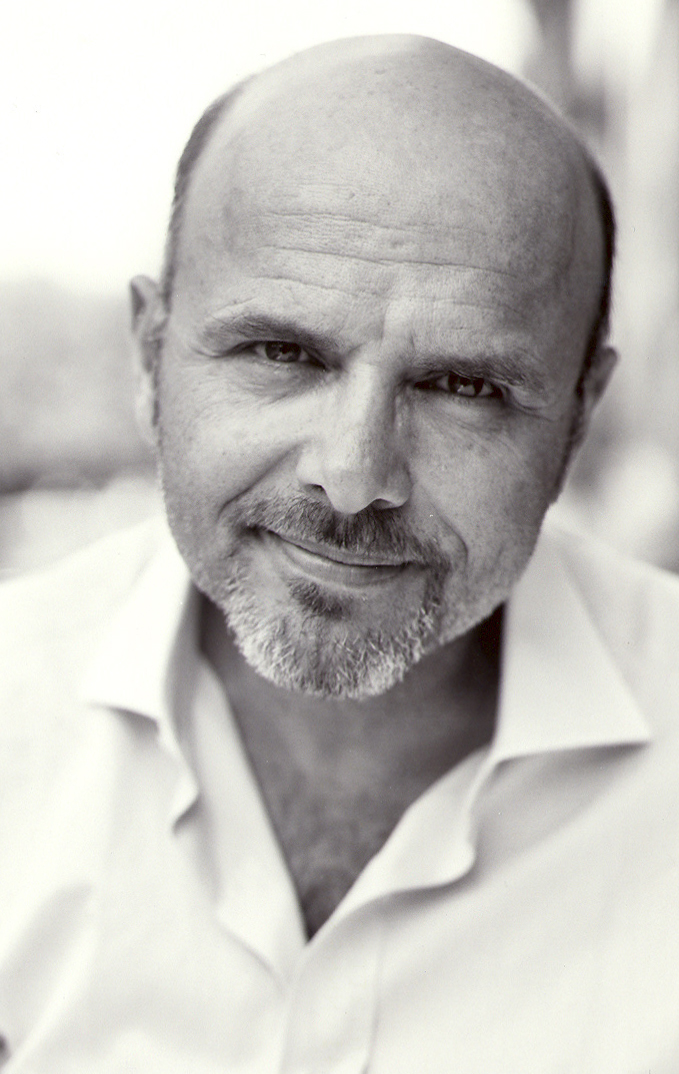
Gregory Itzin generally plays officious asshats in TV shows I don't watch. Joe Pantoliano, on the other hand, has played memorable weasels in several movies I like — Memento, The Matrix, Bound. And for a change of pace, he played a very likeable U.S. Marshal in The Fugitive ...
9) Create a double feature with two different movies with the same title. No remakes. (Peter Nellhaus)
There are hundreds of choices but generally one is good, the other bad (e.g., The Avengers — the very good Marvel movie from 2012, and a dreadful 1998 spy comedy starring Ralph Fiennes and Uma Thurman based on the ultra-cool British television show of the 1960s).
As far as I know, though, Heaven Can Wait — 1943 and 1978 — are the only ones that were both nominated for a best picture Oscar. The one is an Ernst Lubitsch comedy about a loveable scamp (Don Ameche) sharing a drink with the devil after a life of stylishly genteel debauchery. The other is a Warren Beatty remake of 1941's Here Comes Mr. Jordan about a star athlete who is killed in an accident only to discover that he wasn't supposed to have died at all.
In addition to both being very good comedies, both have interesting takes on the afterlife. Beatty's heaven is an empty, arbitrary and capricious void run by officious bureaucrats. Lubitsch's hell, on the other hand, features a surprisingly compassionate, understanding and forgiving Satan. If those are my choices, give me hell every time. As Billy Joel once sang, "the sinners are much more fun / darling, only the good die young."
10) Akiko Wakabayashi or Mie Hama? (Ray Young)
The Bond girls in You Only Live Twice (that's Mie Hama on the left, Akiko Wakabayashi on the right) (and God help us if I have to tell you that's Sean Connery in the middle). I hate to say it, but I don't remember them at all. Honor Blackman and Diana Rigg, they ain't.
But then let's be honest: You Only Live Twice is the worst of the Sean Connery Bond films. That's the dirty secret of the Bond franchise — the last three Connery films, You Only Live Twice, Diamonds Are Forever and Never Say Never Again — were all pretty bad. He was phoning it in for sure.
On the other hand, the Nancy Sinatra theme song is among my favorites, behind only Shirley Bassey's "Goldfinger" and Paul McCartney's "Live and Let Die.
11) Can you think of a (non-porn) movie that informed you of the existence of a sexual act you had not known of prior? (Bob Westal)
I remember when I was eighteen Woody Allen saying something about "trading fours" in Manhattan which I assumed from context was some exotic sex act direct from the pages of the Kama Sutra. Turns out it's actually a jazz term referring to musicians alternating four-bar solo's, but for a while I felt pretty sophisticated if thoroughly clueless.
12) Can you think of a black & white movie that might actually improve if it was in color? (Patrick Robbins)
After shooting The Night of the Iguana — Tennessee Williams's tale of a defrocked preacher stranded in the tropics with three women — director John Huston decided that instead of black-and-white, he should have used color. He was probably right. The black-and-white in this case is flat and lifeless while color might have emphasized the hothouse nature of the storyline.
That's the only one I can think of off the top of my head.
13) Favorite Pedro Almodovar Film?
Women on the Verge of a Nervous Breakdown.
14) Kurt Raab or Udo Kier?
A couple of European supporting actors. I don't know either of them.
15) Worst main title song (Peter Nellhaus)
Criminy, don't get me started — "Burning Bridges" from Kelly's Heroes. A great war caper comedy marred by a ludicrously inappropriate (and lousy) title song.
16) Last movie you saw in a theater? On DVD, Blu-ray or other interesting location/format?
Last we saw in a theater: The Boy and the Heron, by Hayao Miyazaki, Japan's legendary master of animation. I've got to be honest with you, I've liked a number of his other movies better: Porco Rosso, My Neighbor Totoro, Spirited Away, among others. But still, it's worth a look.
On DVD? Jean-Pierre Melville's Le Cercle Rouge, a caper flick by the master of French noir. Highly recommended.
Streaming? Party Girl, the 1995 indie comedy that launched Parker Posey's career. I'm a fan of both the movie and the actress.
17) Favorite movie reference within a Woddy Allen movie? (Larry Aydlette)
I'm going to assume he means "Woody" Allen. If he really means "Woddy" Allen, my apologies.
My favorite is this bit from Midnight in Paris in which the time traveling Gil Pender (Owen Wilson) pitches the plot of The Exterminating Angel to its eventual director Luis Buñuel (Adrien de Van) — with a sly nod at the end to Buñuel's Un Chien Andalou:
"Oh, Mr. Buñuel! I had a nice idea for a movie for you."
"Yes?"
"Yeah. A group of people attend a very formal dinner party and at the end of dinner when they try to leave the room, they can't."
"Why not?"
"They just can't seem to exit the door."
"But why?"
"Well, momento. When they're forced to stay together, the veneer of civilization quickly fades away and what they're left with is who they really are — animals."
"But I don't get it. Why don't they just walk out of the room?"
"All I'm saying is just think about it. Who knows — maybe when you're shaving one day, it'll tickle your fancy."
18) Mary Astor or Claudette Colbert?
For me, this is easy: Mary Astor for The Maltese Falcon, Red Dust, Act of Violence, Across the Pacific, The Prisoner of Zenda, The Kennel Murder Case, Dodsworth, Meet Me in St. Louis, The Palm Beach Story. Among others.
19) Favorite trailer (provide YouTube link if possible)?
Trailers go in one eyeball and out the other as far as I'm concerned but I do remember one. Katie-bar-the-door and I were in the theater grinding through the endless previews when a map of the New York City subway system appeared — that, and nothing more — and she looked at me and said "Did somebody remake Pelham 1-2-3?"
One of the thousands of moments that underscores for me why we belong together.
By the way, how does the remake compare to the original 1974 version starring Walter Matthau, Robert Shaw and Martin Balsam? It doesn't. See the exciting, sublime original, skip the bombastic remake.
20) Oddest double bill you either saw or saw listed in a theater
I'm 62 but the era of the double feature — at least in that part of the country where I grew up — was long past by the time I was old enough to take myself to the movies. Probably the only double feature I've ever seen that was exhibited as a double feature was Duck Soup and A Night at the Opera and that was at the student center at Vanderbilt more than forty years ago. I mean seriously, who shows double features anymore?
21) Favo[r]ite Phil Karlson film?
I was going to say I'd never heard of Phil Karlson but I looked him up and it turns out he directed a number of movies I've seen, including The Phenix City Story (and yes, I spelled that correctly) — a true crime film noir from 1955 about corruption in a small Alabama town on the Georgia border about 45 minutes from Auburn. Good movie, filmed on location under difficult circumstances.
Karlson also directed the classic noir Kansas City Confidential as well as 1973's Walking Tall, another true crime drama about a crusading Tennessee sheriff (played by the wonderful Joe Don Baker).
I recommend them all.
22) Favorite "social problem" picture?
Wikipedia defines a social problem picture as "a narrative film that integrates a larger social conflict into the individual conflict between its characters."
This sort of thing in its pure form almost always bores me stiff (think of those old After School Specials or Stanley Kramer at his preachy-est) but there are a few notable exceptions (assuming the ever-reliable Wikipedia is correct in asserting these are social problem pictures): I Am a Fugitive from a Chain Gang, Modern Times, The Grapes of Wrath, The Best Years of Our Lives, The 400 Blows.
Personally, I don't think of any of those as "social problem" pictures ... but if they are, boy, are they great!
23) Your favourite Harryhausen film/monster? (Ali Arikan)
The skeleton soldiers in Jason and the Argonauts, far and away the best Ray Harryhausen monsters in the best Ray Harryhausen movie.
24) What was the first movie you saw with your significant other? (Patrick Robbins)
Back in college when we were colleagues on the school paper, Katie-bar-the-door and I were in the same theater but not sitting together for The Wrath of Khan and The Rocky Horror Picture Show.
The first we saw together side-by-side, just the two of us, was 1985's Witness, the very good Harrison Ford cop thriller romance (which still holds up, by the way). That was two years before we were dating.
The first as a couple was Animal Crackers on video tape in her apartment. She fell in the floor (literally) laughing at the Groucho Marx line "Signor Ravelli's first selection will be 'Somewhere My Love Lies Sleeping' with a male chorus." Not so much because the line is inherently that funny but because I had to repeat it three times before she caught the double entendre. And that from the quickest witted woman I've ever had the pleasure of knowing.
25) John Payne or Ronald Reagan?
I'm assuming we mean as actors because unless I fell asleep in a history class somewhere, John Payne was never president of these here United States.
That said, while I think Reagan is a bit underrated as an actor (see Kings Row and 1964's The Killers), only one of them made a movie I go out of my way to see every year — John Payne in Miracle on 34th Street. Payne plays the idealistic young lawyer determined to prove that Kris Kringle (Edmund Gwenn) is the one and only Santa Claus.
Payne was also very good in the noir classic Kansas City Confidential and had a supporting role in the 1946 version of The Razor's Edge based on my favorite Somerset Maugham novel of the same name.
26) Movie you feel a certain pressure or obligation to see that you have not yet actually seen
Eventually I'm going to get to 2018 in my alternate Oscars polls. I still haven't seen Roma. I should probably get around to it at some point. Problem is, I don't wanna ...
27) Favorite "psychedelic" movie (Hey, man, like, define it however you want, man…)
Yellow Submarine. The overly-long wormhole sequence at the end of 2001: A Space Odyssey was regarded as a psychedelic experience by the stoned hippies who saw it in 1968, but Yellow Submarine was designed as psychedelia (in the British sense of harkening back to the Edwardian era in a colorful and poetic way) based on the music of the masters of British psychedelia, the Beatles. A wonderful movie. Highly recommended.
28) Thelma Ritter or Eve Arden?
Boy, this is a tough one. I love them both, a pair of acid-tongued broads, one old and crusty, the other young and sassy. If you're going to see one Thelma Ritter picture, watch Rear Window. One Eve Arden movie? Mildred Pierce. They're both wonderful. I refuse to choose between them.
29) Favorite iconic shot or image from a film?
Just one? I could probably describe at least one iconic shot from every great movie I've ever seen. In fact, every day Katherine and I play a quiz from the American Film Institute where you guess the movie from a single frame.
30) What is the movie that inspired the most memorable argument you ever had about a movie?
The longest-running certainly ...
A Little Princess (the 1995 version directed by Alfonso Cuarón long before he won Oscars for directing Gravity and Roma). I wouldn't call it an argument. More of a simple difference in what Katie-bar-the-door and I brought to the theater when we saw the movie.
Do you know the story? A rich girl, Sara Crewe, is sent to boarding school while her widower father heads off to war. When he is listed as missing in action and the money dries up, the headmistress of the school turns on Sara, consigns her to the attic to live as a servant, and pretty much does everything but beat her with an iron rod.
Great stuff, my favorite Alfonso Cuarón movie.
Katherine loves the book by Frances Hodgson Burnett, grew up with it as a kid, read it many times. I didn't. None of the major versions of A Little Princess (1917 with Mary Pickford, 1939 with Shirley Temple, the 1995 version) follow the book ... in which [SPOILER ALERT] the father is actually dead (!), an outcome I contend is unfilmable in a 90-minute children's movie. Katherine doesn't disagree but nevertheless ... it's not the book!
No blood was spilled, no harsh words spoken and we quickly reached a respectful impasse. But we'll never see eye-to-eye.
And let me tell you, if after 34 years of marriage this is our biggest point of contention, we're doing pretty well.
31) Raquel Torres or Lupe Velez?
A pair of Mexican actresses who had brief Hollywood careers in the 1930s.
Raquel Torres was in the Marx Brothers movie Duck Soup. Groucho says to her, "I could dance with you until the cows came home. On second thought, I'd rather dance with the cows until you came home."
Lupe Vélez was known as "the Mexican Spitfire." She starred with Douglas Fairbanks, Sr. in The Gaucho; sang on Broadway for Florenz Ziegfeld; and found success in a series of comedies playing a fish-out-of-water in stuffy American society. She died of an intentional overdose of barbiturates at the age of thirty-six.
Beyond what I've just told you, I really don't know much about them. But I'd sure like to see those Mexican Spitfire movies ...
32) Favorite adaptation of Shakespeare to a film?
Either Laurence Olivier's 1944 version of Henry V or Joss Whedon's modern-dress version of Much Ado About Nothing from 2012. The first is a rousing war picture (featuring the famous "band of brothers" speech), the second is a classic rom-com about a man and a woman whose intense mutual loathing can only mean that they're crazy about each other. I recommend both.
33) Andy Warhol’s Frankenstein (in 3D) — yes or no?
I haven't seen it and don't intend to. I think Andy Warhol might be the most overrated artist in history, a hack of limited talent with a gift for self-promotion. But your mileage may vary.
34) Favorite movie rating?
M. Is anyone here old enough to remember when "M" (for mature) was a rating? It was later replaced by GP, then PG, then PG-13. Make up your mind!
35) Olivia Barash or Joyce Hyser?
A couple of supporting players on television in the 1970s/1980s. I've got nothing. Sorry.
36) What was the movie that convinced you your favorite movie genre was your favorite movie genre?
What is my favorite genre. Hmm. Usually whatever is playing in front of me, provided it moves me, whether to laughter or tears doesn't really matter.
So if my favorite movie genre is the movies themselves, I would have to say seeing 2001: A Space Odyssey in the theater in 1968 at the age of seven was the movie that put the hooks in me.
When the World Book Encyclopedia put out a long essay about movies a year later in its supplemental "Year Book," I was a goner. I wonder how many eight year olds were reading think-pieces about movies and the culture in 1969 ...
And yes, that's my copy of the 1969 World Book Encyclopedia Year Book.
37) Favorite Blake Edwards movie?
Victor/Victoria, hands down. Julie Andrews sings, Robert Preston is hilarious, and James Garner is James Garner! One of my all-time favorites.
Okay, that's it. I don't know about you, but I certainly had fun.
Named for Katie-Bar-The-Door, the Katies are "alternate Oscars"—who should have been nominated, who should have won—but really they're just an excuse to write a history of the movies from the Silent Era to the present day.
To see a list of nominees and winners by decade, as well as links to my essays about them, click the highlighted links:
Remember: There are no wrong answers, only movies you haven't seen yet.
The Silent Oscars
And don't forget to check out the Silent Oscars—my year-by-year choices for best picture, director and all four acting categories for the pre-Oscar years, 1902-1927.
Look at me—Joe College, with a touch of arthritis. Are my eyes really brown? Uh, no, they're green. Would we have the nerve to dive into the icy water and save a person from drowning? That's a key question. I, of course, can't swim, so I never have to face it. Say, haven't you anything better to do than to keep popping in here early every morning and asking a lot of fool questions?








 Posts
Posts

