1944 was a very good year for actresses. The list of those I didn't nominate — Joan Bennett (The Woman In The Window), Claudette Colbert (Since You Went Away), Bette Davis (Mr. Skeffington), Joan Fontaine (Jane Eyre), Elizabeth Taylor (National Velvet), Gene Tierney (Laura) — would make a pretty good slate all by themselves. Can you imagine a lineup that strong coming of today's Hollywood?
Showing posts with label Barbara Stanwyck. Show all posts
Sunday, January 18, 2015
Friday, January 2, 2015
March Madness Is Coming Once Again
The 2015 Favorite Classic Movie Actress Tournament starts up again in March. I'll be hosting the 1960s bracket this year.
Details to follow ...
Friday, April 11, 2014
March Madness In April: Barbara Stanwyck And Bette Davis Duke It Out For The Title
The final round of Monty's Favorite Classic Movie Actress Tournament has started over at All Good Things. Barbara Stanwyck versus Bette Davis. Davis made it to the finals last year, losing to Carole Lombard. Stanwyck was this year's pre-tourney favorite. Either would be a worthy champion.
Click here to vote.
Here's a clip of Stanwyck with Henry Fonda in The Lady Eve. I had a lot of moments just like this one while working in a shoe store during my law school days:
And Bette Davis with Leslie Howard in Of Human Bondage—which also reminds me of law school:
And people wonder why I never go to reunions.
Click here to vote.
Here's a clip of Stanwyck with Henry Fonda in The Lady Eve. I had a lot of moments just like this one while working in a shoe store during my law school days:
And Bette Davis with Leslie Howard in Of Human Bondage—which also reminds me of law school:
And people wonder why I never go to reunions.
Friday, April 4, 2014
Final Four
No, not Florida, Kentucky, et al. Barbara Stanwyck, Bette Davis, Audrey Hepburn and Elizabeth Taylor. The voting starts Saturday at All Good Things.
Wednesday, December 18, 2013
Remember The Night: A Mini Review (Spoilers)
A comedy penned by Preston Sturges, and starring Fred MacMurray and Barbara Stanwyck, Remember The Night is the story of a district attorney who takes the woman he's trying to convict of larceny home to Indiana for Christmas.
Released four years before Double Indemnity, it was critically-acclaimed but a commercial flop, and turns out to be Camille without the cough. Funny and well-acted, but reactionary in its outlook, the ambiguous ending suggests that a tarnished woman can never be redeemed, and good people best not mix with them. Makes you wonder what Jesus thought he was up to, drinking wine with hookers and tax collectors.
3.5 stars out of 5.
Released four years before Double Indemnity, it was critically-acclaimed but a commercial flop, and turns out to be Camille without the cough. Funny and well-acted, but reactionary in its outlook, the ambiguous ending suggests that a tarnished woman can never be redeemed, and good people best not mix with them. Makes you wonder what Jesus thought he was up to, drinking wine with hookers and tax collectors.
3.5 stars out of 5.
Friday, November 15, 2013
Barbara Stanwyck At The AFI-Silver: All Tickets $5!
As if you needed another reason to come out to the AFI-Silver this weekend to meet Victoria Wilson, author of A Life of Barbara Stanwyck: Steel-True, tickets to see the movies themselves are only five bucks! So now you've got no excuses.
The schedule:
Saturday, November 16
1 pm — The Purchase Price
4 pm — The Bitter Tea of General Yen
Sunday, November 17
1 pm — Baby Face
3:20 pm — Illicit
5:30 pm — Remember the Night
With encore presentations of Illicit, Baby Face and Remember the Night on Monday, Tuesday and Wednesday respectively.
Five dollars. You couldn't rent the movies at Blockbuster for that—if there was still a Blockbuster, that is.
The schedule:
Saturday, November 16
1 pm — The Purchase Price
4 pm — The Bitter Tea of General Yen
Sunday, November 17
1 pm — Baby Face
3:20 pm — Illicit
5:30 pm — Remember the Night
With encore presentations of Illicit, Baby Face and Remember the Night on Monday, Tuesday and Wednesday respectively.
Five dollars. You couldn't rent the movies at Blockbuster for that—if there was still a Blockbuster, that is.
Tuesday, November 12, 2013
Barbara Stanwyck Author Victoria Wilson At The AFI-Silver This Weekend
My copy of A Life of Barbara Stanwyck: Steel-True arrived in the mail today and soon enough I will serve up my review of it here at the Monkey. Steel-True has received terrific reviews and I'm looking forward to reading it—if you've been following the Monkey for any length of time, you know Stanwyck is one of my very favorites.
In the meantime, the book's author, Victoria Wilson, will be presenting a series of Stanwyck's films at the AFI-Silver just down the road in Silver Spring, Maryland. Here is the schedule:
Saturday, November 16
1 pm — The Purchase Price
4 pm — The Bitter Tea of General Yen
Sunday, November 17
1 pm — Baby Face
3:20 pm — Illicit
5:30 pm — Remember the Night
Wilson will be signing copies of her book on both Saturday and Sunday.
Katie-Bar-The-Door and I are going to try to make it to Baby Face on Sunday and then maybe stick around for Illicit (the only one of these I haven't seen). Baby Face might be the pre-Code-y-est pre-Code film ever made, the straw that broke the censor's back. The Bitter Tea of General Yen is an A+ film, but Baby Face has to be seen to be believed.
In addition, there will be encore presentations of Illicit on Monday, Baby Face on Tuesday and Remember the Night on Wednesday. But sadly, no Victoria Wilson. So if you're in the DC area, block out some time this weekend and treat yourself.
P.S. To read my short reviews of Baby Face, The Bitter Tea of General Yen and The Purchase Price, click on the highlighted link.
In the meantime, the book's author, Victoria Wilson, will be presenting a series of Stanwyck's films at the AFI-Silver just down the road in Silver Spring, Maryland. Here is the schedule:
Saturday, November 16
1 pm — The Purchase Price
4 pm — The Bitter Tea of General Yen
Sunday, November 17
1 pm — Baby Face
3:20 pm — Illicit
5:30 pm — Remember the Night
Wilson will be signing copies of her book on both Saturday and Sunday.
Katie-Bar-The-Door and I are going to try to make it to Baby Face on Sunday and then maybe stick around for Illicit (the only one of these I haven't seen). Baby Face might be the pre-Code-y-est pre-Code film ever made, the straw that broke the censor's back. The Bitter Tea of General Yen is an A+ film, but Baby Face has to be seen to be believed.
In addition, there will be encore presentations of Illicit on Monday, Baby Face on Tuesday and Remember the Night on Wednesday. But sadly, no Victoria Wilson. So if you're in the DC area, block out some time this weekend and treat yourself.
P.S. To read my short reviews of Baby Face, The Bitter Tea of General Yen and The Purchase Price, click on the highlighted link.
Monday, December 10, 2012
Thumbnail Reviews: A Lyle Talbot Double Feature
We've been on a bit of a Lyle Talbot kick here at the Monkey lately, reviewing (and recommending) his daughter Margaret's very fine book The Entertainer: Movies, Magic and My Father's Twentieth Century, and driving down to the AFI-Silver last weekend to see Three on a Match, the best of Talbot's pre-Code movies.
With another Lyle Talbot double feature on tap this weekend, Katie-Bar-The-Door and I returned to the AFI, this time for a pair of films in which he co-starred with the great Barbara Stanwyck.
The Purchase Price was the second of three movies Talbot made for director Wild Bill Wellman, who as much as anybody championed Talbot's early career in Hollywood. In this one, Talbot is a bootlegger who has been "playing house" with nightclub chanteuse Stanwyck. She's had enough, he hasn't, and with his hired underlings hot on her trail, she hides out by selling herself as a mail-order bride. When she gets off the train in North Dakota or Wyoming or wherever, she finds farmer George Brent waiting for her, and bang-o, they're married. Only they get off on the wrong foot and even though she's soon enough eager to climb into his bed, Brent spends all his time sleeping on the floor.
Complications ensue in the form of snow, sleazy bank managers and a randy local string-puller who proves that no matter how small the pond is, there's always a bigger fish eager to eat the small fry.
With plenty of Wellmanesque touches—drunks, rough humor, and fist fights—it's all fun enough and fast enough to smooth over the abrupt about-faces in character motivations this 68-minute Warner Brothers feature treats us to.
Less comprehensible are Stanwyck's feelings in the bottom half of the double bill, Ladies They Talk About.
The story is simple enough. Stanwyck gets caught helping boyfriend Lyle pull a bank job and winds up serving two-to-five in San Quentin, but the twists and turns in the subsequent love story—"I love you I hate you I love you I shot you let's get married!"—happen so fast and for no apparent reason that even filmgoers as forgiving as Katie and I found ourselves looking at each other in bemused befuddlement.
Warner movies of this era were very short, typically clocking in around 65 minutes and moving at such a breakneck pace that even studio executives worried they were shortchanging their audience. In this case, co-directors Howard Bretherton and William Keighley stripped away every ounce of context and exposition, leaving nothing for the audience to hang its emotional hat on. Add in a women's prison that's more fun than a college sorority house and the goofiest prison break in movie history and you've got yourself a drama that inadvertently veers into camp.
Of the two films, The Purchase Price is the better showcase for Lyle Talbot's talents. For a would-be gangster/stalker, he's friendly, forgiving and generous to a fault, and quite frankly, I thought he was a better match for Stanwyck than George Brent was. Pity Wellman didn't think to swap the roles, but this was only Talbot's third movie at Warners and Brent was the more established of the two.
That's the way it always seemed to go in Talbot's career—a missed chance here, a bit of typecasting there, and his star was falling almost before it had had a chance to rise. The road to journeyman actor is inevitably paved with coulda shoulda woulda's. But hey, he worked with Barbara Stanwyck, not once but twice. That puts him way up on the rest of us.
With another Lyle Talbot double feature on tap this weekend, Katie-Bar-The-Door and I returned to the AFI, this time for a pair of films in which he co-starred with the great Barbara Stanwyck.
The Purchase Price was the second of three movies Talbot made for director Wild Bill Wellman, who as much as anybody championed Talbot's early career in Hollywood. In this one, Talbot is a bootlegger who has been "playing house" with nightclub chanteuse Stanwyck. She's had enough, he hasn't, and with his hired underlings hot on her trail, she hides out by selling herself as a mail-order bride. When she gets off the train in North Dakota or Wyoming or wherever, she finds farmer George Brent waiting for her, and bang-o, they're married. Only they get off on the wrong foot and even though she's soon enough eager to climb into his bed, Brent spends all his time sleeping on the floor.
Complications ensue in the form of snow, sleazy bank managers and a randy local string-puller who proves that no matter how small the pond is, there's always a bigger fish eager to eat the small fry.
With plenty of Wellmanesque touches—drunks, rough humor, and fist fights—it's all fun enough and fast enough to smooth over the abrupt about-faces in character motivations this 68-minute Warner Brothers feature treats us to.
Less comprehensible are Stanwyck's feelings in the bottom half of the double bill, Ladies They Talk About.
The story is simple enough. Stanwyck gets caught helping boyfriend Lyle pull a bank job and winds up serving two-to-five in San Quentin, but the twists and turns in the subsequent love story—"I love you I hate you I love you I shot you let's get married!"—happen so fast and for no apparent reason that even filmgoers as forgiving as Katie and I found ourselves looking at each other in bemused befuddlement.
Warner movies of this era were very short, typically clocking in around 65 minutes and moving at such a breakneck pace that even studio executives worried they were shortchanging their audience. In this case, co-directors Howard Bretherton and William Keighley stripped away every ounce of context and exposition, leaving nothing for the audience to hang its emotional hat on. Add in a women's prison that's more fun than a college sorority house and the goofiest prison break in movie history and you've got yourself a drama that inadvertently veers into camp.
Of the two films, The Purchase Price is the better showcase for Lyle Talbot's talents. For a would-be gangster/stalker, he's friendly, forgiving and generous to a fault, and quite frankly, I thought he was a better match for Stanwyck than George Brent was. Pity Wellman didn't think to swap the roles, but this was only Talbot's third movie at Warners and Brent was the more established of the two.
That's the way it always seemed to go in Talbot's career—a missed chance here, a bit of typecasting there, and his star was falling almost before it had had a chance to rise. The road to journeyman actor is inevitably paved with coulda shoulda woulda's. But hey, he worked with Barbara Stanwyck, not once but twice. That puts him way up on the rest of us.
Friday, November 30, 2012
Golden Boy: The 75th Anniversary Broadway Revival Of The Clifford Odets Play
This last Tuesday afternoon, Mister Muleboy and I made our way to Manhattan for a V.I.P. preview of Golden Boy, a revival of a 1937 Clifford Odets play about an up-and-coming boxer who also happens to be a talented violinist—a high concept that might strike you as faintly ridiculous, but then maybe you're not old enough to remember Mike Reid who some forty years ago was an all-pro defensive tackle for the Cincinnati Bengals as well as a concert pianist and later a Grammy-winning songwriter who was inducted into the Nashville Songwriters Hall of Fame in 2005.
As I keep telling you, there are more things in heaven and earth, Horatio, than are dreamt of in your philosophy. So we were there with open minds.
Clifford Odets, as you probably know, was a playwright who had a brief but wildly-successful run on Broadway in the 1930s. He was also one of the founding members of the Group Theater, an influential theater company that introduced "Method" acting to America. His best-known stage work includes Waiting For Lefty, Golden Boy and The Country Girl. After tastes changed on Broadway in the early '40s—or should I say, after Broadway lost its taste for Clifford Odets—he decamped for Hollywood. He famously struggled there, but he did make one lasting contribution, collaborating on the screenplay to Sweet Smell of Success, starring Tony Curtis and Burt Lancaster, one of the most biting and cynical movies of the 1950s. He died in 1963.
That the Coen Brothers spoofed Odets in Barton Fink as a pretentious Broadway playwright lacking the talent even for hackwork perhaps should have given me pause before racing up to see what the New Yorker notes is a "rarely revived" play, but what can I tell you—I love the theater, I love free food and, to quote Cole Porter, I happen to like New York.
And when I have to give the world a last farewell,
And the undertaker starts to ring my funeral bell,
I don't want to go to heaven, don't want to go to hell.
I happen to like New York.
After cocktails and hors d'oeuvres at Jeffrey Zakarian's Lambs Club with forty or so of our fellow blog-typing wallflowers—I am as dull and dreary in person as I am fascinating and unforgettable online—Mister Muleboy and I crossed 44th Street to the Belasco, a fully-refurbished turn-of-the-last-century jewel built by the legendary Broadway producer David Belasco. He designed the auditorium to create what he called a "little theater" experience, with three tiers of seats pushed close to the stage to foster an intimacy between the performers and the audience.
Sitting there, I thought it's no wonder that the Belasco has featured so much serious drama over the last century, including such plays as Johnny Belinda, The Song of Bernadette and A Raisin in the Sun, as well as much of the Group Theater's output. Indeed, Golden Boy premiered 75 years ago this month at the Belasco—and I'm thinking that its revival there now is not a coincidence.
This new production of Golden Boy stars Seth Numrich (War Horse) and Yvonne Strahovski (Chuck and Dexter) in the leads, with Tony Shalhoub, Danny Burstein, Ned Eisenberg and Dagmara Dominczyk, among others, in support. Tony winner Bartlett Sher directs.
The play opens in the seedy offices of Tom Moody, a boxing promoter who was once the best in New York, but who, like the rest of the country, has been struggling to make ends meet since the stock market crash of 1929. At his side is his mistress and girl Friday, Lorna Moon. Lorna is a self-described "tramp from Newark" who was plucked by Moody from a life that sounds vaguely like prostitution to live a life that still sounds vaguely like prostitution, only with one client, better clothes and a softer bed.
Moody is trying to figure out how to raise the $5000 necessary for a divorce settlement—the sap genuinely wants to marry Lorna—when into his office and into his life rushes Joe Bonaparte, a brash young punk who claims to be a great boxer in need only of a great manager to hit the big time. When one of the fighters in Moody's stable breaks a hand before that evening's bout, he shoves the kid into the ring and discovers, shock of shocks, he has a potential goldmine within his grasp.
The only problem is, the boy is also a gifted violinist who's afraid of ruining his delicate mitts on another man's chin. And how can you hope to win the title if you won't take your hands out of your pockets?
Enter the girl.
You know how to get men to do what you want them to do, Moody tells her. Get him to fight and we can finally get married. And so she sets out to seduce the kid. The thing is, though, as time passes, she can't quite decide whether she's manipulating the boy or falling in love with him. She's been batted around enough to want the security that Moody represents, but like most of us, still longs for true love.
Despite the complications of the love triangle, though, the central conflict is between Joe and his father, with the violin and Joe's rare talent for playing it—he's won a gold medal and a scholarship—standing in for the decision each of us must make eventually: what do you want out of life?
Joe's tired of being ashamed of his poverty and sees boxing as a shortcut to fame, fast cars and flashy clothes—all the things he's never had and his father, a Zen master who pushes a fruit cart, has never counted as important. His father will support Joe's choice as long as he's passionate about it, but what he sees in the boy suggests to him that it's the soulful beauty of the violin rather than the violent release of the ring that gives him true pleasure. That there's no real money in music, his father tells him, isn't important as long as you have a purpose in your life and a song in your heart.
But a parent can't live his child's life for him, he can only hope that as the boy makes his mistakes, the consequences aren't so permanent and debilitating that they ruin him for good. And therein lies the rub, for the violin requires delicate hands and boxing is the destroyer of hands. That boxing is also the destroyer of minds and souls—as represented by the angry, brain-addled palooka the father meets in act two—only exacerbates his fears.
In a time when, thanks to the internet, it's possible to be both a struggling artist and a capitalist fat cat, the choices presented here might seem a little quaint. Played out, though, as Golden Boy was in 1937, against the backdrop of the Great Depression and the rise of fascism in Europe, the choice between the humane and the expedient wasn't a trivial one—the future of civilization hung in the balance.
So what did I think of the play, Mrs. Lincoln?
The acting is top-notch—especially that of Danny Mastrogiorgio as Tom Moody and Tony Shalhoub as the father. Shalhoub you probably remember from Monk, and I imagine he could add warmth and wit to a recitation of the phone book. Mastrogiorgio, who was previously unknown to me, turns a heel into someone you can root for without softening Moody's edges, and it's his performance you can't take your eyes off of. I'll be looking for more of him in the future.
As for the rest of it, the direction is crisp, the staging inventive, the costumes expertly evoke the period. Kudos all around.
The production's flaws lie within the play itself. At times, Odets was so keen to make his points, he seemed to forget his characters were people rather than allegories and plot devices. Lorna, especially, changes tack from scene to scene depending on which direction the story needs go, rendering her motivations not so much complex as murky.
And let me tell you, while complex is exhilarating, murky is frustrating, irritating, and finally enervating—especially by the end of a nearly three hour play.
Still, it's the sort of story that'll stick with you for days, giving you something to mull over rather than forget, and since for a change there was no traffic in the Lincoln Tunnel, I'd call the evening a success—I was home in bed with Katie-Bar-The-Door well before the sun peeked over the horizon.
This being a classic film blog, I was naturally curious afterwards to see how the pros in Hollywood adapted the play to the big screen, and the following morning, I wound up watching the 1939 film adaptation starring Barbara Stanwyck, William Holden and Adolphe Menjou.
It's a more conventional crowd-pleaser, that's for sure.
The girl was already a hop skip and a jump from being a classic Barbara Stanwyck character and Hollywood simply straightened out her through line, turning her into a "dame from Newark" who rediscovers the heart of gold that was always beating in her tastefully slender bosom. Her Lorna is both bitchier and ultimately sweeter than Odets's conception because she, not Moody, is the schemer calling the shots. She's got the boy, her boss and the whole wide world by the balls and she relishes that it's up to her to decide whether and how hard to squeeze.
Like most of Stanwyck's best roles, she's interesting because—right or wrong—she's the one in control.
And how does the film handle Joe Bonaparte?—a pertinent issue since, Mike Reid or no Mike Reid, the choice between the boxing ring and the violin is not and never has been a real world dilemma. William Holden plays him as a tousled-haired schoolboy, twenty-one going on twelve, who nevertheless feels a need to pull his own weight. Music is wonderful, he concedes, but it doesn't put food on the table. The shift in motivation changes the story's central philosophical conflict from an issue of the eternal versus the ephemeral to one of the idealistic versus the practical, a subtle but significant difference.
With Adolphe Menjou playing Moody for laughs, Lee J. Cobb (at age 27!) channeling Chico Marx as William Holden's father, and the supporting cast delivering their lines at twice the speed of normal human speech, the tone is bright and brassy rather than portentous, more Guys and Dolls than Eugene O'Neill.
Does that make the movie better than the play? Well, it's shorter anyway. No doubt the changes were necessary to make the story palatable to an audience that had sacrificed a great deal more than the violin to survive the Great Depression. There's no denying, though, that the movie version of Golden Boy has always been regarded as a minor entry on each of its stars' resumes.
In the final analysis, the film is more a curiosity—a chance to marvel at an impossibly young William Holden eleven years before his breakthrough in Sunset Boulevard—than a necessity. Fit it into your schedule, maybe, after you've run through the best of Holden's (and Stanwyck's) work.
So how about the Broadway revival—can I recommend it to you?
Well, the Ice Capades it isn't, and if you're in town for one night looking for the dramatic equivalent of hot dogs and cotton candy, honestly, you should go elsewhere. But if you're hungry for a deep dish of heavy think in the company of Odets, the Group Theater and the ghosts of Old Broadway, by all means, dive in.
Just don't expect them to spoonfeed it to you.
Golden Boy is currently in previews at the Belasco. It officially opens on December 6 and runs through January 20, 2013. To visit the show's website, click here.
As I keep telling you, there are more things in heaven and earth, Horatio, than are dreamt of in your philosophy. So we were there with open minds.
Clifford Odets, as you probably know, was a playwright who had a brief but wildly-successful run on Broadway in the 1930s. He was also one of the founding members of the Group Theater, an influential theater company that introduced "Method" acting to America. His best-known stage work includes Waiting For Lefty, Golden Boy and The Country Girl. After tastes changed on Broadway in the early '40s—or should I say, after Broadway lost its taste for Clifford Odets—he decamped for Hollywood. He famously struggled there, but he did make one lasting contribution, collaborating on the screenplay to Sweet Smell of Success, starring Tony Curtis and Burt Lancaster, one of the most biting and cynical movies of the 1950s. He died in 1963.
That the Coen Brothers spoofed Odets in Barton Fink as a pretentious Broadway playwright lacking the talent even for hackwork perhaps should have given me pause before racing up to see what the New Yorker notes is a "rarely revived" play, but what can I tell you—I love the theater, I love free food and, to quote Cole Porter, I happen to like New York.
And when I have to give the world a last farewell,
And the undertaker starts to ring my funeral bell,
I don't want to go to heaven, don't want to go to hell.
I happen to like New York.
After cocktails and hors d'oeuvres at Jeffrey Zakarian's Lambs Club with forty or so of our fellow blog-typing wallflowers—I am as dull and dreary in person as I am fascinating and unforgettable online—Mister Muleboy and I crossed 44th Street to the Belasco, a fully-refurbished turn-of-the-last-century jewel built by the legendary Broadway producer David Belasco. He designed the auditorium to create what he called a "little theater" experience, with three tiers of seats pushed close to the stage to foster an intimacy between the performers and the audience.
Sitting there, I thought it's no wonder that the Belasco has featured so much serious drama over the last century, including such plays as Johnny Belinda, The Song of Bernadette and A Raisin in the Sun, as well as much of the Group Theater's output. Indeed, Golden Boy premiered 75 years ago this month at the Belasco—and I'm thinking that its revival there now is not a coincidence.
This new production of Golden Boy stars Seth Numrich (War Horse) and Yvonne Strahovski (Chuck and Dexter) in the leads, with Tony Shalhoub, Danny Burstein, Ned Eisenberg and Dagmara Dominczyk, among others, in support. Tony winner Bartlett Sher directs.
The play opens in the seedy offices of Tom Moody, a boxing promoter who was once the best in New York, but who, like the rest of the country, has been struggling to make ends meet since the stock market crash of 1929. At his side is his mistress and girl Friday, Lorna Moon. Lorna is a self-described "tramp from Newark" who was plucked by Moody from a life that sounds vaguely like prostitution to live a life that still sounds vaguely like prostitution, only with one client, better clothes and a softer bed.
Moody is trying to figure out how to raise the $5000 necessary for a divorce settlement—the sap genuinely wants to marry Lorna—when into his office and into his life rushes Joe Bonaparte, a brash young punk who claims to be a great boxer in need only of a great manager to hit the big time. When one of the fighters in Moody's stable breaks a hand before that evening's bout, he shoves the kid into the ring and discovers, shock of shocks, he has a potential goldmine within his grasp.
The only problem is, the boy is also a gifted violinist who's afraid of ruining his delicate mitts on another man's chin. And how can you hope to win the title if you won't take your hands out of your pockets?
Enter the girl.
You know how to get men to do what you want them to do, Moody tells her. Get him to fight and we can finally get married. And so she sets out to seduce the kid. The thing is, though, as time passes, she can't quite decide whether she's manipulating the boy or falling in love with him. She's been batted around enough to want the security that Moody represents, but like most of us, still longs for true love.
Despite the complications of the love triangle, though, the central conflict is between Joe and his father, with the violin and Joe's rare talent for playing it—he's won a gold medal and a scholarship—standing in for the decision each of us must make eventually: what do you want out of life?
Joe's tired of being ashamed of his poverty and sees boxing as a shortcut to fame, fast cars and flashy clothes—all the things he's never had and his father, a Zen master who pushes a fruit cart, has never counted as important. His father will support Joe's choice as long as he's passionate about it, but what he sees in the boy suggests to him that it's the soulful beauty of the violin rather than the violent release of the ring that gives him true pleasure. That there's no real money in music, his father tells him, isn't important as long as you have a purpose in your life and a song in your heart.
But a parent can't live his child's life for him, he can only hope that as the boy makes his mistakes, the consequences aren't so permanent and debilitating that they ruin him for good. And therein lies the rub, for the violin requires delicate hands and boxing is the destroyer of hands. That boxing is also the destroyer of minds and souls—as represented by the angry, brain-addled palooka the father meets in act two—only exacerbates his fears.
In a time when, thanks to the internet, it's possible to be both a struggling artist and a capitalist fat cat, the choices presented here might seem a little quaint. Played out, though, as Golden Boy was in 1937, against the backdrop of the Great Depression and the rise of fascism in Europe, the choice between the humane and the expedient wasn't a trivial one—the future of civilization hung in the balance.
So what did I think of the play, Mrs. Lincoln?
The acting is top-notch—especially that of Danny Mastrogiorgio as Tom Moody and Tony Shalhoub as the father. Shalhoub you probably remember from Monk, and I imagine he could add warmth and wit to a recitation of the phone book. Mastrogiorgio, who was previously unknown to me, turns a heel into someone you can root for without softening Moody's edges, and it's his performance you can't take your eyes off of. I'll be looking for more of him in the future.
As for the rest of it, the direction is crisp, the staging inventive, the costumes expertly evoke the period. Kudos all around.
The production's flaws lie within the play itself. At times, Odets was so keen to make his points, he seemed to forget his characters were people rather than allegories and plot devices. Lorna, especially, changes tack from scene to scene depending on which direction the story needs go, rendering her motivations not so much complex as murky.
And let me tell you, while complex is exhilarating, murky is frustrating, irritating, and finally enervating—especially by the end of a nearly three hour play.
Still, it's the sort of story that'll stick with you for days, giving you something to mull over rather than forget, and since for a change there was no traffic in the Lincoln Tunnel, I'd call the evening a success—I was home in bed with Katie-Bar-The-Door well before the sun peeked over the horizon.
This being a classic film blog, I was naturally curious afterwards to see how the pros in Hollywood adapted the play to the big screen, and the following morning, I wound up watching the 1939 film adaptation starring Barbara Stanwyck, William Holden and Adolphe Menjou.
It's a more conventional crowd-pleaser, that's for sure.
The girl was already a hop skip and a jump from being a classic Barbara Stanwyck character and Hollywood simply straightened out her through line, turning her into a "dame from Newark" who rediscovers the heart of gold that was always beating in her tastefully slender bosom. Her Lorna is both bitchier and ultimately sweeter than Odets's conception because she, not Moody, is the schemer calling the shots. She's got the boy, her boss and the whole wide world by the balls and she relishes that it's up to her to decide whether and how hard to squeeze.
Like most of Stanwyck's best roles, she's interesting because—right or wrong—she's the one in control.
And how does the film handle Joe Bonaparte?—a pertinent issue since, Mike Reid or no Mike Reid, the choice between the boxing ring and the violin is not and never has been a real world dilemma. William Holden plays him as a tousled-haired schoolboy, twenty-one going on twelve, who nevertheless feels a need to pull his own weight. Music is wonderful, he concedes, but it doesn't put food on the table. The shift in motivation changes the story's central philosophical conflict from an issue of the eternal versus the ephemeral to one of the idealistic versus the practical, a subtle but significant difference.
With Adolphe Menjou playing Moody for laughs, Lee J. Cobb (at age 27!) channeling Chico Marx as William Holden's father, and the supporting cast delivering their lines at twice the speed of normal human speech, the tone is bright and brassy rather than portentous, more Guys and Dolls than Eugene O'Neill.
Does that make the movie better than the play? Well, it's shorter anyway. No doubt the changes were necessary to make the story palatable to an audience that had sacrificed a great deal more than the violin to survive the Great Depression. There's no denying, though, that the movie version of Golden Boy has always been regarded as a minor entry on each of its stars' resumes.
In the final analysis, the film is more a curiosity—a chance to marvel at an impossibly young William Holden eleven years before his breakthrough in Sunset Boulevard—than a necessity. Fit it into your schedule, maybe, after you've run through the best of Holden's (and Stanwyck's) work.
So how about the Broadway revival—can I recommend it to you?
Well, the Ice Capades it isn't, and if you're in town for one night looking for the dramatic equivalent of hot dogs and cotton candy, honestly, you should go elsewhere. But if you're hungry for a deep dish of heavy think in the company of Odets, the Group Theater and the ghosts of Old Broadway, by all means, dive in.
Just don't expect them to spoonfeed it to you.
Golden Boy is currently in previews at the Belasco. It officially opens on December 6 and runs through January 20, 2013. To visit the show's website, click here.
Thursday, November 8, 2012
Book Review: The Entertainer By Margaret Talbot (Highly Recommended)
I have to admit, when the galley proof of The Entertainer: Movies, Magic and My Father's Twentieth Century by Margaret Talbot arrived in the mail, I had my doubts. Hollywood memoirs are an uneven lot at best, often badly-written tales told by professional raconteurs, blabbermouths, axe-grinders, apologists, sex fiends and fantasists, only rarely amounting to more than 200 pages of time-marking windbaggery designed to collect an advance check and nothing more.
And the memoirs of the children of Hollywood stars are usually worse—distilling into either bitter hatchet jobs or worshipful love notes.
Bleh.
But I couldn't have been more wrong about this one. I was hooked on The Entertainer before I finished the preface and now rank it as one of the best Hollywood memoirs I've ever read.
The Entertainer—the story of Golden Age Hollywood actor Lyle Talbot—reminded me of two truths: first, that you don't have to be famous to be interesting (and vice versa), and second, that acting, like baseball, "may be a religion full of magic, cosmic truth, and the fundamental ontological riddles of our time, but it's also a job." (Bull Durham, in case you don't remember the quote.) Also that the story of Hollywood's evolution from a small company town to the largest purveyor of entertainment in the world—when told as well as it is here—is a fascinating one.
Okay, that's three things.
Lyle Talbot got his first lesson in acting early. Raised by his maternal grandmother in a small Nebraska town shortly after the turn of the century, Talbot routinely got a beating if he didn't shed enough tears over a lock of his dead mother's hair—the mother who had died shortly after Lyle's birth. Bewildered by this remembrance of a woman he'd never known, Talbot soon learned to conjure up the appropriate response even if he didn't quite know why he needed to. But he learned his lesson well, figuring out how to please people and enjoying the positive attention he got when he did.
At fifteen, Talbot left home to live with his father—his grandmother had forbidden a relationship with the man who had knocked-up her teenage daughter and carted her off to Pittsburgh for a quickie marriage—a pivotal moment in the boy's life. His father and his new stepmother were small-time performers, and Talbot joined a world of traveling carnivals, working first as a magician's assistant, then as a "plant" for a hypnotist, pretending to be hypnotized and doing crazy things to warm up the audience.
The two funniest anecdotes in the book make it clear it's a miracle Talbot made the transition to acting at all. Hired on as a bit actor in a traveling theater troupe, Talbot mistimed a staged punch in the very first scene of his very first performance and cold-cocked the star, leading to an early curtain. Only the intervention of the troupe manager's wife—she was sweet on the handsome boy—saved his job.
Years later, in 1932, Warner Brothers invited Talbot to Hollywood for a screen test. By now Talbot was an accomplished stage performer, but he was still wet behind the ears when it came to the internal workings of studio politics. For his screen test, he selected a fast-talking scene from a play he'd done many times, Louder Please, a comedy about a lecherous movie producer. He knew the part cold and had always gotten laughs when he played it on stage, but what he didn't realize was that Louder Please had been written by a disgruntled ex-Warners employee, Norman Krasna, about the studio's boss, Darryl F. Zanuck, a fact everybody in Hollywood but Talbot knew.
Fortunately, Zanuck was in a forgiving mood when he watched the tests the next day—or maybe it's that he had maverick director "Wild Bill" Wellman in tow—and Talbot got a contract.
Being one himself, Wellman loved troublemakers and despite the fact that Talbot was in fact a pretty straight arrow, immediately cast him in three of his movies, Love is a Racket with Douglas Fairbanks, Jr., The Purchase Price with Barbara Stanwyck, and College Coach with Dick Powell and Pat O'Brien.
Like most second tier players in those days, Talbot worked like a dog, making eleven movies in 1932, ten in 1933 and ten more in 1934.
The best of his films was probably Three on a Match, starring Bette Davis, Joan Blondell and Ann Dvorak. One of the fastest and most cynical films of the pre-Code era, Three on a Match packs episodes of drug addiction, adultery, prostitution, blackmail, kidnapping, child neglect, suicide and Bette Davis in her undies into 63 breakneck minutes. Talbot's role as a weak-willed hoodlum who lures a rich housewife into a life of sex, champagne and cocaine was a memorable one.
"I can tell you're a real woman," he tells Dvorak at one point, "not one of those stuffed brassieres you see on Park Avenue."
What woman wouldn't swoon!
He also had good parts in 20,000 Years in Sing Sing opposite Spencer Tracy, Ladies They Talk About (Stanwyck again), and Mary Stevens, M.D. with Kay Francis at the height of her career.
Yet despite a big build-up and favorable notices, Talbot never achieved the stardom the studio had mapped out for him.
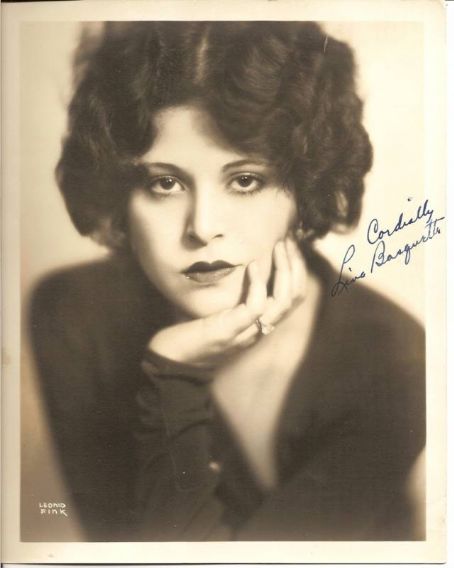
For one thing, he was involved for a while with Sam Warner's widow, Lina Basquette, whom the surviving Warner brothers had branded a "bad mother" and used the press and a pile of money to extort custody of her daughter from her. Despite pressure from his bosses, Talbot refused to break off the liaison, gallantly rising to her defense. For all the good it did. In the end, it was Basquette herself who ended the affair, taking up with another man right there in Talbot's living room while Talbot slept one off in the next room. (What can I say, Basquette liked men and wound up marrying nine of them, although not all at the same time.)
And then he developed a fondness for alcohol—Hollywood was a small town with lots of distractions, and the actors liked to blow off steam in places like the Brown Derby and the Cocoanut Grove. A teetotaler by upbringing, Talbot discovered he enjoyed the buoyant feeling he got from a drink, and with what was likely a genetic predisposition to alcoholism, he started lapping it up and found he couldn't stop. His drinking never prevented him from working, but the tabloid tales of drunken buffoonery didn't help his standing with a studio already worried about the trajectory of his career.
Nor did Talbot endear himself to his paymasters by co-founding the Screen Actors Guild, the first effective union of movie actors. The studios in those days worked their actors like plow horses, starting at 6 a.m., working until 8 p.m.—midnight on Saturdays!—six day a week. Theoretically, the actors got six weeks of vacation annually, but the studios often loaned them out during these stretches, and with no leverage to speak of, the actors had to take it and like it. Talbot was no political firebrand—he was close to apolitical—but like eighteen of the other twenty original founders, he came from a stage background which did have a strong union, and he instinctively rallied to the support of his fellow actors whom he thought of as his family.
But what ultimately derailed Talbot's path to stardom was his lack of that indefinable "it"—the charisma that makes your eyes go to a performer no matter what else was happening on the screen. Talbot was good-looking, but not as startlingly handsome as Robert Taylor; he was a ladies man, but wasn't as charmingly roguish as Clark Gable; he was hard-working but not as manically animated as James Cagney. He was a competent actor (occasionally better than that) and whatever role you asked him to play, he'd learn his lines and do a good job, but he had no edge, no mystery, no intriguing contradictions, and when you get right down to it, there was always somebody at hand who could play it better—thus, he was good enough to land good parts in a handful of good movies, but never great enough to land the great part in a great movie.
He wound up as one of the legion of "oh, yeah, that guy" character actors who filled out cast lists in nearly two hundred movies, and later nearly three hundred episodes of series television.
Warner Brothers dropped Talbot in 1936, and after that the parts he played were more and more forgettable—his best known movies on the downhill slide are probably the ones he made for the notorious Ed Wood, Plan 9 From Outer Space and Glen or Glenda. He had an unexpected Broadway hit during the war in the bedroom farce Separate Rooms, joined the Air Force where he organized entertainment for the troops, made serials (he was film's first Lex Luthor) and then settled into television. He was part of the cast of The Adventures of Ozzie and Harriet, appearing in 72 episodes, and played guest spots on everything from Bonanza to Leave it to Beaver.
In fact, Talbot acted steadily until his retirement in 1987, when he appeared in an episode of Newhart and the movie Amazon Women of the Moon. He died in 1996 at the age of 94. He won no awards, received no nominations, and as far as I know, doesn't even have a star on the sidewalk in the town he called home for decades.
So what makes this biography of a relatively-unknown journeyman so fascinating?
Well, for one thing, Margaret Talbot is a terrific writer—working for the last decade as a staffer at The New Yorker, and before that for The New York Times Magazine and as an editor at The New Republic. She has an easy style that can serve up a memorable line seemingly without effort, such as with this description of pre-Code actress Glenda Farrell: "When she talked fast, as she almost always did, it was like the strident clackety-clack of a typewriter; you half expected her to ring at the end of a sentence."
But more than that, Talbot is only half telling the story of her father. What she's really doing is telling the story of entertainment in America during the 20th century. Her father acted in practically every medium there was—stage, radio, movies, television—and witnessed (and participated in) the development of the concept of "mass media." In telling her father's story, she evokes the Hollywood of the 1930s, New York of the early '40s, television in the '50s and '60s, and perhaps most interesting, the life of the actor living out of a trunk, playing tiny towns all over the American midwest nearly a hundred years ago, a way of life that came to end, ironically, when talkies came in.
She also writes of Lyle as a prime example of what she argues was the transformation of American values from the 19th century's focus on "character" (how one might be perceived in the "eyes of God") to the 20th century's fascination with "personality" (how we sell an image of ourselves to others).
All in all, a terrific story. Highly recommended.
The Entertainer is published by Riverhead Books and hits stores today. To promote the book's publication, the American Film Institute will be showing ten of Lyle Talbot's pre-Code movies at the AFI-Silver in Silver Spring, Maryland, from December 1 thru the 19th. Check listings.
And the memoirs of the children of Hollywood stars are usually worse—distilling into either bitter hatchet jobs or worshipful love notes.
Bleh.
But I couldn't have been more wrong about this one. I was hooked on The Entertainer before I finished the preface and now rank it as one of the best Hollywood memoirs I've ever read.
The Entertainer—the story of Golden Age Hollywood actor Lyle Talbot—reminded me of two truths: first, that you don't have to be famous to be interesting (and vice versa), and second, that acting, like baseball, "may be a religion full of magic, cosmic truth, and the fundamental ontological riddles of our time, but it's also a job." (Bull Durham, in case you don't remember the quote.) Also that the story of Hollywood's evolution from a small company town to the largest purveyor of entertainment in the world—when told as well as it is here—is a fascinating one.
Okay, that's three things.
Lyle Talbot got his first lesson in acting early. Raised by his maternal grandmother in a small Nebraska town shortly after the turn of the century, Talbot routinely got a beating if he didn't shed enough tears over a lock of his dead mother's hair—the mother who had died shortly after Lyle's birth. Bewildered by this remembrance of a woman he'd never known, Talbot soon learned to conjure up the appropriate response even if he didn't quite know why he needed to. But he learned his lesson well, figuring out how to please people and enjoying the positive attention he got when he did.
At fifteen, Talbot left home to live with his father—his grandmother had forbidden a relationship with the man who had knocked-up her teenage daughter and carted her off to Pittsburgh for a quickie marriage—a pivotal moment in the boy's life. His father and his new stepmother were small-time performers, and Talbot joined a world of traveling carnivals, working first as a magician's assistant, then as a "plant" for a hypnotist, pretending to be hypnotized and doing crazy things to warm up the audience.
The two funniest anecdotes in the book make it clear it's a miracle Talbot made the transition to acting at all. Hired on as a bit actor in a traveling theater troupe, Talbot mistimed a staged punch in the very first scene of his very first performance and cold-cocked the star, leading to an early curtain. Only the intervention of the troupe manager's wife—she was sweet on the handsome boy—saved his job.
Years later, in 1932, Warner Brothers invited Talbot to Hollywood for a screen test. By now Talbot was an accomplished stage performer, but he was still wet behind the ears when it came to the internal workings of studio politics. For his screen test, he selected a fast-talking scene from a play he'd done many times, Louder Please, a comedy about a lecherous movie producer. He knew the part cold and had always gotten laughs when he played it on stage, but what he didn't realize was that Louder Please had been written by a disgruntled ex-Warners employee, Norman Krasna, about the studio's boss, Darryl F. Zanuck, a fact everybody in Hollywood but Talbot knew.
Fortunately, Zanuck was in a forgiving mood when he watched the tests the next day—or maybe it's that he had maverick director "Wild Bill" Wellman in tow—and Talbot got a contract.
Being one himself, Wellman loved troublemakers and despite the fact that Talbot was in fact a pretty straight arrow, immediately cast him in three of his movies, Love is a Racket with Douglas Fairbanks, Jr., The Purchase Price with Barbara Stanwyck, and College Coach with Dick Powell and Pat O'Brien.
Like most second tier players in those days, Talbot worked like a dog, making eleven movies in 1932, ten in 1933 and ten more in 1934.
The best of his films was probably Three on a Match, starring Bette Davis, Joan Blondell and Ann Dvorak. One of the fastest and most cynical films of the pre-Code era, Three on a Match packs episodes of drug addiction, adultery, prostitution, blackmail, kidnapping, child neglect, suicide and Bette Davis in her undies into 63 breakneck minutes. Talbot's role as a weak-willed hoodlum who lures a rich housewife into a life of sex, champagne and cocaine was a memorable one.
"I can tell you're a real woman," he tells Dvorak at one point, "not one of those stuffed brassieres you see on Park Avenue."
What woman wouldn't swoon!
He also had good parts in 20,000 Years in Sing Sing opposite Spencer Tracy, Ladies They Talk About (Stanwyck again), and Mary Stevens, M.D. with Kay Francis at the height of her career.
Yet despite a big build-up and favorable notices, Talbot never achieved the stardom the studio had mapped out for him.
For one thing, he was involved for a while with Sam Warner's widow, Lina Basquette, whom the surviving Warner brothers had branded a "bad mother" and used the press and a pile of money to extort custody of her daughter from her. Despite pressure from his bosses, Talbot refused to break off the liaison, gallantly rising to her defense. For all the good it did. In the end, it was Basquette herself who ended the affair, taking up with another man right there in Talbot's living room while Talbot slept one off in the next room. (What can I say, Basquette liked men and wound up marrying nine of them, although not all at the same time.)
And then he developed a fondness for alcohol—Hollywood was a small town with lots of distractions, and the actors liked to blow off steam in places like the Brown Derby and the Cocoanut Grove. A teetotaler by upbringing, Talbot discovered he enjoyed the buoyant feeling he got from a drink, and with what was likely a genetic predisposition to alcoholism, he started lapping it up and found he couldn't stop. His drinking never prevented him from working, but the tabloid tales of drunken buffoonery didn't help his standing with a studio already worried about the trajectory of his career.
Nor did Talbot endear himself to his paymasters by co-founding the Screen Actors Guild, the first effective union of movie actors. The studios in those days worked their actors like plow horses, starting at 6 a.m., working until 8 p.m.—midnight on Saturdays!—six day a week. Theoretically, the actors got six weeks of vacation annually, but the studios often loaned them out during these stretches, and with no leverage to speak of, the actors had to take it and like it. Talbot was no political firebrand—he was close to apolitical—but like eighteen of the other twenty original founders, he came from a stage background which did have a strong union, and he instinctively rallied to the support of his fellow actors whom he thought of as his family.
But what ultimately derailed Talbot's path to stardom was his lack of that indefinable "it"—the charisma that makes your eyes go to a performer no matter what else was happening on the screen. Talbot was good-looking, but not as startlingly handsome as Robert Taylor; he was a ladies man, but wasn't as charmingly roguish as Clark Gable; he was hard-working but not as manically animated as James Cagney. He was a competent actor (occasionally better than that) and whatever role you asked him to play, he'd learn his lines and do a good job, but he had no edge, no mystery, no intriguing contradictions, and when you get right down to it, there was always somebody at hand who could play it better—thus, he was good enough to land good parts in a handful of good movies, but never great enough to land the great part in a great movie.
He wound up as one of the legion of "oh, yeah, that guy" character actors who filled out cast lists in nearly two hundred movies, and later nearly three hundred episodes of series television.
Warner Brothers dropped Talbot in 1936, and after that the parts he played were more and more forgettable—his best known movies on the downhill slide are probably the ones he made for the notorious Ed Wood, Plan 9 From Outer Space and Glen or Glenda. He had an unexpected Broadway hit during the war in the bedroom farce Separate Rooms, joined the Air Force where he organized entertainment for the troops, made serials (he was film's first Lex Luthor) and then settled into television. He was part of the cast of The Adventures of Ozzie and Harriet, appearing in 72 episodes, and played guest spots on everything from Bonanza to Leave it to Beaver.
In fact, Talbot acted steadily until his retirement in 1987, when he appeared in an episode of Newhart and the movie Amazon Women of the Moon. He died in 1996 at the age of 94. He won no awards, received no nominations, and as far as I know, doesn't even have a star on the sidewalk in the town he called home for decades.
So what makes this biography of a relatively-unknown journeyman so fascinating?
Well, for one thing, Margaret Talbot is a terrific writer—working for the last decade as a staffer at The New Yorker, and before that for The New York Times Magazine and as an editor at The New Republic. She has an easy style that can serve up a memorable line seemingly without effort, such as with this description of pre-Code actress Glenda Farrell: "When she talked fast, as she almost always did, it was like the strident clackety-clack of a typewriter; you half expected her to ring at the end of a sentence."
But more than that, Talbot is only half telling the story of her father. What she's really doing is telling the story of entertainment in America during the 20th century. Her father acted in practically every medium there was—stage, radio, movies, television—and witnessed (and participated in) the development of the concept of "mass media." In telling her father's story, she evokes the Hollywood of the 1930s, New York of the early '40s, television in the '50s and '60s, and perhaps most interesting, the life of the actor living out of a trunk, playing tiny towns all over the American midwest nearly a hundred years ago, a way of life that came to end, ironically, when talkies came in.
She also writes of Lyle as a prime example of what she argues was the transformation of American values from the 19th century's focus on "character" (how one might be perceived in the "eyes of God") to the 20th century's fascination with "personality" (how we sell an image of ourselves to others).
All in all, a terrific story. Highly recommended.
The Entertainer is published by Riverhead Books and hits stores today. To promote the book's publication, the American Film Institute will be showing ten of Lyle Talbot's pre-Code movies at the AFI-Silver in Silver Spring, Maryland, from December 1 thru the 19th. Check listings.
Sunday, March 11, 2012
Barbara Boxing
Saturday, February 25, 2012
Barbara Stanwyck Banner #1
Wednesday, February 22, 2012
Looking Ahead: Monty's March Madness Favorite Actress Tournament #3
A look ahead at the Monty's March Madness Favorite Actress Tournament, part of which we'll be hosting here at the Monkey.
Voting begins March 5.
Barbara Stanwyck
Birth Name: Ruby Catherine Stevens
Tourney Bracket and Seeding: "Tough Broads and Pre-Code Babes" #1
Birth Date: July 16, 1907
Birthplace: Brooklyn, New York
Height: 5' 5"
Film Debut: Broadway Nights (1927)
Academy Awards: 4 nominations, honorary Oscar (1982)
Katie Awards: Best Actress (Comedy/Musical) (1941) (Ball of Fire and The Lady Eve) and Best Actress (Drama) (1944) (Double Indemnity)
Three More To See: The Bitter Tea of General Yen, Baby Face, Sorry, Wrong Number
versus
Miriam Hopkins
Birth Name: Ellen Miriam Hopkins
Tourney Bracket and Seeding: "Tough Broads and Pre-Code Babes" #8
Birth Date: October 18, 1902
Birthplace: Savannah, Georgia
Height: 5' 2"
Film Debut: The Home Girl (1928)
Academy Awards: 1 nomination
Katie Awards: Best Supporting Actress (1931-32) (The Smiling Lieutenant and Dr. Jekyll and Mr. Hyde)
Three More To See: Trouble in Paradise, The Story of Temple Drake, Design for Living
The winner of this match-up will face the winner of:
Claudette Colbert
Birth Name: Emilie Claudette Chauchoin
Tourney Bracket and Seeding: "Tough Broads and Pre-Code Babes" #4
Birth Date: September 13, 1903
Birthplace: Saint-Mandé, France
Height: 5' 4½"
Film Debut: For the Love of Mike (1927)
Academy Awards: 3 nominations, 1 win (Best Actress, 1934) (It Happened One Night)
Three More To See: Imitation of Life, Midnight, The Palm Beach Story
versus
Mary Astor
Birth Name: Lucile Vasconcellos Langhanke
Tourney Bracket and Seeding: "Tough Broads and Pre-Code Babes" #5
Birth Date: May 3, 1906
Birthplace: Quincy, Illinois
Height: 5' 6"
Film Debut: Bullets or Ballots (1921)
Academy Awards: 1 win (Best Supporting Actress, 1941) (The Great Lie)
Katie Awards: Best Supporting Actress (1941) (The Great Lie and The Maltese Falcon)
Three More To See: Red Dust, Dodsworth, The Palm Beach Story
Voting begins March 5.
Barbara Stanwyck
Birth Name: Ruby Catherine StevensTourney Bracket and Seeding: "Tough Broads and Pre-Code Babes" #1
Birth Date: July 16, 1907
Birthplace: Brooklyn, New York
Height: 5' 5"
Film Debut: Broadway Nights (1927)
Academy Awards: 4 nominations, honorary Oscar (1982)
Katie Awards: Best Actress (Comedy/Musical) (1941) (Ball of Fire and The Lady Eve) and Best Actress (Drama) (1944) (Double Indemnity)
Three More To See: The Bitter Tea of General Yen, Baby Face, Sorry, Wrong Number
versus
Miriam Hopkins
Birth Name: Ellen Miriam HopkinsTourney Bracket and Seeding: "Tough Broads and Pre-Code Babes" #8
Birth Date: October 18, 1902
Birthplace: Savannah, Georgia
Height: 5' 2"
Film Debut: The Home Girl (1928)
Academy Awards: 1 nomination
Katie Awards: Best Supporting Actress (1931-32) (The Smiling Lieutenant and Dr. Jekyll and Mr. Hyde)
Three More To See: Trouble in Paradise, The Story of Temple Drake, Design for Living
The winner of this match-up will face the winner of:
Claudette Colbert
Birth Name: Emilie Claudette ChauchoinTourney Bracket and Seeding: "Tough Broads and Pre-Code Babes" #4
Birth Date: September 13, 1903
Birthplace: Saint-Mandé, France
Height: 5' 4½"
Film Debut: For the Love of Mike (1927)
Academy Awards: 3 nominations, 1 win (Best Actress, 1934) (It Happened One Night)
Three More To See: Imitation of Life, Midnight, The Palm Beach Story
versus
Mary Astor
Birth Name: Lucile Vasconcellos LanghankeTourney Bracket and Seeding: "Tough Broads and Pre-Code Babes" #5
Birth Date: May 3, 1906
Birthplace: Quincy, Illinois
Height: 5' 6"
Film Debut: Bullets or Ballots (1921)
Academy Awards: 1 win (Best Supporting Actress, 1941) (The Great Lie)
Katie Awards: Best Supporting Actress (1941) (The Great Lie and The Maltese Falcon)
Three More To See: Red Dust, Dodsworth, The Palm Beach Story
Subscribe to:
Posts (Atom)