skip to main |
skip to sidebar
We've been on a bit of a Lyle Talbot kick here at the Monkey lately, reviewing (and recommending) his daughter Margaret's very fine book The Entertainer: Movies, Magic and My Father's Twentieth Century, and driving down to the AFI-Silver last weekend to see Three on a Match, the best of Talbot's pre-Code movies.
With another Lyle Talbot double feature on tap this weekend, Katie-Bar-The-Door and I returned to the AFI, this time for a pair of films in which he co-starred with the great Barbara Stanwyck.
The Purchase Price was the second of three movies Talbot made for director Wild Bill Wellman, who as much as anybody championed Talbot's early career in Hollywood. In this one, Talbot is a bootlegger who has been "playing house" with nightclub chanteuse Stanwyck. She's had enough, he hasn't, and with his hired underlings hot on her trail, she hides out by selling herself as a mail-order bride. When she gets off the train in North Dakota or Wyoming or wherever, she finds farmer George Brent waiting for her, and bang-o, they're married. Only they get off on the wrong foot and even though she's soon enough eager to climb into his bed, Brent spends all his time sleeping on the floor.
Complications ensue in the form of snow, sleazy bank managers and a randy local string-puller who proves that no matter how small the pond is, there's always a bigger fish eager to eat the small fry.
With plenty of Wellmanesque touches—drunks, rough humor, and fist fights—it's all fun enough and fast enough to smooth over the abrupt about-faces in character motivations this 68-minute Warner Brothers feature treats us to.
Less comprehensible are Stanwyck's feelings in the bottom half of the double bill, Ladies They Talk About.
The story is simple enough. Stanwyck gets caught helping boyfriend Lyle pull a bank job and winds up serving two-to-five in San Quentin, but the twists and turns in the subsequent love story—"I love you I hate you I love you I shot you let's get married!"—happen so fast and for no apparent reason that even filmgoers as forgiving as Katie and I found ourselves looking at each other in bemused befuddlement.
Warner movies of this era were very short, typically clocking in around 65 minutes and moving at such a breakneck pace that even studio executives worried they were shortchanging their audience. In this case, co-directors Howard Bretherton and William Keighley stripped away every ounce of context and exposition, leaving nothing for the audience to hang its emotional hat on. Add in a women's prison that's more fun than a college sorority house and the goofiest prison break in movie history and you've got yourself a drama that inadvertently veers into camp.
Of the two films, The Purchase Price is the better showcase for Lyle Talbot's talents. For a would-be gangster/stalker, he's friendly, forgiving and generous to a fault, and quite frankly, I thought he was a better match for Stanwyck than George Brent was. Pity Wellman didn't think to swap the roles, but this was only Talbot's third movie at Warners and Brent was the more established of the two.
That's the way it always seemed to go in Talbot's career—a missed chance here, a bit of typecasting there, and his star was falling almost before it had had a chance to rise. The road to journeyman actor is inevitably paved with coulda shoulda woulda's. But hey, he worked with Barbara Stanwyck, not once but twice. That puts him way up on the rest of us.
As I mentioned earlier in the week, the author of The Entertainer: Movies, Magic and My Father's Twentieth Century, Margaret Talbot, was at the AFI-Silver Saturday to introduce the pre-Code film Three on a Match, starring Joan Blondell, Ann Dvorak, Bette Davis, and Margaret's own father, Lyle.
The film is a terrific little example of a Warner Brothers-style pre-Code film, 63 lightning-quick minutes of gangsters, booze, drugs, fast women and actresses in their skivvies (here, Bette Davis rather than Joan Blondell, who must have been grateful to keep her clothes on for once). (By the way, it occurred to me, after watching Davis rolling on a pair of stockings on a screen thirty feet high, to do a Pre-Code Stocking Stuffers piece in a few days. I guarantee you, if you want to make Junior happy for the holidays, give him a couple of pre-Code movies—that'll keep him busy.)
Afterwards, Margaret Talbot talked about her book, her father and the history of entertainment from the 1910s to the 1960s. She's just as interesting in person as she is on paper—how rare is that?
Normally, I wouldn't pester someone at a public appearance, but since she actually dropped by the comment section and made me swear I would, well, what was I going to do? I'm as compulsively honest as Abe Lincoln and the only promise I've ever willingly broken is the one to finish writing this blog.
Not only was Margaret Talbot kind and gracious—not surprising, if you've read the book—but it also turns out she's a faithful reader of the Mythical Monkey!
Which did take me by surprise. I confess that, Katie-Bar-The-Door notwithstanding, I think of myself as writing this blog for an audience of one—my dog, Angie, off whom I bounce ideas as we walk two miles in the morning and another two in the evening. She never comments, but I'll bet she knows more about silent movies than any other canine on the east coast.
I guess this means I need to start paying a bit more attention, huh. (Looking for a quick entree into the Mythical Monkey? Click here and here.)
For my part, you'll be glad to know that upon meeting Margaret, the Monkey was as smooth as a schoolboy who's just turned a corner and run headlong into the homecoming queen. "English second language my is! Also only language!"
Did I really used to litigate in federal court? No, you must mean two other Monkeys.
Of course we didn't have a camera, and my cellphone is so old, you have to crank a handle and ask for Sara at the switchboard, so I have photo-shopped the encounter for you. That's me on the left.
It was nice to meet you yesterday, Margaret (do you mind if I call you "Ms. Talbot"?)—and let's do get together for that drink. I'll take a refresher course in English by then, I promise.
(Read the latest from Margaret Talbot, a piece for the Wall Street Journal, here.)
Margaret Talbot, author of The Entertainer: Movies, Magic and My Father's Twentieth Century, will be introducing the best of her father Lyle Talbot's films at the AFI-Silver on Saturday.
Three on a Match is the story of three classmates—bad girl Joan Blondell, good girl Bette Davis, and rich girl Ann Dvorak—who meet three very different fates. A pre-Code classic, Three on a Match packs episodes of drug addiction, adultery, prostitution, blackmail, kidnapping, child neglect, suicide and Bette Davis in her undies into 63 breakneck minutes. It also features the best performance of Lyle Talbot's career as a weak-willed hoodlum who invites Dvorak to take a walk on the wild side.
Great stuff.
The show starts at 4 pm this Saturday, December 1, 2012, at the AFI-Silver in Silver Spring, Maryland.
Don't know yet whether I'll be in attendance—I'm actually typing this post three weeks in advance—but I can't imagine I'll introduce myself to Margaret Talbot even if I do attend. The Monkey don't schmooze!
I have to admit, when the galley proof of The Entertainer: Movies, Magic and My Father's Twentieth Century by Margaret Talbot arrived in the mail, I had my doubts. Hollywood memoirs are an uneven lot at best, often badly-written tales told by professional raconteurs, blabbermouths, axe-grinders, apologists, sex fiends and fantasists, only rarely amounting to more than 200 pages of time-marking windbaggery designed to collect an advance check and nothing more.
And the memoirs of the children of Hollywood stars are usually worse—distilling into either bitter hatchet jobs or worshipful love notes.
Bleh.
But I couldn't have been more wrong about this one. I was hooked on The Entertainer before I finished the preface and now rank it as one of the best Hollywood memoirs I've ever read.
The Entertainer—the story of Golden Age Hollywood actor Lyle Talbot—reminded me of two truths: first, that you don't have to be famous to be interesting (and vice versa), and second, that acting, like baseball, "may be a religion full of magic, cosmic truth, and the fundamental ontological riddles of our time, but it's also a job." (Bull Durham, in case you don't remember the quote.) Also that the story of Hollywood's evolution from a small company town to the largest purveyor of entertainment in the world—when told as well as it is here—is a fascinating one.
Okay, that's three things.
Lyle Talbot got his first lesson in acting early. Raised by his maternal grandmother in a small Nebraska town shortly after the turn of the century, Talbot routinely got a beating if he didn't shed enough tears over a lock of his dead mother's hair—the mother who had died shortly after Lyle's birth. Bewildered by this remembrance of a woman he'd never known, Talbot soon learned to conjure up the appropriate response even if he didn't quite know why he needed to. But he learned his lesson well, figuring out how to please people and enjoying the positive attention he got when he did.
At fifteen, Talbot left home to live with his father—his grandmother had forbidden a relationship with the man who had knocked-up her teenage daughter and carted her off to Pittsburgh for a quickie marriage—a pivotal moment in the boy's life. His father and his new stepmother were small-time performers, and Talbot joined a world of traveling carnivals, working first as a magician's assistant, then as a "plant" for a hypnotist, pretending to be hypnotized and doing crazy things to warm up the audience.
The two funniest anecdotes in the book make it clear it's a miracle Talbot made the transition to acting at all. Hired on as a bit actor in a traveling theater troupe, Talbot mistimed a staged punch in the very first scene of his very first performance and cold-cocked the star, leading to an early curtain. Only the intervention of the troupe manager's wife—she was sweet on the handsome boy—saved his job.
Years later, in 1932, Warner Brothers invited Talbot to Hollywood for a screen test. By now Talbot was an accomplished stage performer, but he was still wet behind the ears when it came to the internal workings of studio politics. For his screen test, he selected a fast-talking scene from a play he'd done many times, Louder Please, a comedy about a lecherous movie producer. He knew the part cold and had always gotten laughs when he played it on stage, but what he didn't realize was that Louder Please had been written by a disgruntled ex-Warners employee, Norman Krasna, about the studio's boss, Darryl F. Zanuck, a fact everybody in Hollywood but Talbot knew.
Fortunately, Zanuck was in a forgiving mood when he watched the tests the next day—or maybe it's that he had maverick director "Wild Bill" Wellman in tow—and Talbot got a contract.
Being one himself, Wellman loved troublemakers and despite the fact that Talbot was in fact a pretty straight arrow, immediately cast him in three of his movies, Love is a Racket with Douglas Fairbanks, Jr., The Purchase Price with Barbara Stanwyck, and College Coach with Dick Powell and Pat O'Brien.
Like most second tier players in those days, Talbot worked like a dog, making eleven movies in 1932, ten in 1933 and ten more in 1934.
The best of his films was probably Three on a Match, starring Bette Davis, Joan Blondell and Ann Dvorak. One of the fastest and most cynical films of the pre-Code era, Three on a Match packs episodes of drug addiction, adultery, prostitution, blackmail, kidnapping, child neglect, suicide and Bette Davis in her undies into 63 breakneck minutes. Talbot's role as a weak-willed hoodlum who lures a rich housewife into a life of sex, champagne and cocaine was a memorable one.
"I can tell you're a real woman," he tells Dvorak at one point, "not one of those stuffed brassieres you see on Park Avenue."
What woman wouldn't swoon!
He also had good parts in 20,000 Years in Sing Sing opposite Spencer Tracy, Ladies They Talk About (Stanwyck again), and Mary Stevens, M.D. with Kay Francis at the height of her career.
Yet despite a big build-up and favorable notices, Talbot never achieved the stardom the studio had mapped out for him.
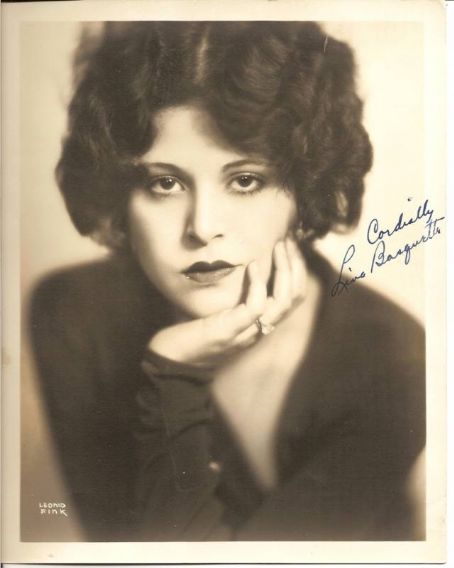
For one thing, he was involved for a while with Sam Warner's widow, Lina Basquette, whom the surviving Warner brothers had branded a "bad mother" and used the press and a pile of money to extort custody of her daughter from her. Despite pressure from his bosses, Talbot refused to break off the liaison, gallantly rising to her defense. For all the good it did. In the end, it was Basquette herself who ended the affair, taking up with another man right there in Talbot's living room while Talbot slept one off in the next room. (What can I say, Basquette liked men and wound up marrying nine of them, although not all at the same time.)
And then he developed a fondness for alcohol—Hollywood was a small town with lots of distractions, and the actors liked to blow off steam in places like the Brown Derby and the Cocoanut Grove. A teetotaler by upbringing, Talbot discovered he enjoyed the buoyant feeling he got from a drink, and with what was likely a genetic predisposition to alcoholism, he started lapping it up and found he couldn't stop. His drinking never prevented him from working, but the tabloid tales of drunken buffoonery didn't help his standing with a studio already worried about the trajectory of his career.
Nor did Talbot endear himself to his paymasters by co-founding the Screen Actors Guild, the first effective union of movie actors. The studios in those days worked their actors like plow horses, starting at 6 a.m., working until 8 p.m.—midnight on Saturdays!—six day a week. Theoretically, the actors got six weeks of vacation annually, but the studios often loaned them out during these stretches, and with no leverage to speak of, the actors had to take it and like it. Talbot was no political firebrand—he was close to apolitical—but like eighteen of the other twenty original founders, he came from a stage background which did have a strong union, and he instinctively rallied to the support of his fellow actors whom he thought of as his family.
But what ultimately derailed Talbot's path to stardom was his lack of that indefinable "it"—the charisma that makes your eyes go to a performer no matter what else was happening on the screen. Talbot was good-looking, but not as startlingly handsome as Robert Taylor; he was a ladies man, but wasn't as charmingly roguish as Clark Gable; he was hard-working but not as manically animated as James Cagney. He was a competent actor (occasionally better than that) and whatever role you asked him to play, he'd learn his lines and do a good job, but he had no edge, no mystery, no intriguing contradictions, and when you get right down to it, there was always somebody at hand who could play it better—thus, he was good enough to land good parts in a handful of good movies, but never great enough to land the great part in a great movie.
He wound up as one of the legion of "oh, yeah, that guy" character actors who filled out cast lists in nearly two hundred movies, and later nearly three hundred episodes of series television.
Warner Brothers dropped Talbot in 1936, and after that the parts he played were more and more forgettable—his best known movies on the downhill slide are probably the ones he made for the notorious Ed Wood, Plan 9 From Outer Space and Glen or Glenda. He had an unexpected Broadway hit during the war in the bedroom farce Separate Rooms, joined the Air Force where he organized entertainment for the troops, made serials (he was film's first Lex Luthor) and then settled into television. He was part of the cast of The Adventures of Ozzie and Harriet, appearing in 72 episodes, and played guest spots on everything from Bonanza to Leave it to Beaver.
In fact, Talbot acted steadily until his retirement in 1987, when he appeared in an episode of Newhart and the movie Amazon Women of the Moon. He died in 1996 at the age of 94. He won no awards, received no nominations, and as far as I know, doesn't even have a star on the sidewalk in the town he called home for decades.
So what makes this biography of a relatively-unknown journeyman so fascinating?
Well, for one thing, Margaret Talbot is a terrific writer—working for the last decade as a staffer at The New Yorker, and before that for The New York Times Magazine and as an editor at The New Republic. She has an easy style that can serve up a memorable line seemingly without effort, such as with this description of pre-Code actress Glenda Farrell: "When she talked fast, as she almost always did, it was like the strident clackety-clack of a typewriter; you half expected her to ring at the end of a sentence."
But more than that, Talbot is only half telling the story of her father. What she's really doing is telling the story of entertainment in America during the 20th century. Her father acted in practically every medium there was—stage, radio, movies, television—and witnessed (and participated in) the development of the concept of "mass media." In telling her father's story, she evokes the Hollywood of the 1930s, New York of the early '40s, television in the '50s and '60s, and perhaps most interesting, the life of the actor living out of a trunk, playing tiny towns all over the American midwest nearly a hundred years ago, a way of life that came to end, ironically, when talkies came in.
She also writes of Lyle as a prime example of what she argues was the transformation of American values from the 19th century's focus on "character" (how one might be perceived in the "eyes of God") to the 20th century's fascination with "personality" (how we sell an image of ourselves to others).
All in all, a terrific story. Highly recommended.
The Entertainer is published by Riverhead Books and hits stores today. To promote the book's publication, the American Film Institute will be showing ten of Lyle Talbot's pre-Code movies at the AFI-Silver in Silver Spring, Maryland, from December 1 thru the 19th. Check listings.









 Posts

