Three on a Match is the story of three classmates—bad girl Joan Blondell, good girl Bette Davis, and rich girl Ann Dvorak—who meet three very different fates. A pre-Code classic, Three on a Match packs episodes of drug addiction, adultery, prostitution, blackmail, kidnapping, child neglect, suicide and Bette Davis in her undies into 63 breakneck minutes. It also features the best performance of Lyle Talbot's career as a weak-willed hoodlum who invites Dvorak to take a walk on the wild side.
Great stuff.
The show starts at 4 pm this Saturday, December 1, 2012, at the AFI-Silver in Silver Spring, Maryland.
Don't know yet whether I'll be in attendance—I'm actually typing this post three weeks in advance—but I can't imagine I'll introduce myself to Margaret Talbot even if I do attend. The Monkey don't schmooze!
I have to admit, when the galley proof of The Entertainer: Movies, Magic and My Father's Twentieth Century by Margaret Talbot arrived in the mail, I had my doubts. Hollywood memoirs are an uneven lot at best, often badly-written tales told by professional raconteurs, blabbermouths, axe-grinders, apologists, sex fiends and fantasists, only rarely amounting to more than 200 pages of time-marking windbaggery designed to collect an advance check and nothing more.
And the memoirs of the children of Hollywood stars are usually worse—distilling into either bitter hatchet jobs or worshipful love notes.
Bleh.
But I couldn't have been more wrong about this one. I was hooked on The Entertainer before I finished the preface and now rank it as one of the best Hollywood memoirs I've ever read.
The Entertainer—the story of Golden Age Hollywood actor Lyle Talbot—reminded me of two truths: first, that you don't have to be famous to be interesting (and vice versa), and second, that acting, like baseball, "may be a religion full of magic, cosmic truth, and the fundamental ontological riddles of our time, but it's also a job." (Bull Durham, in case you don't remember the quote.) Also that the story of Hollywood's evolution from a small company town to the largest purveyor of entertainment in the world—when told as well as it is here—is a fascinating one.
Okay, that's three things.
Lyle Talbot got his first lesson in acting early. Raised by his maternal grandmother in a small Nebraska town shortly after the turn of the century, Talbot routinely got a beating if he didn't shed enough tears over a lock of his dead mother's hair—the mother who had died shortly after Lyle's birth. Bewildered by this remembrance of a woman he'd never known, Talbot soon learned to conjure up the appropriate response even if he didn't quite know why he needed to. But he learned his lesson well, figuring out how to please people and enjoying the positive attention he got when he did.
At fifteen, Talbot left home to live with his father—his grandmother had forbidden a relationship with the man who had knocked-up her teenage daughter and carted her off to Pittsburgh for a quickie marriage—a pivotal moment in the boy's life. His father and his new stepmother were small-time performers, and Talbot joined a world of traveling carnivals, working first as a magician's assistant, then as a "plant" for a hypnotist, pretending to be hypnotized and doing crazy things to warm up the audience.
The two funniest anecdotes in the book make it clear it's a miracle Talbot made the transition to acting at all. Hired on as a bit actor in a traveling theater troupe, Talbot mistimed a staged punch in the very first scene of his very first performance and cold-cocked the star, leading to an early curtain. Only the intervention of the troupe manager's wife—she was sweet on the handsome boy—saved his job.
Years later, in 1932, Warner Brothers invited Talbot to Hollywood for a screen test. By now Talbot was an accomplished stage performer, but he was still wet behind the ears when it came to the internal workings of studio politics. For his screen test, he selected a fast-talking scene from a play he'd done many times, Louder Please, a comedy about a lecherous movie producer. He knew the part cold and had always gotten laughs when he played it on stage, but what he didn't realize was that Louder Please had been written by a disgruntled ex-Warners employee, Norman Krasna, about the studio's boss, Darryl F. Zanuck, a fact everybody in Hollywood but Talbot knew.
Fortunately, Zanuck was in a forgiving mood when he watched the tests the next day—or maybe it's that he had maverick director "Wild Bill" Wellman in tow—and Talbot got a contract.
Being one himself, Wellman loved troublemakers and despite the fact that Talbot was in fact a pretty straight arrow, immediately cast him in three of his movies, Love is a Racket with Douglas Fairbanks, Jr., The Purchase Price with Barbara Stanwyck, and College Coach with Dick Powell and Pat O'Brien.
Like most second tier players in those days, Talbot worked like a dog, making eleven movies in 1932, ten in 1933 and ten more in 1934.
The best of his films was probably Three on a Match, starring Bette Davis, Joan Blondell and Ann Dvorak. One of the fastest and most cynical films of the pre-Code era, Three on a Match packs episodes of drug addiction, adultery, prostitution, blackmail, kidnapping, child neglect, suicide and Bette Davis in her undies into 63 breakneck minutes. Talbot's role as a weak-willed hoodlum who lures a rich housewife into a life of sex, champagne and cocaine was a memorable one.
"I can tell you're a real woman," he tells Dvorak at one point, "not one of those stuffed brassieres you see on Park Avenue."
What woman wouldn't swoon!
He also had good parts in 20,000 Years in Sing Sing opposite Spencer Tracy, Ladies They Talk About (Stanwyck again), and Mary Stevens, M.D. with Kay Francis at the height of her career.
Yet despite a big build-up and favorable notices, Talbot never achieved the stardom the studio had mapped out for him.
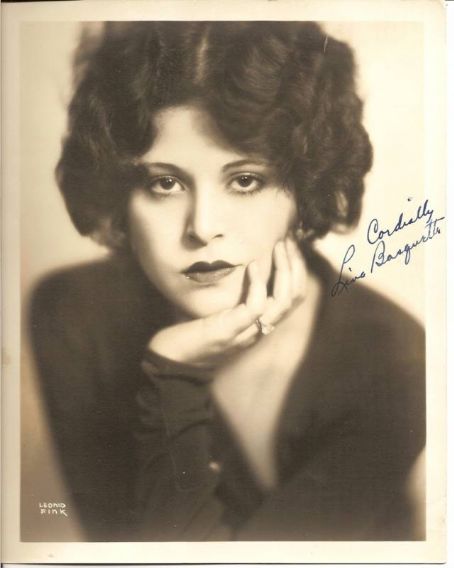
For one thing, he was involved for a while with Sam Warner's widow, Lina Basquette, whom the surviving Warner brothers had branded a "bad mother" and used the press and a pile of money to extort custody of her daughter from her. Despite pressure from his bosses, Talbot refused to break off the liaison, gallantly rising to her defense. For all the good it did. In the end, it was Basquette herself who ended the affair, taking up with another man right there in Talbot's living room while Talbot slept one off in the next room. (What can I say, Basquette liked men and wound up marrying nine of them, although not all at the same time.)
And then he developed a fondness for alcohol—Hollywood was a small town with lots of distractions, and the actors liked to blow off steam in places like the Brown Derby and the Cocoanut Grove. A teetotaler by upbringing, Talbot discovered he enjoyed the buoyant feeling he got from a drink, and with what was likely a genetic predisposition to alcoholism, he started lapping it up and found he couldn't stop. His drinking never prevented him from working, but the tabloid tales of drunken buffoonery didn't help his standing with a studio already worried about the trajectory of his career.
Nor did Talbot endear himself to his paymasters by co-founding the Screen Actors Guild, the first effective union of movie actors. The studios in those days worked their actors like plow horses, starting at 6 a.m., working until 8 p.m.—midnight on Saturdays!—six day a week. Theoretically, the actors got six weeks of vacation annually, but the studios often loaned them out during these stretches, and with no leverage to speak of, the actors had to take it and like it. Talbot was no political firebrand—he was close to apolitical—but like eighteen of the other twenty original founders, he came from a stage background which did have a strong union, and he instinctively rallied to the support of his fellow actors whom he thought of as his family.
But what ultimately derailed Talbot's path to stardom was his lack of that indefinable "it"—the charisma that makes your eyes go to a performer no matter what else was happening on the screen. Talbot was good-looking, but not as startlingly handsome as Robert Taylor; he was a ladies man, but wasn't as charmingly roguish as Clark Gable; he was hard-working but not as manically animated as James Cagney. He was a competent actor (occasionally better than that) and whatever role you asked him to play, he'd learn his lines and do a good job, but he had no edge, no mystery, no intriguing contradictions, and when you get right down to it, there was always somebody at hand who could play it better—thus, he was good enough to land good parts in a handful of good movies, but never great enough to land the great part in a great movie.
He wound up as one of the legion of "oh, yeah, that guy" character actors who filled out cast lists in nearly two hundred movies, and later nearly three hundred episodes of series television.
Warner Brothers dropped Talbot in 1936, and after that the parts he played were more and more forgettable—his best known movies on the downhill slide are probably the ones he made for the notorious Ed Wood, Plan 9 From Outer Space and Glen or Glenda. He had an unexpected Broadway hit during the war in the bedroom farce Separate Rooms, joined the Air Force where he organized entertainment for the troops, made serials (he was film's first Lex Luthor) and then settled into television. He was part of the cast of The Adventures of Ozzie and Harriet, appearing in 72 episodes, and played guest spots on everything from Bonanza to Leave it to Beaver.
In fact, Talbot acted steadily until his retirement in 1987, when he appeared in an episode of Newhart and the movie Amazon Women of the Moon. He died in 1996 at the age of 94. He won no awards, received no nominations, and as far as I know, doesn't even have a star on the sidewalk in the town he called home for decades.
So what makes this biography of a relatively-unknown journeyman so fascinating?
Well, for one thing, Margaret Talbot is a terrific writer—working for the last decade as a staffer at The New Yorker, and before that for The New York Times Magazine and as an editor at The New Republic. She has an easy style that can serve up a memorable line seemingly without effort, such as with this description of pre-Code actress Glenda Farrell: "When she talked fast, as she almost always did, it was like the strident clackety-clack of a typewriter; you half expected her to ring at the end of a sentence."
But more than that, Talbot is only half telling the story of her father. What she's really doing is telling the story of entertainment in America during the 20th century. Her father acted in practically every medium there was—stage, radio, movies, television—and witnessed (and participated in) the development of the concept of "mass media." In telling her father's story, she evokes the Hollywood of the 1930s, New York of the early '40s, television in the '50s and '60s, and perhaps most interesting, the life of the actor living out of a trunk, playing tiny towns all over the American midwest nearly a hundred years ago, a way of life that came to end, ironically, when talkies came in.
She also writes of Lyle as a prime example of what she argues was the transformation of American values from the 19th century's focus on "character" (how one might be perceived in the "eyes of God") to the 20th century's fascination with "personality" (how we sell an image of ourselves to others).
All in all, a terrific story. Highly recommended.
The Entertainer is published by Riverhead Books and hits stores today. To promote the book's publication, the American Film Institute will be showing ten of Lyle Talbot's pre-Code movies at the AFI-Silver in Silver Spring, Maryland, from December 1 thru the 19th. Check listings.
[To read Part One, click here. To read Part Two, click here.]
III. Tabloid Cinema At Its Best Scarface premiered in New Orleans, Louisiana, on March 31, 1932, two years after Howard Hughes had acquired the film rights to the story. Denied a proper release thanks to the interference of the Hays Office, the National Board of Review and other state and local censorship boards, the movie played where it could.
Even in its compromised form, though, Scarface was the toughest, most violent picture of its era, boasting twenty-eight deaths (with more off screen), drive-by shootings, bombings, numerous car crashes, and for those lucky enough to see the original ending, a shootout worthy of a more modern movie. It's also credited with being the first picture to show a gangster using a machine gun and it gave us George Raft and his oft-parodied coin-flipping gangster routine.
Scarface is the story of Tony Camonte (Paul Muni), a vicious, small-time thug determined to take what he wants, and what he wants (in the words of Key Largo's Johnny Rocco) is "more." As the movie begins, Tony is working as hired muscle for Johnny Lovo (Osgood Perkins), a Chicago gangster who is tired of waiting in line behind Big Louie Costillo who has grown fat, happy and complacent after years of running Chicago's South Side. After removing Big Louie and taking over his operation, Lovo mistakenly believes he can handle Tony, aiming him like a tommy gun when he needs him, putting him away again when he's served his purpose.
But Tony is a sociopath unable to control his impulses or reign in his appetites. "Some day I'm gonna run the whole works," he boasts. "In this business there's only one law you gotta follow to keep out of trouble: Do it first, do it yourself, and keep on doing it." His ferocity gets Lovo embroiled in a gang war he's not ready for and eventually Tony also tires of waiting in line behind a mob boss he feels has grown fat, happy and complacent, wresting control from Lovo in a bloody confrontation.
Meanwhile, Tony's sister Cesca (Ann Dvorak) falls in love with Tony's best friend and partner in crime, Guino Rinaldo (George Raft), a development as dangerous for the would-be lovers as a gang war is for everybody else—Tony is in love with his sister and will allow no one, not even his best friend, to get close to her.
Predictably, Tony's lack of self-control leads to his downfall. "Someday you're gonna stumble and fall down in the gutter," a police detective tells him, "right where the horses have been standing, right where you belong." And you just know he's right. (If Ben Hecht didn't write that line, I'll eat the movie.) While typically Hawks's dramas focus on a man aware of his limitations as he runs smack up against a nearly-impossible task, Tony Camonte might be the least self-aware man Hawks ever spent time studying and his lack of self-awareness proves to be his Achilles heel.
The result is one of Howard Hawks's best movies, to my mind the first indispensable movie of his long career. The storytelling is taut, the action intense and well-staged. The camerawork is some of the most involved of his career, for example, using an uninterrupted tracking shot to open the movie in a style reminiscent of the silent opening of Rio Bravo.
Without calling attention to itself in the way, say, the opening of Orson Welles's Touch of Evil does, the shot establishes the ethnicity of the main characters, their buffoonish pretensions and tragic fall, Tony Camonte's treachery and the reluctance of a witness to get involved, all while creating an air of suspense that literally pulls the audience into the story.
Hawks was also beginning to experiment with faster-paced dialogue—twenty percent faster than anything he'd done before, he later said. Although it would be another two years before he began to experiment with overlapping dialogue and rapid-fire delivery in the screwball comedy Twentieth Century, a style that would characterized so many of his later films, the speed and fluidity of Scarface is a welcome relief from the static and stagy efforts of so many of his contemporaries.
Which is not to say that Scarface is a perfect movie. The constant moral- izing of police- men, reporters and politicians is clumsily written, repetitive and tiresome (blame the Hays Office, assistant director Richard Rosson and writer John Lee Mahin). The film's attempts at humor from Tony's illiterate secretary Angelo (Vince Barnett) are too broad for a movie this serious. Further, some have criticized Muni's performance in the title role—writer Ben Hecht who had himself recommended Muni for the part later complained, "He was a make-believe tough guy. You think he's a menace, but he doesn't do anything." (I myself have nominated Muni for a best actor award, so obviously I disagree; but it's a matter of taste.)
And those looking for Hawks's signature elements—male comradery, stoicism in the face of danger, and smart, independent women—will not find them here. What we today think of as a Howard Hawks movie was still a few years up the road.
Still, for all its flaws, Scarface is the best gangster movie of the early sound era and arguably the best gangster movie made before The Godfather in 1972.
It may also be the least glamorous look at crime before Martin Scorsese's Goodfellas. Without The Public Enemy's back story to explain away violent behavior (criminals are made, that film suggests, rather than born), without James Cagney's gleeful energy, Edward G. Robinson's genuine menace, or Clark Gable's roguish sexuality, the portrait of criminals presented in Scarface is of dull-witted buffoons and incestuous sociopaths. The violence may have been thrilling, but I can't imagine anyone walking out of the theater thinking, "Gee, I wish I were Tony Camonte."
Despite favorable reviews and strong box office in those theaters where it played, Scarface received no awards and no nominations. Hughes ultimately withdrew the picture from circulation and except for bootleg copies, it wasn't seen again until 1980.
Of the major participants, Hawks went on to become one of the most acclaimed directors in Hollywood history, giving us such gems as Rio Bravo, Red River, His Girl Friday, Bringing Up Baby, Gentlemen Prefer Blondes, To Have and Have Not, The Big Sleep and many more. Howard Hughes, as fans of Martin Scorsese already know, was primarily interested in aviation, but he did produce twenty-six movies, including The Outlaw which in 1943 introduced Jane Russell's bosom to a grateful movie-going public. Paul Muni went on to become one of Hollywood's biggest names, earning six Oscar nominations, winning for The Story of Louis Pasteur. Ann Dvorak on the other hand, got into a contract dispute with Warner Brothers and despite a brief flurry of good movies in the early '30s, wound up making B-pictures until her retirement in 1952. (You can read more about her at Operator 99's blog "Allure.") George Raft had a long career playing gangsters and tough guys but he also had an uncanny ability to turn down good parts, rejecting the lead roles in High Sierra, The Maltese Falcon and Double Indemnity.
As for the authors of the screenplay, Ben Hecht was nominated for six Oscars during his career, winning two, for Underworld and The Scoundrel, though his best known work now is probably the screenplay for the Alfred Hitchcock classic, Notorious.
W.R. Burnett continued to work as a screenwriter and novelist, earning an Oscar nomination for 1942's Wake Island. Along with fellow novelist James Clavell, he also co-wrote the screenplay for The Great Escape in 1963.
Seton I. Miller went on to write sixty-nine movies, including the original screenplay for The Adventures of Robin Hood, and shared the Oscar for Here Comes Mr. Jordan with Sidney Buchman.
John Lee Mahin most often worked with director Victor Fleming (he of Gone With The Wind), contributing to ten of Fleming's movies. Mahin helped found the Screen Writers Guild, but opposed his co-founders' leftist politics and joined the Screen Playwrights instead. He was later an outspoken critic of Communism during the McCarthy Era but denied involvement in the blacklists of the period, saying, "If [screenwriters] were a threat to the American way of life, the American way of life isn't worth a shit, you know?" He was twice nominated for an Oscar, for Captains Courageous and Heaven Knows, Mister Allison.
Armitage Trail (a.k.a. Maurice Coons), whose novel inspired the movie, never saw the finished production. He died of a heart attack in October 1930 shortly after his arrival in Hollywood. He was only twenty-eight. His brother, Hannibal Coons, wrote for television, including twenty-five episodes of The Addams Family.
Scarface itself is now regarded as an indispensable part of the Hollywood film canon. Hawks called it his favorite movie and Jean Luc-Godard once named it the best American movie ever made. In his 1974 book Talking Pictures, Richard Corliss called Scarface "a kind of cinematic version of tabloid prose at its best" and "the alpha and omega of Hollywood's first gangster craze."
In 1994, the Library of Congress included Scarface in the National Film Registry, and in 2006, the American Film Institute selected it the sixth best gangster movie ever made. The AFI also included Paul Muni's Tony Camonte on its list of the fifty greatest villains of movie history.
And what did the movie's inspiration, Al Capone, think of Scarface? He liked it so much, he obtained a copy for his own personal collection.
Note: In Part One of this essay, I wrote, with regard to what role each of the credited writers played in preparing the final screenplay for Scarface, "Whether [Seton I.] Miller and [John Lee] Mahin worked together as a team or one after the other, I can't say (given the degree to which Miller later resented collaborating with other writers, the latter seems likely)." Since then, I found a photo of the "cutting continuity" (which Joseph's Glossary of Film Terms defines as "a list containing information about camera setups, dialogue, and other aspects of each shot of the final cut of the film") which lists Ben Hecht as the screenplay's author with "continuities" by Miller.
Assuming this is a copy of the cutting continuity for Hawks's version of the film (the document is dated 1931) before Richard Rosson shot additional footage, then I would have to conclude that Mahin was brought in to write the alternate ending for Scarface. Maybe other dialogue as well. I can't swear to this though since I haven't actually read the cutting continuity. It can be purchased for a mere $3500, which is about $3490 more than my budget allows for this sort of thing. If someone has read it, or otherwise can say where Miller and Mahin come into the story, let me know.
II. From Screenplay To Screen: Battling The Censors "Congress shall make no law respecting an establishment of religion, or prohibiting the free exercise thereof; or abridging the freedom of speech, or of the press, or the right of the people peaceably to assemble, and to petition the Government for a redress of grievances."
For those unfamiliar with the words, that's the First Amendment to the Constitution of the United States and it's been allowing sinners and saints, artists and hacks, and statesmen and blowhards alike, to speak their piece without fear of reprisal or prior restraint for over two hundred years.
Well, theoretically.
Despite the absolutist language of the amendment, courts have always recognized limitations on the freedom of speech (and speech is what I'm specifically writing about here), including but not limited to prohibitions against slander and libel, child pornography, incitement to riot, creating the danger of imminent harm (that is, yelling "fire" in a crowded theater), and publishing troop movements during times of war (and no doubt others I haven't thought about since law school); as well as reasonable "time, place and manner" restrictions on when, where and how speech is conducted (which is why protesters camp out across the street from the White House and not in the Oval Office). (Others would not doubt remind me of the Alien and Sedition Act of 1798, the so-called "Espionage" Act of 1917, the McCarthyism of the 1950s, and a lot of other episodes that would curl your hair.)
Still, it must be astonishing to a generation accustomed to watching pornography on their telephones to discover that for the first half of the 20th Century, the First Amendment did not apply to movies at all.
Huh? What?
In 1915 the United States Supreme Court ruled in Mutual Film Corporation v. Industrial Commission of Ohio that the protections of the First Amendment did not extend to motion pictures. "[T]he exhibition of moving pictures is a business, pure and simple, originated and conducted for profit ... not to be regarded, nor intended to be regarded ... as part of the press of the country, or as organs of public opinion." Given that movies could be "used for evil," the Court reasoned, censorship was not beyond the power of the state.
Until the Supreme Court overturned Mutual Film in 1952 (Joseph Burstyn, Inc v. Wilson), Hollywood studios were subject to the whim of any government body with a mind to protect the public from itself.
The government of New York City was the first to begin censoring movies, forming the New York Board of Motion Picture Censorship in 1909. The city required all movies to receive its stamp of approval before being exhibiting in its jurisdiction. Because of the city's outsized commercial importance, the major studios agreed to submit their films for the board's review, which meant in effect that New York City was determining what the rest of the nation could see. To reflect that fact, the Board changed its name, first to the National Board of Censorship and then to the National Board of Review.
After the Supreme Court's decision in Mutual Film, seven other states created their own censorship boards. By the time Scarface went into production, one out of three moviegoers lived in states or cities that regulated the content of movies.
In the early 1920s, a series of scandals—for example, the Roscoe "Fatty" Arbuckle trial -- further eroded Hollywood's standing in the eyes of the public. To stave off the threat of even more state and local oversight, the studios asked former U.S. Postmaster General, Will Hays, to draft a set of guidelines of what would and would not be acceptable content in movies. In 1930, he produced a more formal document of prohibited topics called "A Code To Govern The Making Of Talking, Synchronized And Silent Motion Pictures," known informally as the Hays Code. (For a more detailed primer on the history of movie censorship, check out the article "Movie Censorship—A Brief History" at "The Picture Show Man.")
It was in this climate that Hughes, Hawks and Hecht sought to make the ultimate gangster picture, one which as Hecht put it, would "double the casualty rate of any picture to date." Hecht's treatment had come complete with casting recommendations—for the lead, Paul Muni, a young New York actor who had made a couple of critically-acclaimed flops in Hollywood before retreating to the Broadway stage; and for the part of Johnny Lovo, Tony's boss, Osgood Perkins who had played the lead in Hecht's Broadway play The Front Page. Hawks cast George Raft for the key role of Tony's sidekick, Guino Rinaldo. Before turning to acting, Raft had been a boxer in New York's Hell's Kitchen and had well-known mob connections, both lending authenticity to the part. In the role of Tony's sister and Rinaldo's love interest, Hawks cast bit player Ann Dvorak after seeing her dance at one of Raft's parties.
Principal photography began in June 1931 and continued until October. The film's release was delayed until March 31, 1932, while Hughes wrangled with both the Hays Office and New York's National Board of Review over the film's content.
Tim Dirks, at his indispensable website "Filmsite," details the various cuts, edits and alternate scenes deemed necessary to get the film out the door.
For example, Tony Camonte's mother explicitly disapproves of her son, calling him "bad" and "no good." Hawks dialed down the violence as much as possible, showing no blood despite a body count of nearly thirty and leaving many of the deaths to occur off screen. (He instead used a recurring visual motif, the letter "X," to signal to the audience that a death had occurred, paying his crew $100 a piece for ways to fit the X into the production, the most inventive being the murder of Boris Karloff in a bowling alley—he rolls a strike, marked with an "X" on his scorecard, just as he's gunned down.)
Hawks also de-emphasized the incestuous relationship that had inspired Hecht's screenplay in the first place.
"We made the brother-sister relationship clearly incestuous," he explained later, "but the censors mistook our intention and objected to it because they thought the relationship between them was too beautiful to be attributed to a gangster. We had a scene in which Muni told his sister that he loved her, and we couldn't play it in full light. We wound up play it in silhouette against a curtain with the light coming from outside. It was a little bit too intense to show faces—you wouldn't dare take a chance."
Despite the changes, the Hays Office refused to give Scarface its stamp of approval—unusual at a time when the Code was unenforceable and honored in the breach if at all—forcing Hughes to bring in assistant director Richard Rosson after filming was complete to shoot an alternate ending, one where a cringing, cowardly Tony Camonte is brought before a judge and sentence to death. By that time, Muni was no longer available and a stand-in (whose face is never shown) was used in his stead.
In addition, Rosson added several moralistic speeches with lines such as "Don't blame the police. They can't stop machine guns from being run back and forth across the state lines. They can't enforce laws that don't exist." A disclaimer was tacked on to the beginning of the film as well as a subtitle, "The Shame Of The Nation," both designed to shift the blame for bootlegger violence from police and political corruption to public indifference.
And still the Hays Office did not approve the film. Hughes finally got tired of waiting and shipped the movie out to any theater that would take it. Some states, New Jersey for example, saw the original cut; New York saw a cut with the bowdlerized ending. Scarface did well wherever it played but didn't play in enough places to make back its costs and eventually Hughes withdrew the film from circulation. Except for bootlegged 16-millimeter prints, the public didn't see it again for nearly fifty years when Universal Pictures bought Scarface in preparation for Brian DePalma's 1983 remake. (The original cut of Scarface wasn't seen in New York until 1980.)
She had big blue eyes that rivaled those of Bette Davis, but unlike Bette's eyes, which always promised a knee to the groin if you got too close, Blondell's eyes promised a good time—if you measured up.
Joan Blondell and Bette Davis
Other than a promotional short (i.e., info-merical) the two made for General Electric in 1933, Blondell and Davis made only one movie together, 1932's Three On A Match, a gangster melodrama about three former schoolmates (Blondell, Davis and Scarface's Ann Dvorak) who reunite with disastrous results—if you consider drug addiction, alcoholism, adultery, divorce and kidnapping to be a problem.
Definitely a pre-Code production.
Because of my high regard for you, I watched it this afternoon on YouTube, a great sacrifice, I know. Directed by Mervyn LeRoy (Little Caesar, I Am A Fugitive From A Chain Gang), it moves like lightning, clocking in at a mere 63 minutes, and at that pace, you have no time to get bogged down in the soapy absurdity of the story line.
A young Humphrey Bogart also makes an appearance, his tenth movie actually, but he would return to the New York stage soon after and with one exception wouldn't be seen again on screen until 1936's Petrified Forest (also with Bette Davis). Edward Arnold and Warren William provide solid support.
Named for Katie-Bar-The-Door, the Katies are "alternate Oscars"—who should have been nominated, who should have won—but really they're just an excuse to write a history of the movies from the Silent Era to the present day.
To see a list of nominees and winners by decade, as well as links to my essays about them, click the highlighted links:
Remember: There are no wrong answers, only movies you haven't seen yet.
The Silent Oscars
And don't forget to check out the Silent Oscars—my year-by-year choices for best picture, director and all four acting categories for the pre-Oscar years, 1902-1927.
Look at me—Joe College, with a touch of arthritis. Are my eyes really brown? Uh, no, they're green. Would we have the nerve to dive into the icy water and save a person from drowning? That's a key question. I, of course, can't swim, so I never have to face it. Say, haven't you anything better to do than to keep popping in here early every morning and asking a lot of fool questions?









 Posts
Posts

