1) Best movie of 2016
I liked Hell or High Water and Love & Friendship. Haven't seen Manchester by the Sea yet, for which I have high hopes.
2) Worst movie of 2016
There were, according to imdb.com, 12,414 movies released in 2016. I haven't seen enough of them to have any idea what might be the worst.
3) Best actress of 2016
I thought Kate Beckinsale should have gotten more notice for Love & Friendship.
4) Best actor of 2016
Jeff Bridges got the nominations for Hell or High Water but Chris Pine did the heavy lifting. Heard good things about Casey Affleck in Manchester by the Sea.
5) What movie from 2016 would you prefer not hearing another word about? Why?
Since blogspot ate all my movie links in October and we dropped our subscription to New Yorker before that, I haven't heard or read much about anything movie-related. Have people been talking about movies?
6) Second-favorite Olivier Assayas movie
You flatter me by assuming I know who Olivier Assayas is.
7) Miriam Hopkins or Kay Francis?
Miriam Hopkins, although Kay Francis got the better of her when they squared off in Trouble in Paradise. Favorite Miriam Hopkins performance? Design for Living followed by Dr. Jekyll and Mr. Hyde (1931). I wrote about the latter here. Dig her in Lubitsch's The Smiling Lieutenant, too.
8) What’s the story of your first R-rated movie?
A bunch of misfits join a college fraternity. Hi-jinks ensue. Although that's probably not what you meant. I want to say my first R-rated movie was Animal House, but I can't swear to it. Anyway, I saw it with a pal and his father. No sneaking around, no shy tittering behind raised hands, just three people watching a very funny movie.
9) What movie from any era that you haven’t yet seen would you be willing to resolve to see before this day next year?
I'm not committing myself to anything.
10) Second-favorite Pedro Almodovar movie
I don't know. Volver?
11) What movie do you think comes closest to summing up or otherwise addressing the qualities of 2016?
Apparently they never made a movie of It Can't Happen Here, so maybe A Face in the Crowd?
12) Chris Pine or Chris Pratt?
Like them both. If I were casting the movie running in my head, I'd cast Chris Pratt if I wanted to emphasize the comedic elements of the story, Chris Pine the dramatic.
13) Your favorite movie theater, presently or from the past
AFI-Silver in Silver Spring, Maryland, particularly theater one.
14) Favorite movie involving a family celebration Hannah and Her Sisters revolved around a series of family celebrations (rather than celebrations of family). That might be the best. Still, the most under-rated is The Ref, starring Denis Leary as a thief who takes Judy Davis, Kevin Spacey and their family hostage at Christmas time. O.Henry style hilarity ensues. If you broke into my house and forced me to watch one of the two, I'd watch The Ref.
15) Second-favorite Paul Schrader movie Taxi Driver, I suppose, although I don't like it nearly as much as most others do.
16) Ruth Negga or Hayley Atwell?
Hayley Atwell. I thought the first season of TV's Agent Carter was terrific.
17) Last three movies you saw, in any format La La Land at the theater. Pleasantly meh. The Maltese Falcon on DVD. Classic. The Thin Man streaming. Classic.
18) Your first X-rated, or porn movie?
It's been so long since I've seen a porn movie, Ronald Reagan was president and porn stars had pubic hair!
19) Richard Boone or Charles McGraw?
Is this a trick question? Richard Boone.
20) Second-favorite Chan-wook Park movie
Ate a bagel in Bryant Park last time I was in New York, does that count?
21) Movie that best encompasses or expresses loneliness The Apartment is probably my favorite. The "Over The Rainbow" sequence of The Wizard of Oz may be my favorite scene on the subject.
22) What’s your favorite movie to watch with your best friend?
Well, my best friend is Katie-Bar-The-Door. I'd say my favorite movie to watch with her is whichever one we're watching together.
23) Who’s the current actor you most look forward to seeing in 2017?
Looking forward to seeing Kristen Bell in the season (and probably series) finale of The Good Place tomorrow night.
24) Your New Year’s wish for the movies
That Katie-Bar-The-Door and I actually make it to the movies with our pals from time to time.
A look ahead at the Monty's March Madness Favorite Actress Tournament, part of which we'll be hosting here at the Monkey.
Voting begins March 5.
Barbara Stanwyck Birth Name: Ruby Catherine Stevens Tourney Bracket and Seeding: "Tough Broads and Pre-Code Babes" #1 Birth Date: July 16, 1907 Birthplace: Brooklyn, New York Height: 5' 5" Film Debut:Broadway Nights (1927) Academy Awards: 4 nominations, honorary Oscar (1982) Katie Awards: Best Actress (Comedy/Musical) (1941) (Ball of Fire and The Lady Eve) and Best Actress (Drama) (1944) (Double Indemnity) Three More To See:The Bitter Tea of General Yen, Baby Face, Sorry, Wrong Number
versus
Miriam Hopkins Birth Name: Ellen Miriam Hopkins Tourney Bracket and Seeding: "Tough Broads and Pre-Code Babes" #8 Birth Date: October 18, 1902 Birthplace: Savannah, Georgia Height: 5' 2" Film Debut:The Home Girl (1928) Academy Awards: 1 nomination Katie Awards: Best Supporting Actress (1931-32) (The Smiling Lieutenant and Dr. Jekyll and Mr. Hyde) Three More To See:Trouble in Paradise, The Story of Temple Drake, Design for Living
The winner of this match-up will face the winner of:
Claudette Colbert Birth Name: Emilie Claudette Chauchoin Tourney Bracket and Seeding: "Tough Broads and Pre-Code Babes" #4 Birth Date: September 13, 1903 Birthplace: Saint-Mandé, France Height: 5' 4½" Film Debut:For the Love of Mike (1927) Academy Awards: 3 nominations, 1 win (Best Actress, 1934) (It Happened One Night) Three More To See:Imitation of Life, Midnight, The Palm Beach Story
versus
Mary Astor Birth Name: Lucile Vasconcellos Langhanke Tourney Bracket and Seeding: "Tough Broads and Pre-Code Babes" #5 Birth Date: May 3, 1906 Birthplace: Quincy, Illinois Height: 5' 6" Film Debut:Bullets or Ballots (1921) Academy Awards: 1 win (Best Supporting Actress, 1941) (The Great Lie) Katie Awards: Best Supporting Actress (1941) (The Great Lie and The Maltese Falcon) Three More To See:Red Dust, Dodsworth, The Palm Beach Story
Universal Studio's cycle of classic horror movies officially began in early 1931 with Bela Lugosi's Dracula, but for me, it's Frankenstein that really kicked it off. Boris Karloff and James Whale only made three movies together—Frankenstein, The Old Dark House and Bride of Frankenstein—but it feels like more than that, maybe because this trio of movies established so many of the conventions of the genre. Or maybe because they're just that good.
1932 also saw the release of Scarface, the best gangster movie made before The Godfather despite starring Paul Muni rather than James Cagney, Humphrey Bogart or Edward G. Robinson. But Howard Hawks directed it and given that he makes a serious claim to the title of best American director ever, maybe I shouldn't be surprised after all.
As for the actress awards, I was tempted when I expanded the Katies to the "Golden Globe" format to bump Joan Crawford up from supporting to lead and give her the award for drama. But I like Mae Clarke, the girl who got the grapefruit in the face in The Public Enemy, and I've got a later award in mind for Joan. Feel free to argue with me. My mind is subject to change.
PICTURE (Drama) winner:Frankenstein (prod. Carl Laemmle, Jr.) nominees:Freaks (prod. Tod Browning); Grand Hotel (prod. Irving Thalberg); Scarface (prod. Howard Hughes); Waterloo Bridge (prod. Carl Laemmle Jr.) Must-See:The Champ; Dr. Jekyll And Mr. Hyde; Emma; Five Star Final; Frankenstein; Freaks; Grand Hotel; Scarface; Shanghai Express; Skyscraper Souls; Tabu: A Story Of The South Seas; Waterloo Bridge; What Price Hollywood?
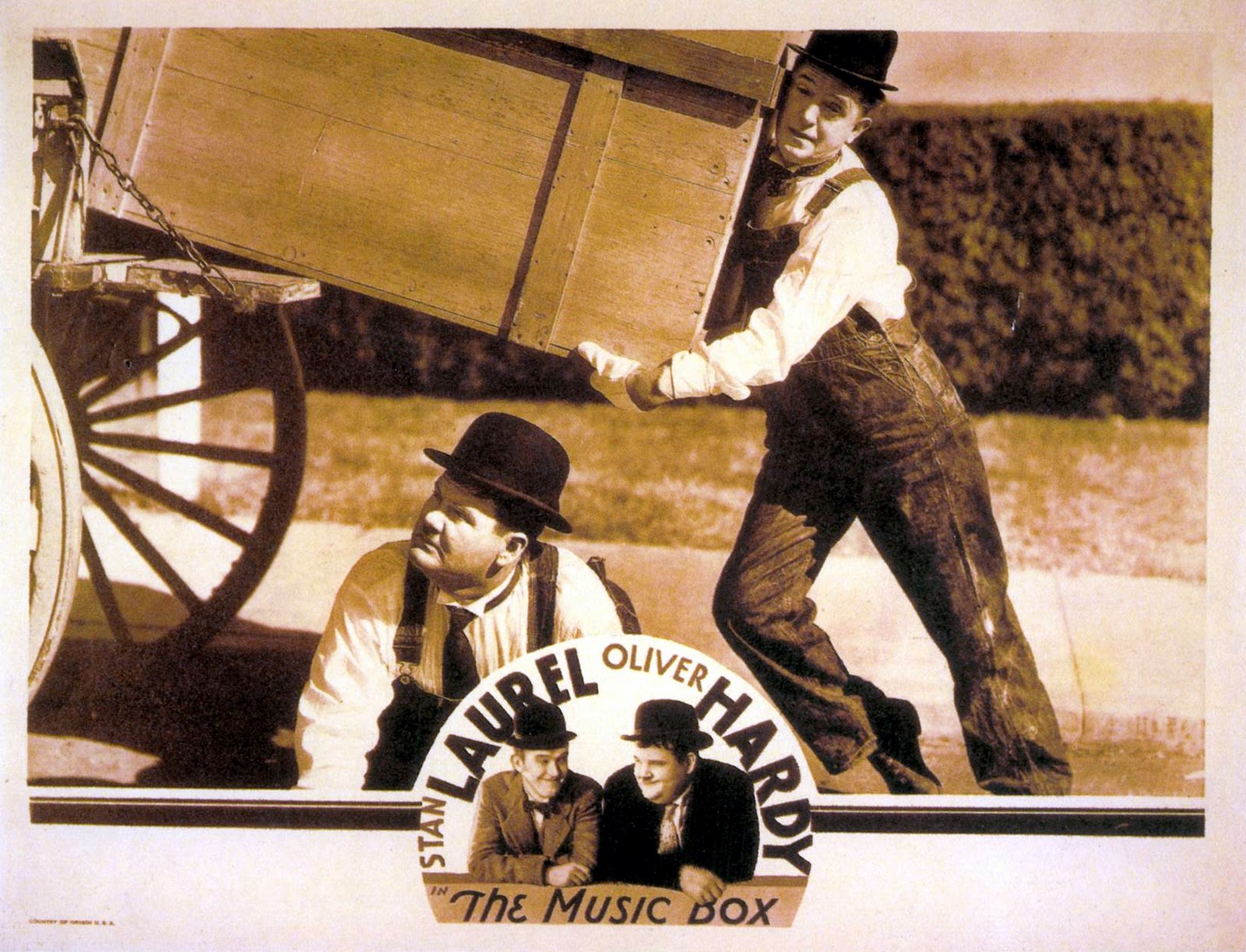
PICTURE (Comedy/Musical) winner:The Music Box (prod. Hal Roach) nominees:Monkey Business (prod. Herman J. Mankiewicz); Private Lives (prod. Irving Thalberg); The Smiling Lieutenant (prod. Ernst Lubitsch) Must-See Comedy/Musical:The Guardsman; Monkey Business; The Music Box; One Hour With You; Private Lives; Red-Headed Woman; The Smiling Lieutenant
PICTURE (Foreign Language) winner:À Nous La Liberté (prod. Frank Clifford) nominees:La Chienne (prod. Pierre Braunberger and Roger Richebé); I Was Born, But ... (prod. Shochiku Film); Mädchen in Uniform (prod. Carl Froelich and Friedrich Pflughaupt); Marius (prod. Robert Kane and Marcel Pagnol) Must-See Foreign Language Pictures:À Nous La Liberté; La Chienne; I Was Born, But ...; Mädchen In Uniform; Marius
ACTOR (Drama) <winner:Fredric March (Dr. Jekyll And Mr. Hyde) nominees: Wallace Beery (The Champ); Paul Muni (Scarface); Edward G. Robinson (Five Star Final); Warren William (Skyscraper Souls)
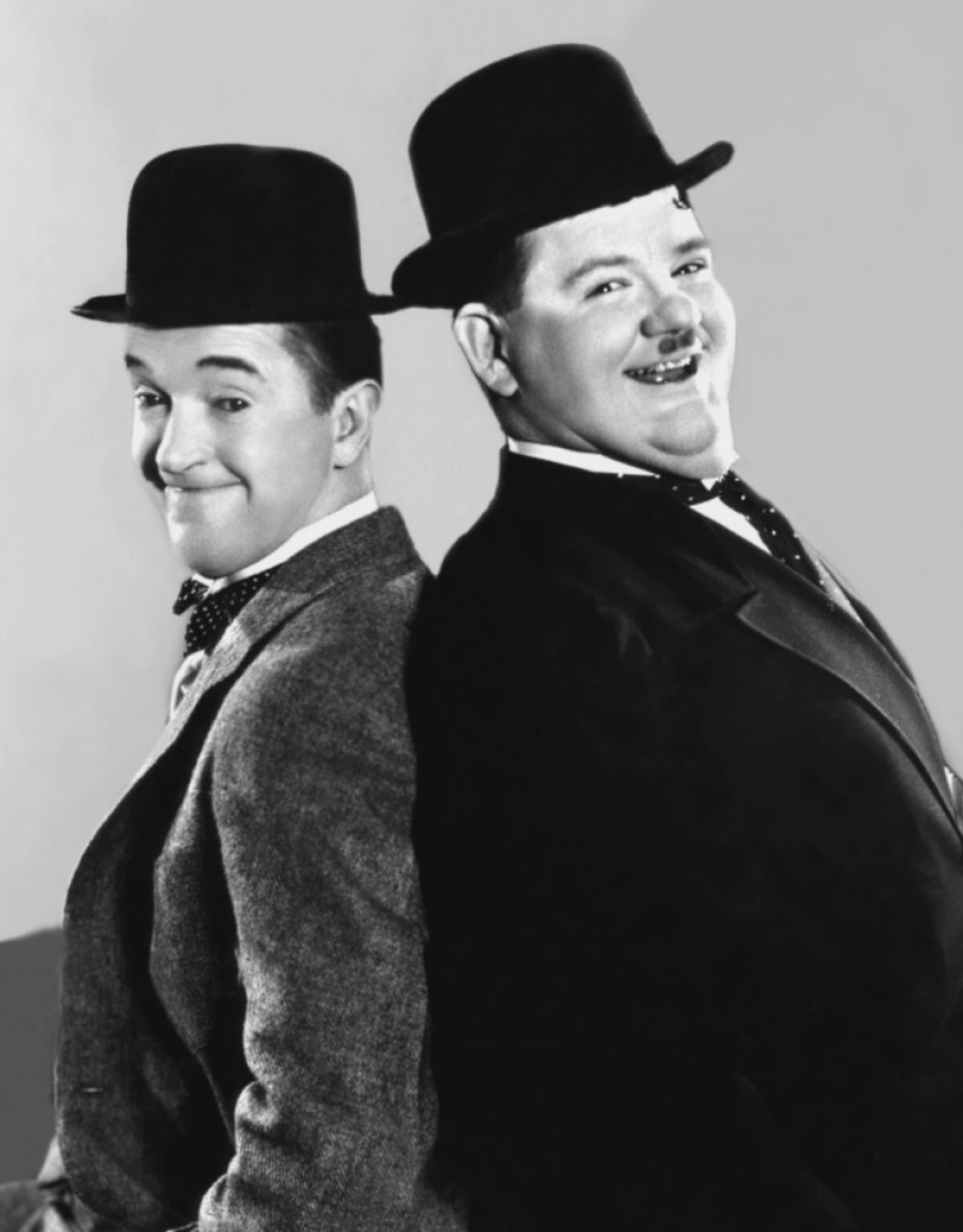
ACTOR (Comedy/Musical) winner:Stan Laurel and Oliver Hardy (The Music Box) nominees: James Cagney (Blonde Crazy); Maurice Chevalier (The Smiling Lieutenant and One Hour With You); The Marx Brothers (Monkey Business); Robert Montgomery (Private Lives)
ACTRESS (Drama) winner:Mae Clarke (Waterloo Bridge) nominees: Constance Bennett (What Price Hollywood?); Marlene Dietrich (Shanghai Express); Barbara Stanwyck (The Miracle Woman); Dorothea Wieck (Mädchen in Uniform)
ACTRESS (Comedy/Musical) winner:Norma Shearer (Private Lives) nominees: Joan Blondell (Blonde Crazy); Claudette Colbert (The Smiling Lieutenant); Lynn Fontanne (The Guardsman); Jean Harlow (Platinum Blonde and Red-Headed Woman)
DIRECTOR (Drama) winner: Howard Hawks (Scarface) nominees: Tod Browning (Freaks); Edmund Goulding (Grand Hotel); Rouben Mamoulian (Dr. Jekyll And Mr. Hyde); James Whale (Frankenstein and Waterloo Bridge)
DIRECTOR (Comedy/Musical) winner:René Clair (À Nous La Liberté) nominees: Sidney Franklin (The Guardsman and Private Lives); Ernst Lubitsch (The Smiling Lieutenant and One Hour With You); Yasujirô Ozu (I Was Born, But ...); James Parrott (The Music Box)
SUPPORTING ACTOR winner:Lionel Barrymore (Grand Hotel) nominees: John Barrymore (Grand Hotel); Boris Karloff (Frankenstein); Raimu (Marius); Roland Young (The Guardsman and One Hour With You)
SCREENPLAY winner:Ben Hecht; continuity and dialogue by Seton I. Miller, John Lee Mahin and W.R. Burnett; from a novel by Armitage Trail (Scarface) nominees: René Clair (À Nous La Liberté); Frances Marion (story), Leonard Praskins (dialogue continuity) and Wanda Tuchock (additional dialogue) (The Champ); Christa Winsloe and Friedrich Dammann (as F.D. Andam); from the play by Christa Winsloe (Mädchen in Uniform); S.J. Perelman and Will B. Johnstone (screenplay); Arthur Sheekman (additional dialogue) (Monkey Business)
SPECIAL AWARDS Lee Garmes (Shanghai Express and Scarface) (Cinematography); C. Roy Hunter (Frankenstein) (Sound); Charles D. Hall and Kenneth Strickfaden (Frankenstein) (Art Direction-Set Decoration); Jack Pierce and Pauline Eells (Frankenstein) (Makeup); Wally Westmore (Dr. Jekyll and Mr. Hyde) (Special Effects)
I'm out of the office for a few days, so as Halloween approaches, I'm reposting some essays about classic horror films, this about Dr. Jekyll and Mr. Hyde from March 29, 2010. I'll catch up on comments early next week.
The title role in Robert Louis Stevenson's Dr. Jekyll And Mr. Hyde is an actor's dream: a dual role playing both a prig and a monster with a dramatic physical and psychic transformation from one to the other requiring the actor to hit a wide range of emotional notes. But the part also presents the actor with a dilemma, too. Ground the performance too firmly in Method realism and the action implodes; play it too broadly, and the horror becomes campy comedy.
John Barrymore, who was without doubt the greatest ham in movie history (sometimes brilliantly so), chewed so much scenery in the 1920 silent version of the story, the performance became the gold standard for over-acting—watch Douglas Fairbanks, Jr.'s imitation in Our Modern Maidens sometime if you don't believe me.
On the other hand, Spencer Tracy, the most empathetic actor ever to grace the screen, never really convinces us in the 1941 version he's either the priggish Jekyll or the brutal Hyde precisely because he can't convince us he's oblivious to the feelings of his fellow beings. (He probably wasn't helped much by a Production Code-era screenplay that dialed down both the violence and the sex.) It's one of the few performances of his great career that doesn't work for me.
It took Fredric March in the 1931 version of Dr. Jekyll And Mr. Hyde to thread the needle between the two extremes and give the definitive performance in the role. The Academy recognized it as the best performance of the year and for once, I agree.
These days we like to pretend we've advanced well beyond notions of moral rectitude, repressed desire and a secret id run wild. As the A.V. Club put it just last month in writing about Stevenson's novel, "Today’s worst impulses run cheek-and-jowl with the best mankind has to offer, and the idea that some saintly seeming public figure might like to drink and whore around in private isn't so much unsurprising as it is a job requirement."
Oh, yeah? Let me just say two words: Tiger Woods.
If the apparently genuine public shock and, in any event, the nonstop tabloid Sturm und Drang over Woods's professed infidelities tell us anything, they tell us we haven't come anywhere close to getting a grip on the notion that a public figure can have a dark side. And as long as fans expect their heroes to be saints, as long as parents expect their children to be perfect, heck, as long as spouses expect their mates to stop banging cocktail waitresses, the story of a man who tries to repress his dark side only to see it destroy him is always going to be relevant.
Thomas Boswell wrote recently in the Washington Post that everyone has a public face and a private face and that "Our interior life, our soul, our truest sense of ourselves, whatever you call it, is too difficult and changing a thing to summarize easily or share widely.
"But," he went on to say, "when the gap between the public face and the private self becomes a vast gulf, people go into crisis. The split inside you becomes intolerable. You feel that are 'living a life of a lie.' You becomes reckless, partly out of self-hatred ..., but also because you want to put the warring sides of yourself back together, even if the cost is huge."
Jekyll suffers from the same intolerable split—"It's the things one can't do that always tempt me," he confesses—but unlike the rest of us, he doesn't want to put the warring sides back together; he wants a permanent split, and not just psychically but physically as well. He works feverishly to perfect a potion that will accomplish this dream, reasoning that once freed of the constraints of conscience and societal norms, the private self will fulfill its dark desires and trouble him no longer.
It's a nutty notion since as we all know (or ought to) once the baser self is allowed to run free, it wants only one thing: to quote Johnny Rocco, "More." Jekyll discovers this truth the hard way and pays the ultimate price for his knowledge.
Director Rouben Mamoulian introduces Jekyll with a tracking shot from Jekyll's viewpoint, starting in Jekyll's laboratory, following his butler through his manor house, and ending with him gazing at himself in a mirror, preening prior to an important speech before his colleagues in the medical profession. Coming from most directors, this point-of-view tracking shot would be a mere film school stunt, but here, it's an inventive way to introduce the main theme of the movie, the two faces of a man, the one people see (i.e., the face in the mirror) and the one we hide away, in Jekyll's case, even from himself.
Tellingly, director Mamoulian has Jekyll return to the mirror when he first drinks the potion and we see his transformation into Hyde in reflection—the handsome public face becoming the hideous private one. (As a side note, listen for Mamoulian's imaginative use of sound in this sequence, typically cutting-edge. The heartbeat on the soundtrack, by the way, is his own, recorded after running up and down a flight of stairs.)
A key to the movie's success is, of course, how well it shows the transformation from Jekyll to Hyde. The special effects work of Wally Westmore is very good, astounding really considering the movie will be eighty years old next year. Westmore created Jekyll's transformation to Hyde using layers of makeup, each a different color, each revealed with a different filtered camera lens, so that without clumsy cut-aways or overlapping dissolves, Jekyll's face changes before your eyes.
Well, and then they put in some big teeth and a Neanderthal's nose. But it's impressive work.
Still, if clever effects, no matter how good, are all a movie has to offer, within a few years of its release, you wind up with something akin to, say, Tron, a special effects extravaganza from 1982 that made lots of money, inspired an arcade game, and is now remembered, if at all, as an insufferably stupid movie with dated special effects. Something to keep in mind as you champion this year's special effects wonder, Avatar.
That Dr. Jekyll And Mr. Hyde continues to speak to an audience nearly eighty years on is a testament to the screenplay by Samuel Hoffenstein and Percy Heath which takes the original Stevenson tale and adds depth and action; to Miriam Hopkins terrific supporting performance; to Mamoulian's inventive direction—the only horror movie he ever directed, and one he was justly proud of—and above all, to the skill with which March convinces us he is both the pompous, repressed Jekyll and the gleefully brutal Hyde.
"One aspect that amazes me about March's performance," Bill Cooke said as part of a roundtable discussion at Video Watchdog, "is that I don't at any point feel it's the same actor playing both roles. That certainly can't be said of every other version I've seen featuring one actor in the part."
And at the same discussion, Richard Harlan Smith argued, "March remains unmatched as the definitive Victorian throwback. His performance ("I'll show you what horror means!") still unnerves, almost 80 years later."
I agree with both assessments.
It was director Mamoulian who insisted on casting March. The studio was pushing Irving Pichel, who had earlier that year played the key role of district attorney Orville Mason in An American Tragedy, and who had a wonderful voice—he later narrated She Wore A Yellow Ribbon (he also became a director)—but who didn't fit Mamoulian's conception of the role.
"[M]y concept all along for the character of Hyde," Mamoulian later said, "was that of a Neanderthal man, not a monster, because it is the animal side of human nature that attracted me to the piece. At the time I was offered Dr. Jekyll and Mr. Hyde, I had seen Freddie March in some comedy, and I knew he would be perfect. Now I had never met this actor before in my life, but I took a risk and told Paramount that I would not make the film without Fredric March. And he gave an inspired and dazzling performance!"
If you know where to look, you'll discover that March gave a number of great performances throughout a career that stretched across fifty years, from the silent era to the Seventies. He was nominated for five Academy Awards, winning two, for Dr. Jekyll And Mr. Hyde, of course, and for the classic film about the difficulties of coming home from war, The Best Years Of Our Lives. He played comedy and drama equally well, for example, starring with Gary Cooper and Miriam Hopkins in Ernst Lubitsch's ode to the menage-a-trois, Design For Living, and with Carole Lombard in the screwball classic Nothing Sacred; but also in 1937's super-soaper A Star Is Born (later remade with James Mason and Judy Garland) and the Rod Serling-scripted political thriller, Seven Days In May.
In 1960, March and fellow Jekyll, Spencer Tracy, squared off in a fiction- alized account of the Scopes' Monkey Trial, Inherit The Wind. That movie proved to be a showcase for the two actors contrasting styles, with the naturalistic Tracy and the more formal March playing off each other to great effect. If the Academy Awards are any judge, Tracy won that battle, garnering an Academy Award nomination for best actor. But when it came to the dual roles of Jekyll and Hyde, March was the hands-down winner.
Named for Katie-Bar-The-Door, the Katies are "alternate Oscars"—who should have been nominated, who should have won—but really they're just an excuse to write a history of the movies from the Silent Era to the present day.
To see a list of nominees and winners by decade, as well as links to my essays about them, click the highlighted links:
Remember: There are no wrong answers, only movies you haven't seen yet.
The Silent Oscars
And don't forget to check out the Silent Oscars—my year-by-year choices for best picture, director and all four acting categories for the pre-Oscar years, 1902-1927.
Look at me—Joe College, with a touch of arthritis. Are my eyes really brown? Uh, no, they're green. Would we have the nerve to dive into the icy water and save a person from drowning? That's a key question. I, of course, can't swim, so I never have to face it. Say, haven't you anything better to do than to keep popping in here early every morning and asking a lot of fool questions?










 Posts
Posts

