skip to main |
skip to sidebar

Starring Greta Garbo, John Barrymore, Wallace Beery, Joan Crawford and Lionel Barrymore, Grand Hotel is the story of five very different people — a ballerina, a thief, a factory owner, his secretary and a dying man — who cross paths at a luxury hotel in Berlin with tragic consequences.
With its sumptuous art Deco sets and its foreign locale, Grand Hotel was about as far removed from the daily lives of the audiences who paid to see it as a movie could get, yet it was the highest grossing film of the year for MGM, one of the few studios to turn a profit during this particularly harsh year of the Depression.
On November 18, 1932, the Academy named Grand Hotel the best movie of the year, a triumph for producer Irving Thalberg who had bought the rights to Vicki Baum's 1929 novel and shepherded it through every stage of production, honing the screenplay, choosing the cast and putting his personal stamp on the film's every detail.
Grand Hotel won for best picture despite failing to receive a single nomination in any other category.
The award for best actor went to both Fredric March (Dr. Jekyll and Mr. Hyde) and Wallace Beery (The Champ), the first tie in Oscar history.
It almost didn't turn out that way.
During the ceremony itself, Norma Shearer announced March alone as the winner. Moments later, the president of the Academy, Conrad Nagel, came on stage to announce that under Academy rules, candidates for an award who finished within three votes of each other were deemed to have tied. Beery, who had finished a single vote in back of March, came up on stage and accepted a second best actor trophy.
The only problem was, while such a rule had been in place the year before, it had been discarded before the 1932 ceremony. Stories abound regarding the backstage shenanigans that resulted in the tie, the most fun of which is that Beery was so incensed at losing to March, he went to MGM studio chief Louis B. Mayer and insisted he be given an Oscar, too.
Whatever the truth, by 1935, the accounting firm of Price Waterhouse would begin tabulating and certifying the results, another step out of Louis B. Mayer's smoke-filled office into the fresh air of Oscar democracy.
The best actress trophy went to Helen Hayes, a Broadway legend making her film debut in The Sin of Madelon Claudet, a 75-minute super-soaper about a woman who has a child out of wedlock and then endures unimaginable hardships to care for a son who doesn't know she exists. Her performance was a bit stagy and theatrical, not bad, not great, but her pedigree appealed to Oscar voters who were eager to promote movies — thought of as lowbrow entertainment for the masses — as the equal of the "legitimate" theater.
We here at the Monkey have no such agenda.
The only real horror among the major winners was Frank Borzage who picked up his second career Oscar, this time for directing Bad Girl, the story of a couple struggling through Depression-era difficulties — a jaded girl meets a cranky radio salesman, gets pregnant, then gets married — that turns into an idiot plot and fizzles, a damp squib now deservedly forgotten.
Oh, well, that's what alternate Oscars are for.
Lot of good movies came out between August 1, 1931, and July 31, 1932, including Dr. Jekyll and Mr. Hyde, Frankenstein, Freaks, the aforementioned Grand Hotel, Monkey Business, The Music Box, Private Lives, Scarface, Waterloo Bridge ...
My picks:
1931-32
PICTURE (Drama)
winner: Frankenstein (prod. Carl Laemmle, Jr.)
nominees: Dr. Jekyll and Mr. Hyde (prod. Rouben Mamoulian); Freaks (prod. Tod Browning); Grand Hotel (prod. Irving Thalberg); Scarface (prod. Howard Hughes); Waterloo Bridge (prod. Carl Laemmle Jr.)
PICTURE (Comedy/Musical)
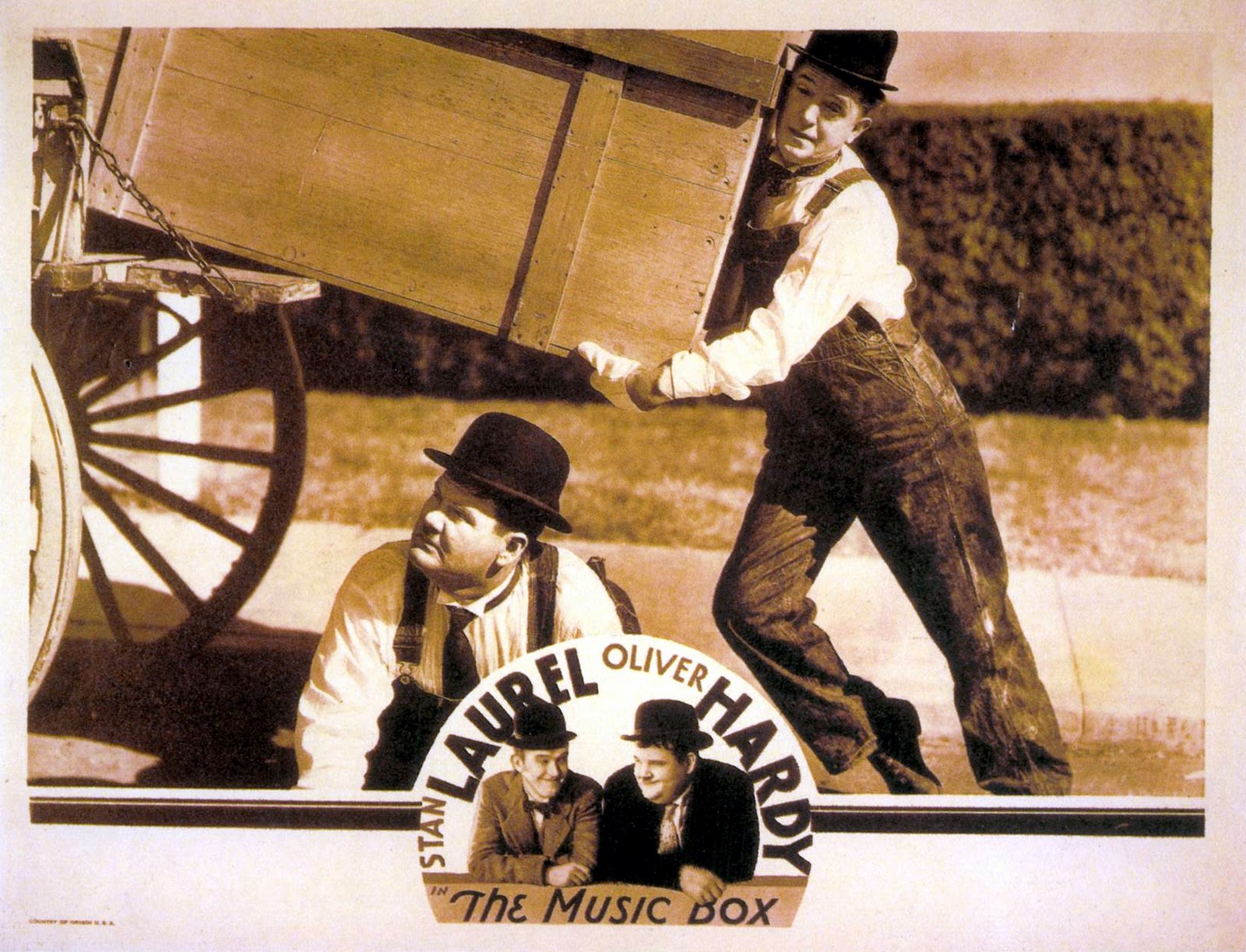
winner: The Music Box (prod. Hal Roach)
nominees: Monkey Business (prod. Herman J. Mankiewicz); Private Lives (prod. Irving Thalberg); The Smiling Lieutenant (prod. Ernst Lubitsch)
PICTURE (Foreign Language)
winner: À Nous La Liberté (prod. Frank Clifford)
nominees: La Chienne (prod. Pierre Braunberger and Roger Richebé); I Was Born, But ... (prod. Shochiku); Mädchen in Uniform (prod. Carl Froelich and Friedrich Pflughaupt); Marius (prod. Robert Kane and Marcel Pagnol)
ACTOR (Drama)
winner: Fredric March (Dr. Jekyll And Mr. Hyde)
nominees: John Barrymore (Grand Hotel); Lionel Barrymore (Grand Hotel); Wallace Beery (The Champ); Colin Clive (Frankenstein); Paul Muni (Scarface); Edward G. Robinson (Five Star Final); Warren William (Skyscraper Souls)
ACTOR (Comedy/Musical)
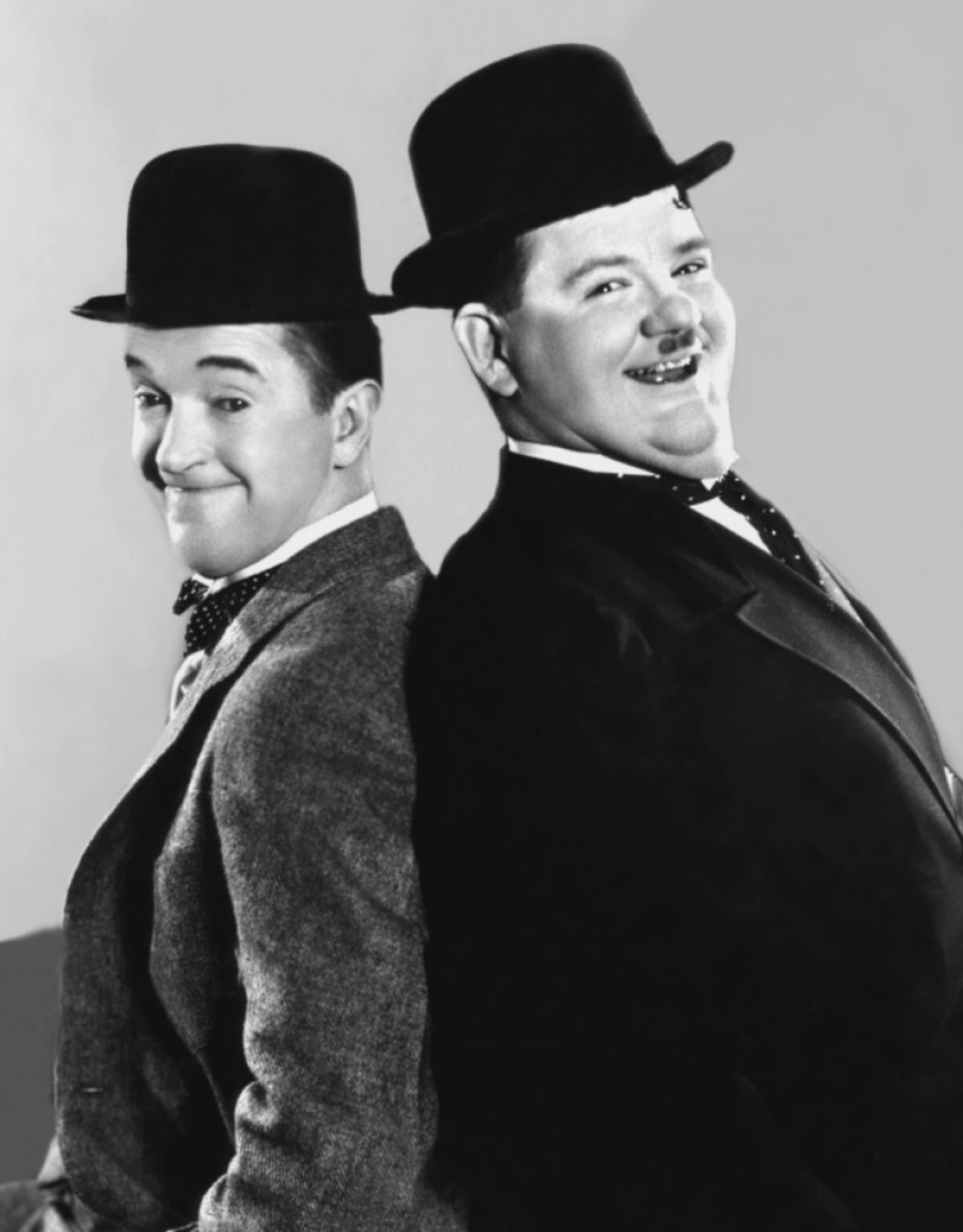
winner: Stan Laurel and Oliver Hardy (The Music Box)
nominees: James Cagney (Blonde Crazy); Maurice Chevalier (The Smiling Lieutenant and One Hour With You); The Marx Brothers (Monkey Business); Robert Montgomery (Private Lives)
ACTRESS (Drama)
winner: Mae Clarke (Waterloo Bridge)
nominees: Constance Bennett (What Price Hollywood?); Joan Crawford (Grand Hotel); Marlene Dietrich (Shanghai Express); Greta Garbo (Susan Lenox (Her Fall and Rise), Mata Hari, Grand Hotel and As You Desire Me); Helen Hayes (The Sin of Madelon Claudet and Arrowsmith); Barbara Stanwyck (The Miracle Woman); Dorothea Wieck (Mädchen in Uniform)
ACTRESS (Comedy/Musical)
winner: Norma Shearer (Private Lives)
nominees: Joan Blondell (Blonde Crazy); Claudette Colbert (The Smiling Lieutenant); Lynn Fontanne (The Guardsman); Jean Harlow (Platinum Blonde and Red-Headed Woman)
DIRECTOR (Drama)
winner: Tod Browning (Freaks)
nominees: Edmund Goulding (Grand Hotel); Howard Hawks (Scarface); Rouben Mamoulian (Dr. Jekyll And Mr. Hyde); James Whale (Frankenstein and Waterloo Bridge)
DIRECTOR (Comedy/Musical)
winner: René Clair (À Nous La Liberté)
nominees: Sidney Franklin (The Guardsman and Private Lives); Ernst Lubitsch (The Smiling Lieutenant and One Hour With You); Yasujirô Ozu (I Was Born, But ...); James Parrott (The Music Box)
SUPPORTING ACTOR (Drama)
winner: George Raft (Scarface)
nominees: Boris Karloff (Frankenstein); Lewis Stone (The Sin of Madelon Claudet, Mata Hari and Grand Hotel)
SUPPORTING ACTOR (Comedy/Musical)
winner: Roland Young (The Guardsman and One Hour With You)
nominees: Raimu (Marius)
SUPPORTING ACTRESS (Drama)
winner: Miriam Hopkins (Dr. Jekyll And Mr. Hyde)
nominees: Ann Dvorak (Scarface); Aline MacMahon (Five Star Final); Anna May Wong (Shanghai Express)
SUPPORTING ACTRESS (Comedy/Musical)
winner: Thelma Todd (Monkey Business)
nominees: Miriam Hopkins (The Smiling Lieutenant); Una Merkel (Private Lives and Red-Headed Woman)
SCREENPLAY
winner: Ben Hecht; continuity and dialogue by Seton I. Miller, John Lee Mahin and W.R. Burnett; from a novel by Armitage Trail (Scarface)
nominees: René Clair (À Nous La Liberté); Frances Marion (story), Leonard Praskins (dialogue continuity) and Wanda Tuchock (additional dialogue) (The Champ); Garrett Fort and Francis Edward Faragoh (screenplay), adaptation by John L. Balderston, from the novel Frankenstein: or, The Modern Prometheus by Mary Shelley and the play Frankenstein: An Adventure in the Macabre by Peggy Webling (Frankenstein); Christa Winsloe and Friedrich Dammann (as F.D. Andam); from the play by Christa Winsloe (Mädchen in Uniform); S.J. Perelman and Will B. Johnstone (screenplay); Arthur Sheekman (additional dialogue) (Monkey Business)
SPECIAL AWARDS
Lee Garmes (Shanghai Express and Scarface) (Cinematography); C. Roy Hunter (Frankenstein) (Sound); Charles D. Hall and Kenneth Strickfaden (Frankenstein) (Art Direction-Set Decoration); Jack Pierce and Pauline Eells (Frankenstein) (Makeup); Wally Westmore (Dr. Jekyll and Mr. Hyde) (Special Effects)
 Universal Studio's cycle of classic horror movies officially began in early 1931 with Bela Lugosi's Dracula, but for me, it's Frankenstein that really kicked it off. Boris Karloff and James Whale only made three movies together—Frankenstein, The Old Dark House and Bride of Frankenstein—but it feels like more than that, maybe because this trio of movies established so many of the conventions of the genre. Or maybe because they're just that good.
1932 also saw the release of Scarface, the best gangster movie made before The Godfather despite starring Paul Muni rather than James Cagney, Humphrey Bogart or Edward G. Robinson. But Howard Hawks directed it and given that he makes a serious claim to the title of best American director ever, maybe I shouldn't be surprised after all.
As for the actress awards, I was tempted when I expanded the Katies to the "Golden Globe" format to bump Joan Crawford up from supporting to lead and give her the award for drama. But I like Mae Clarke, the girl who got the grapefruit in the face in The Public Enemy, and I've got a later award in mind for Joan. Feel free to argue with me. My mind is subject to change.
PICTURE (Drama)
winner: Frankenstein (prod. Carl Laemmle, Jr.)
nominees: Freaks (prod. Tod Browning); Grand Hotel (prod. Irving Thalberg); Scarface (prod. Howard Hughes); Waterloo Bridge (prod. Carl Laemmle Jr.)
Must-See: The Champ; Dr. Jekyll And Mr. Hyde; Emma; Five Star Final; Frankenstein; Freaks; Grand Hotel; Scarface; Shanghai Express; Skyscraper Souls; Tabu: A Story Of The South Seas; Waterloo Bridge; What Price Hollywood?
PICTURE (Comedy/Musical)
winner: The Music Box (prod. Hal Roach)
nominees: Monkey Business (prod. Herman J. Mankiewicz); Private Lives (prod. Irving Thalberg); The Smiling Lieutenant (prod. Ernst Lubitsch)
Must-See Comedy/Musical: The Guardsman; Monkey Business; The Music Box; One Hour With You; Private Lives; Red-Headed Woman; The Smiling Lieutenant
PICTURE (Foreign Language)
winner: À Nous La Liberté (prod. Frank Clifford)
nominees: La Chienne (prod. Pierre Braunberger and Roger Richebé); I Was Born, But ... (prod. Shochiku Film); Mädchen in Uniform (prod. Carl Froelich and Friedrich Pflughaupt); Marius (prod. Robert Kane and Marcel Pagnol)
Must-See Foreign Language Pictures: À Nous La Liberté; La Chienne; I Was Born, But ...; Mädchen In Uniform; Marius
ACTOR (Drama)
<winner: Fredric March (Dr. Jekyll And Mr. Hyde)
nominees: Wallace Beery (The Champ); Paul Muni (Scarface); Edward G. Robinson (Five Star Final); Warren William (Skyscraper Souls)
ACTOR (Comedy/Musical)
winner: Stan Laurel and Oliver Hardy (The Music Box)
nominees: James Cagney (Blonde Crazy); Maurice Chevalier (The Smiling Lieutenant and One Hour With You); The Marx Brothers (Monkey Business); Robert Montgomery (Private Lives)
ACTRESS (Drama)
winner: Mae Clarke (Waterloo Bridge)
nominees: Constance Bennett (What Price Hollywood?); Marlene Dietrich (Shanghai Express); Barbara Stanwyck (The Miracle Woman); Dorothea Wieck (Mädchen in Uniform)
ACTRESS (Comedy/Musical)
winner: Norma Shearer (Private Lives)
nominees: Joan Blondell (Blonde Crazy); Claudette Colbert (The Smiling Lieutenant); Lynn Fontanne (The Guardsman); Jean Harlow (Platinum Blonde and Red-Headed Woman)
DIRECTOR (Drama)
winner: Howard Hawks (Scarface)
nominees: Tod Browning (Freaks); Edmund Goulding (Grand Hotel); Rouben Mamoulian (Dr. Jekyll And Mr. Hyde); James Whale (Frankenstein and Waterloo Bridge)
DIRECTOR (Comedy/Musical)
winner: René Clair (À Nous La Liberté)
nominees: Sidney Franklin (The Guardsman and Private Lives); Ernst Lubitsch (The Smiling Lieutenant and One Hour With You); Yasujirô Ozu (I Was Born, But ...); James Parrott (The Music Box)
SUPPORTING ACTOR
winner: Lionel Barrymore (Grand Hotel)
nominees: John Barrymore (Grand Hotel); Boris Karloff (Frankenstein); Raimu (Marius); Roland Young (The Guardsman and One Hour With You)
SUPPORTING ACTRESS
winner: Miriam Hopkins (The Smiling Lieutenant and Dr. Jekyll And Mr. Hyde)
nominees: Joan Crawford (Grand Hotel); Ann Dvorak (Scarface); Aline MacMahon (Five Star Final); Anna May Wong (Shanghai Express)
SCREENPLAY
winner: Ben Hecht; continuity and dialogue by Seton I. Miller, John Lee Mahin and W.R. Burnett; from a novel by Armitage Trail (Scarface)
nominees: René Clair (À Nous La Liberté); Frances Marion (story), Leonard Praskins (dialogue continuity) and Wanda Tuchock (additional dialogue) (The Champ); Christa Winsloe and Friedrich Dammann (as F.D. Andam); from the play by Christa Winsloe (Mädchen in Uniform); S.J. Perelman and Will B. Johnstone (screenplay); Arthur Sheekman (additional dialogue) (Monkey Business)
SPECIAL AWARDS
Lee Garmes (Shanghai Express and Scarface) (Cinematography); C. Roy Hunter (Frankenstein) (Sound); Charles D. Hall and Kenneth Strickfaden (Frankenstein) (Art Direction-Set Decoration); Jack Pierce and Pauline Eells (Frankenstein) (Makeup); Wally Westmore (Dr. Jekyll and Mr. Hyde) (Special Effects)
I'm out of the office for a few days, so as Halloween approaches, I'm reposting some essays about classic horror films, this about Dr. Jekyll and Mr. Hyde from March 29, 2010. I'll catch up on comments early next week.
 The title role in Robert Louis Stevenson's Dr. Jekyll And Mr. Hyde is an actor's dream: a dual role playing both a prig and a monster with a dramatic physical and psychic transformation from one to the other requiring the actor to hit a wide range of emotional notes. But the part also presents the actor with a dilemma, too. Ground the performance too firmly in Method realism and the action implodes; play it too broadly, and the horror becomes campy comedy.
John Barrymore, who was without doubt the greatest ham in movie history (sometimes brilliantly so), chewed so much scenery in the 1920 silent version of the story, the performance became the gold standard for over-acting—watch Douglas Fairbanks, Jr.'s imitation in Our Modern Maidens sometime if you don't believe me.
On the other hand, Spencer Tracy, the most empathetic actor ever to grace the screen, never really convinces us in the 1941 version he's either the priggish Jekyll or the brutal Hyde precisely because he can't convince us he's oblivious to the feelings of his fellow beings. (He probably wasn't helped much by a Production Code-era screenplay that dialed down both the violence and the sex.) It's one of the few performances of his great career that doesn't work for me.
It took Fredric March in the 1931 version of Dr. Jekyll And Mr. Hyde to thread the needle between the two extremes and give the definitive performance in the role. The Academy recognized it as the best performance of the year and for once, I agree.
 These days we like to pretend we've advanced well beyond notions of moral rectitude, repressed desire and a secret id run wild. As the A.V. Club put it just last month in writing about Stevenson's novel, "Today’s worst impulses run cheek-and-jowl with the best mankind has to offer, and the idea that some saintly seeming public figure might like to drink and whore around in private isn't so much unsurprising as it is a job requirement."
Oh, yeah? Let me just say two words: Tiger Woods.
If the apparently genuine public shock and, in any event, the nonstop tabloid Sturm und Drang over Woods's professed infidelities tell us anything, they tell us we haven't come anywhere close to getting a grip on the notion that a public figure can have a dark side. And as long as fans expect their heroes to be saints, as long as parents expect their children to be perfect, heck, as long as spouses expect their mates to stop banging cocktail waitresses, the story of a man who tries to repress his dark side only to see it destroy him is always going to be relevant.
Thomas Boswell wrote recently in the Washington Post that everyone has a public face and a private face and that "Our interior life, our soul, our truest sense of ourselves, whatever you call it, is too difficult and changing a thing to summarize easily or share widely.
 "But," he went on to say, "when the gap between the public face and the private self becomes a vast gulf, people go into crisis. The split inside you becomes intolerable. You feel that are 'living a life of a lie.' You becomes reckless, partly out of self-hatred ..., but also because you want to put the warring sides of yourself back together, even if the cost is huge."
Jekyll suffers from the same intolerable split—"It's the things one can't do that always tempt me," he confesses—but unlike the rest of us, he doesn't want to put the warring sides back together; he wants a permanent split, and not just psychically but physically as well. He works feverishly to perfect a potion that will accomplish this dream, reasoning that once freed of the constraints of conscience and societal norms, the private self will fulfill its dark desires and trouble him no longer.
It's a nutty notion since as we all know (or ought to) once the baser self is allowed to run free, it wants only one thing: to quote Johnny Rocco, "More." Jekyll discovers this truth the hard way and pays the ultimate price for his knowledge.
Director Rouben Mamoulian introduces Jekyll with a tracking shot from Jekyll's viewpoint, starting in Jekyll's laboratory, following his butler through his manor house, and ending with him gazing at himself in a mirror, preening prior to an important speech before his colleagues in the medical profession. Coming from most directors, this point-of-view tracking shot would be a mere film school stunt, but here, it's an inventive way to introduce the main theme of the movie, the two faces of a man, the one people see (i.e., the face in the mirror) and the one we hide away, in Jekyll's case, even from himself.
 Tellingly, director Mamoulian has Jekyll return to the mirror when he first drinks the potion and we see his transformation into Hyde in reflection—the handsome public face becoming the hideous private one. (As a side note, listen for Mamoulian's imaginative use of sound in this sequence, typically cutting-edge. The heartbeat on the soundtrack, by the way, is his own, recorded after running up and down a flight of stairs.)
 A key to the movie's success is, of course, how well it shows the transformation from Jekyll to Hyde. The special effects work of Wally Westmore is very good, astounding really considering the movie will be eighty years old next year. Westmore created Jekyll's transformation to Hyde using layers of makeup, each a different color, each revealed with a different filtered camera lens, so that without clumsy cut-aways or overlapping dissolves, Jekyll's face changes before your eyes.
 Well, and then they put in some big teeth and a Neanderthal's nose. But it's impressive work.
Still, if clever effects, no matter how good, are all a movie has to offer, within a few years of its release, you wind up with something akin to, say, Tron, a special effects extravaganza from 1982 that made lots of money, inspired an arcade game, and is now remembered, if at all, as an insufferably stupid movie with dated special effects. Something to keep in mind as you champion this year's special effects wonder, Avatar.
 That Dr. Jekyll And Mr. Hyde continues to speak to an audience nearly eighty years on is a testament to the screenplay by Samuel Hoffenstein and Percy Heath which takes the original Stevenson tale and adds depth and action; to Miriam Hopkins terrific supporting performance; to Mamoulian's inventive direction—the only horror movie he ever directed, and one he was justly proud of—and above all, to the skill with which March convinces us he is both the pompous, repressed Jekyll and the gleefully brutal Hyde.
"One aspect that amazes me about March's performance," Bill Cooke said as part of a roundtable discussion at Video Watchdog, "is that I don't at any point feel it's the same actor playing both roles. That certainly can't be said of every other version I've seen featuring one actor in the part."
And at the same discussion, Richard Harlan Smith argued, "March remains unmatched as the definitive Victorian throwback. His performance ("I'll show you what horror means!") still unnerves, almost 80 years later."
I agree with both assessments.
It was director Mamoulian who insisted on casting March. The studio was pushing Irving Pichel, who had earlier that year played the key role of district attorney Orville Mason in An American Tragedy, and who had a wonderful voice—he later narrated She Wore A Yellow Ribbon (he also became a director)—but who didn't fit Mamoulian's conception of the role.
 "[M]y concept all along for the character of Hyde," Mamoulian later said, "was that of a Neanderthal man, not a monster, because it is the animal side of human nature that attracted me to the piece. At the time I was offered Dr. Jekyll and Mr. Hyde, I had seen Freddie March in some comedy, and I knew he would be perfect. Now I had never met this actor before in my life, but I took a risk and told Paramount that I would not make the film without Fredric March. And he gave an inspired and dazzling performance!"
If you know where to look, you'll discover that March gave a number of great performances throughout a career that stretched across fifty years, from the silent era to the Seventies. He was nominated for five Academy Awards, winning two, for Dr. Jekyll And Mr. Hyde, of course, and for the classic film about the difficulties of coming home from war, The Best Years Of Our Lives. He played comedy and drama equally well, for example, starring with Gary Cooper and Miriam Hopkins in Ernst Lubitsch's ode to the menage-a-trois, Design For Living, and with Carole Lombard in the screwball classic Nothing Sacred; but also in 1937's super-soaper A Star Is Born (later remade with James Mason and Judy Garland) and the Rod Serling-scripted political thriller, Seven Days In May.
 In 1960, March and fellow Jekyll, Spencer Tracy, squared off in a fiction- alized account of the Scopes' Monkey Trial, Inherit The Wind. That movie proved to be a showcase for the two actors contrasting styles, with the naturalistic Tracy and the more formal March playing off each other to great effect. If the Academy Awards are any judge, Tracy won that battle, garnering an Academy Award nomination for best actor. But when it came to the dual roles of Jekyll and Hyde, March was the hands-down winner.
Adapted from three previous posts on the occasion of Miriam Hopkins's 109th birthday.
 Largely forgotten now, Miriam Hopkins was one of the sauciest actresses of the pre-Code age, excelling in light comedies and lurid melodramas alike and nabbing an Oscar nomination along the way. Her early sound movies are some of the best of the era, yet often proved too scandalous to be re-issued once censors began taking scissors to Hollywood's past. Coupled with the years lost while she languished on the McCarthy-era blacklist, and even film fanatics can admit to having rarely seen her work.
Hopkins was born in Savannah, Georgia, and grew up in a small town on the Alabama border, but she was acting on the Broadway stage by the age of eighteen with her turn in the stage adaptation of Theodore Dreiser's An American Tragedy in 1926 really making audiences sit up and take notice. She made her feature-film debut in the 1930 comedy Fast and Loose, and within a year turned in two of her best film performances, in Ernst Lubitsch's musical comedy The Smiling Lieutenant and Rouben Mamoulian's adaptation of the Robert Louis Stevenson horror classic, Dr. Jekyll and Mr. Hyde.
 In the first of these, Maurice Chevalier plays a randy lieutenant in the Austrian army who beds down with an equally randy violinist played by Claudette Colbert. (Her band's name? "The Viennese Swallows." Ahem.) The two make beautiful music together, literally and figuratively, until by accident, Chevalier finds himself mistakenly flirting with a visiting princess—the prim, virginal Hopkins—instead of Colbert, threatening an international incident.
"When you winked at my daughter," asks the king, "were your intentions honorable?"
"They were," says the lieutenant.
"Well, then naturally you'll marry her."
"My intentions were dishonorable!" the lieutenant says quickly.
"Then you'll have to marry her!"
Variety in a contemporary review praised Hopkins as the more experienced Colbert's equal, while eighty years later Dan Callahan noted, "Hopkins gives an expertly timed comic performance as plain-Jane royalty with Princess Leia buns on her ears who makes a play for Chevalier."
 A movie fan of today who knows Hopkins's pre-Code work waits a little impatiently for the princess to bust out—knowing that when she does, it'll be worth it. But an audience of the time, not knowing Hopkins and what she was capable of, must have found her transformation from a prudish virgin to a cigarette-smoking, jazz-playing temptress just as shocking as Chevalier's lieutenant does.
It's a fun movie, loaded with double entendres and sexy situations, served up with the director's typically light, frothy style. I tell you, it's as bracing and intoxicating as cold champagne.
Hopkins followed up her success in The Smiling Lieutenant with Dr. Jekyll and Mr. Hyde, a movie that is the polar opposite of Lubitsch's comedy in every sense but quality. Both pictures received Oscar nominations, the former for best picture, the latter for actor, cinematography and screenplay.
 The basic outline of Dr. Jekyll and Mr. Hyde is familiar to us all—a scientist drinks a potion that turns him into a murdering beast with hairy hands and bad teeth. What tends to be forgotten is the why. Dr. Jekyll (here pronounced with a long "e," as in "gee whiz" rather than the familiar rhyme with "heckle") is striving for the perfectability of man, using science to distill out our bestial dark side, freeing the angels of our better nature to pursue more virtuous callings.
As in the other great horror picture of 1931, Frankenstein, the hubris of playing God leads to disaster.
 Here, Hopkins plays Ivy Pearson, saloon singer, prostitute, and physical embodiment of Jekyll's base desires. The character is not in the novel, but is so perfect, you wonder why not. Taking full advantage of the pre-Code era's permissiveness, there's no question that Ivy is a prostitute and Hopkins doesn't try to soften her. Her Ivy is both lovely and—what is the word?—skanky at the same time. Her play for Jekyll is coarse and obvious, pulling up her skirts to show her legs, offering to be his slave. Even the priggish and pompous Jekyll feels the pull of the animal, and his shame is what drives him to try to cleanse himself of his base nature, resulting in the experiments that divide him.
That's the flaw, by the way, in the great Ingrid Bergman's performance as the same character in the 1941 remake. Her Ivy may live in low economic circumstances, but Bergman can't convince us that even on her worst day she was ever low or common, and thus Jekyll's revulsion at himself for wanting her makes no sense. But Hopkins? Well, she's very convincing as someone who'd inspire you to both sleep with her and then scrub yourself with lye soap and a wire brush afterwards, so different from the prim and proper princess of The Smiling Lieutenant you wonder that it's the same actress.
After the triumphs of 1931, Hopkins would top herself in two more Lubitsch comedies, Trouble in Paradise, in which she plays a con artist who teams up romantically and professionally with Herbert Marshall's master thief, and Design For Living, in which she scandalously resolves a love triangle with Fredric March and Gary Cooper by living with them both.
 Trouble In Paradise is the story of a pair of sophisticated lovers, Gaston and Lily—Herbert Marshall and Hopkins—who romance and thieve their way across Europe, only to find their happiness threatened by a beautiful young widow who also happens to be the target of their latest scam.
The widow, who may well know she's being taken but is still eager for the ride, is played with sympathy and sex appeal by Kay Francis. Her polished, dark beauty contrasts nicely with Hopkins's earthy blonde charms and no doubt was a factor in her casting, as was her performance earlier that year in Jewel Robbery, in which she plays a willing victim to William Powell's elegant jewel thief. Although her career would later take a nose-dive after a bitter contract dispute at Warner Brothers, in 1932, she was at the peak of her popularity.
 Just the plot I've described so far would provide the makings of a good comedy (or spun in a different direction, suspense thriller), but Lubitsch ups the ante by creating genuine chemistry between Gaston and the widow. Suddenly Trouble In Paradise is no longer a simple story about the theft of money, but the theft of Gaston's affections as well, which realistically can't end well for somebody. The inevitable heartbreak adds what Andrew Sarris called "a counterpoint of poignant sadness during a film's gayest moments," and is what, I think, lifts this sparkling comedy to the level of pure genius.
And that's without even addressing the numerous examples of Lubitsch's mastery of the technical end of his craft, which not only keeps the story moving but gives this confection its airy, art Deco style. "I think I have done nothing better or as good," he wrote of the film shortly before his death.
 If Trouble In Paradise, with its depictions of thieves living happily ever after, had pushed the limits of pre-Code permissiveness, Hopkins's next picture, Design For Living, blew right past them.
The story of a woman who loves two men and makes them like it, Design For Living was based on Noel Coward's play about his own tangled relationship with Broadway's most famous acting couple, Alfred Lunt and Lynn Fontanne, a triangle marked by professional and romantic jealousy, and self-destructive egotism.
As the movie opens, George (Gary Cooper) and Tom (Fredric March) are, respectively, an unsuccessful painter and an unsuccessful playwright—deservedly so judging by samples of their work. On a train to Paris, they meet Gilda (Miriam Hopkins), a commercial artist not the least bit embarrassed to earn a living painting advertisements of Napoleon in long underwear. She immediately recognizes the innate quality of both men and is determined to give George and Tom the pointers they need to become great artists while taking advantage of their soon-proven talents as lovers.
"A thing happened to me that usually happens to men," she says. "You see, a man can meet two, three or even four women and fall in love with all of them, and then, by a process of, uh, interesting elimination, he is able to decide which one he prefers. But a woman must decide purely on instinct, guesswork, if she wants to be considered nice. Oh, it's alright for her to try on a hundred hats before she picks one out, but—"
"That's very fine," says Tom, "but which chapeau do you want, madame?"
"Both."
 Hopkins is perfect in the part, never veering too far into either smug certainty or guilt-wracked introspection. Lubitsch always wrote interesting female characters, and Gilda is one of his best. We think of feminism and the sexual revolution as primarily modern movements, a product of baby boomer discontent, but in fact, many movies in the pre-Code era were about strong women insisting on sexual and economic freedom. Barbara Stanwyck's Lily Powers, who sleeps her way to the top in 1933's Baby Face, was the most ruthless incarnation of the pre-Code feminist, but Lubitsch's Gilda may well have been the strongest.
Even more scandalous was 1933's The Story of Temple Drake. Based on William Faulkner's novel Sanctuary, the story of a flighty debutante's rape proved so shocking, it was banned in many states; Joseph Breen, who succeeded Will Hays as the head of the Production Code Office, later ordered it withdrawn from circulation and it remained unseen for decades. (Click here for Erik Beck's review.)
In 1935, Hopkins received her only Oscar nomination, for playing the conniving title character in Becky Sharp. Being a fellow Georgian, she was Margaret Mitchell's choice to play Scarlett O'Hara in Gone With The Wind, but of course it was David O. Selznick's opinion that mattered.
 Despite her success on screen, Hopkins was not well-liked by her Hollywood peers and she bounced around several studios in a short number of years. She had several well-publicized battles with Bette Davis on the sets of The Old Maid and Old Acquaintance, Davis later declaring, "Miriam Hopkins was a bitch!" (That Davis was having an affair with Hopkins's husband, Anatole Litvak, was no doubt a primary cause of the friction.)
Hopkins also disdained Hollywood society, preferring the company of writers such as William Faulkner, Theodore Dreiser and William Saroyan. And even her sympathetic biographer Allan Ellenberger admits she had a volatile temper, waging on-set and behind-the-scenes battles with producers, directors and co-stars alike. She was also well-known for her eccentricities, for example, always consulting a psychic before accepting a new role, leading her to turn down the lead role in Frank Capra's It Happened One Night, a part that won Claudette Colbert an Oscar, proving once and for all that the stars may control our fates but they don't know a damn thing about the movies.
 Hopkins grew in- creasingly unpopular as the decade wore on—in 1940, the Harvard Lampoon dubbed her "the least desirable companion on a desert island"—and she retired in 1943. She didn't appear in another movie for six years, then made her comeback in The Heiress as Olivia de Havilland's aunt, a performance the Golden Globe awards recognized with a nomination for best supporting actress. In 1952, however, Hopkins was accused of being a Communist sympathizer and again she was out of the movies, this time for nine years.
In all, Hopkins made only thirty-three movies in her career, twenty-two of them by 1937.
Hopkins launched yet another comeback in the 1961 film, The Children's Hour, playing Shirley MacLaine's ditsy aunt to good reviews. (Coincidentally, Hopkins had played the MacLaine role in the first film version of Lillian Hellman's play in 1936 when it was produced under the title These Three.)
 Hopkins also did a lot of television back when that meant appearances in live theater productions on shows such as Studio One and Lux Video Theater. She continued to work almost up to her death of a heart attack in 1972.











 Posts
Posts

