As the Depression, now its third year, ground on with no end in sight, movie goers and Oscar voters alike flocked to a big budget spectacle about rich people behaving badly.
Starring Greta Garbo, John Barrymore, Wallace Beery, Joan Crawford and Lionel Barrymore, Grand Hotel is the story of five very different people — a ballerina, a thief, a factory owner, his secretary and a dying man — who cross paths at a luxury hotel in Berlin with tragic consequences.
With its sumptuous art Deco sets and its foreign locale, Grand Hotel was about as far removed from the daily lives of the audiences who paid to see it as a movie could get, yet it was the highest grossing film of the year for MGM, one of the few studios to turn a profit during this particularly harsh year of the Depression.
On November 18, 1932, the Academy named Grand Hotel the best movie of the year, a triumph for producer Irving Thalberg who had bought the rights to Vicki Baum's 1929 novel and shepherded it through every stage of production, honing the screenplay, choosing the cast and putting his personal stamp on the film's every detail.
Grand Hotel won for best picture despite failing to receive a single nomination in any other category.
The award for best actor went to both Fredric March (Dr. Jekyll and Mr. Hyde) and Wallace Beery (The Champ), the first tie in Oscar history.
It almost didn't turn out that way.
During the ceremony itself, Norma Shearer announced March alone as the winner. Moments later, the president of the Academy, Conrad Nagel, came on stage to announce that under Academy rules, candidates for an award who finished within three votes of each other were deemed to have tied. Beery, who had finished a single vote in back of March, came up on stage and accepted a second best actor trophy.
The only problem was, while such a rule had been in place the year before, it had been discarded before the 1932 ceremony. Stories abound regarding the backstage shenanigans that resulted in the tie, the most fun of which is that Beery was so incensed at losing to March, he went to MGM studio chief Louis B. Mayer and insisted he be given an Oscar, too.
Whatever the truth, by 1935, the accounting firm of Price Waterhouse would begin tabulating and certifying the results, another step out of Louis B. Mayer's smoke-filled office into the fresh air of Oscar democracy.
The best actress trophy went to Helen Hayes, a Broadway legend making her film debut in The Sin of Madelon Claudet, a 75-minute super-soaper about a woman who has a child out of wedlock and then endures unimaginable hardships to care for a son who doesn't know she exists. Her performance was a bit stagy and theatrical, not bad, not great, but her pedigree appealed to Oscar voters who were eager to promote movies — thought of as lowbrow entertainment for the masses — as the equal of the "legitimate" theater.
We here at the Monkey have no such agenda.
The only real horror among the major winners was Frank Borzage who picked up his second career Oscar, this time for directing Bad Girl, the story of a couple struggling through Depression-era difficulties — a jaded girl meets a cranky radio salesman, gets pregnant, then gets married — that turns into an idiot plot and fizzles, a damp squib now deservedly forgotten.
Oh, well, that's what alternate Oscars are for.
Lot of good movies came out between August 1, 1931, and July 31, 1932, including Dr. Jekyll and Mr. Hyde, Frankenstein, Freaks, the aforementioned Grand Hotel, Monkey Business, The Music Box, Private Lives, Scarface, Waterloo Bridge ...
My picks:
1931-32 PICTURE (Drama) winner:Frankenstein (prod. Carl Laemmle, Jr.) nominees:Dr. Jekyll and Mr. Hyde (prod. Rouben Mamoulian); Freaks (prod. Tod Browning); Grand Hotel (prod. Irving Thalberg); Scarface (prod. Howard Hughes); Waterloo Bridge (prod. Carl Laemmle Jr.)
ACTOR (Drama) winner:Fredric March (Dr. Jekyll And Mr. Hyde) nominees: John Barrymore (Grand Hotel); Lionel Barrymore (Grand Hotel); Wallace Beery (The Champ); Colin Clive (Frankenstein); Paul Muni (Scarface); Edward G. Robinson (Five Star Final); Warren William (Skyscraper Souls)
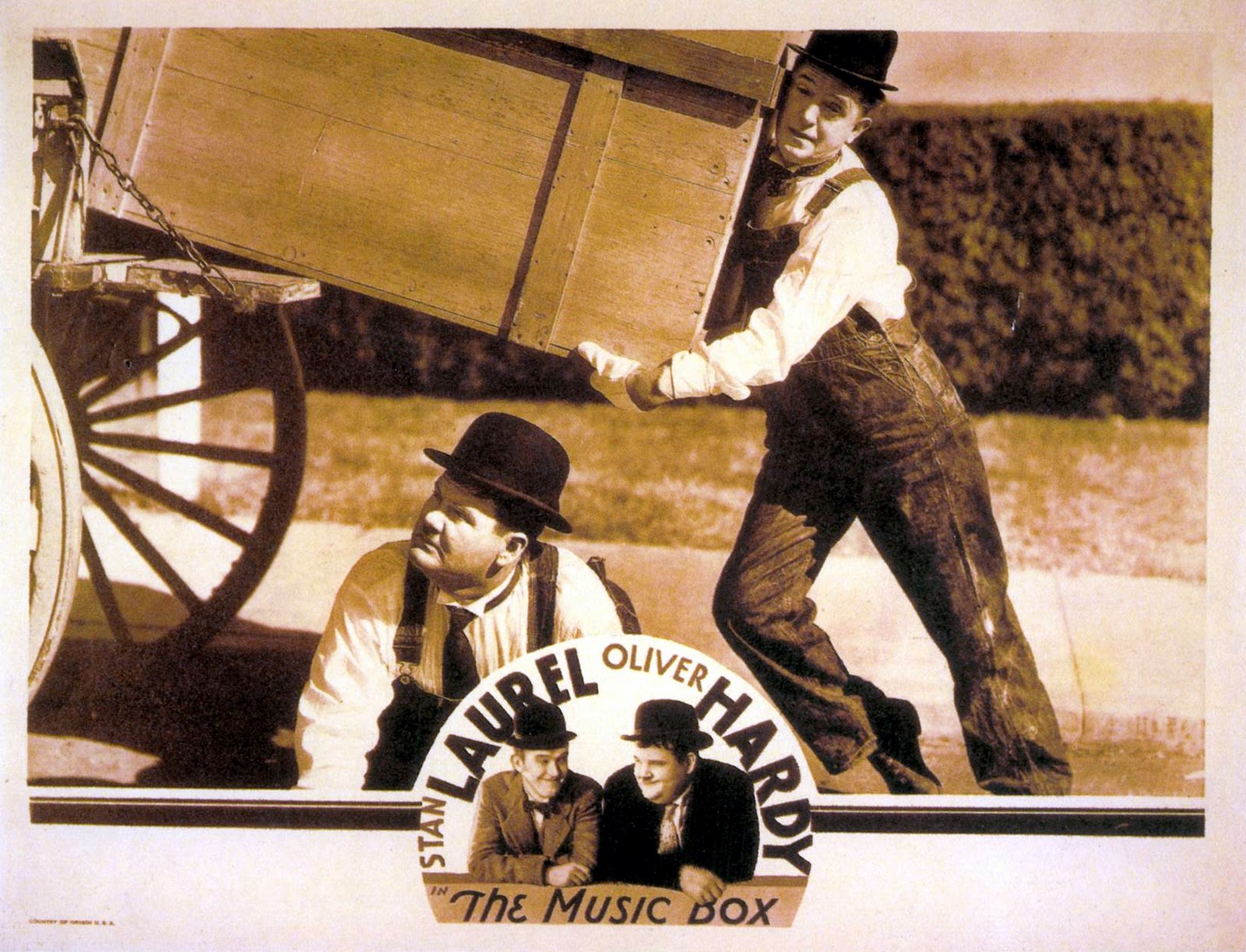
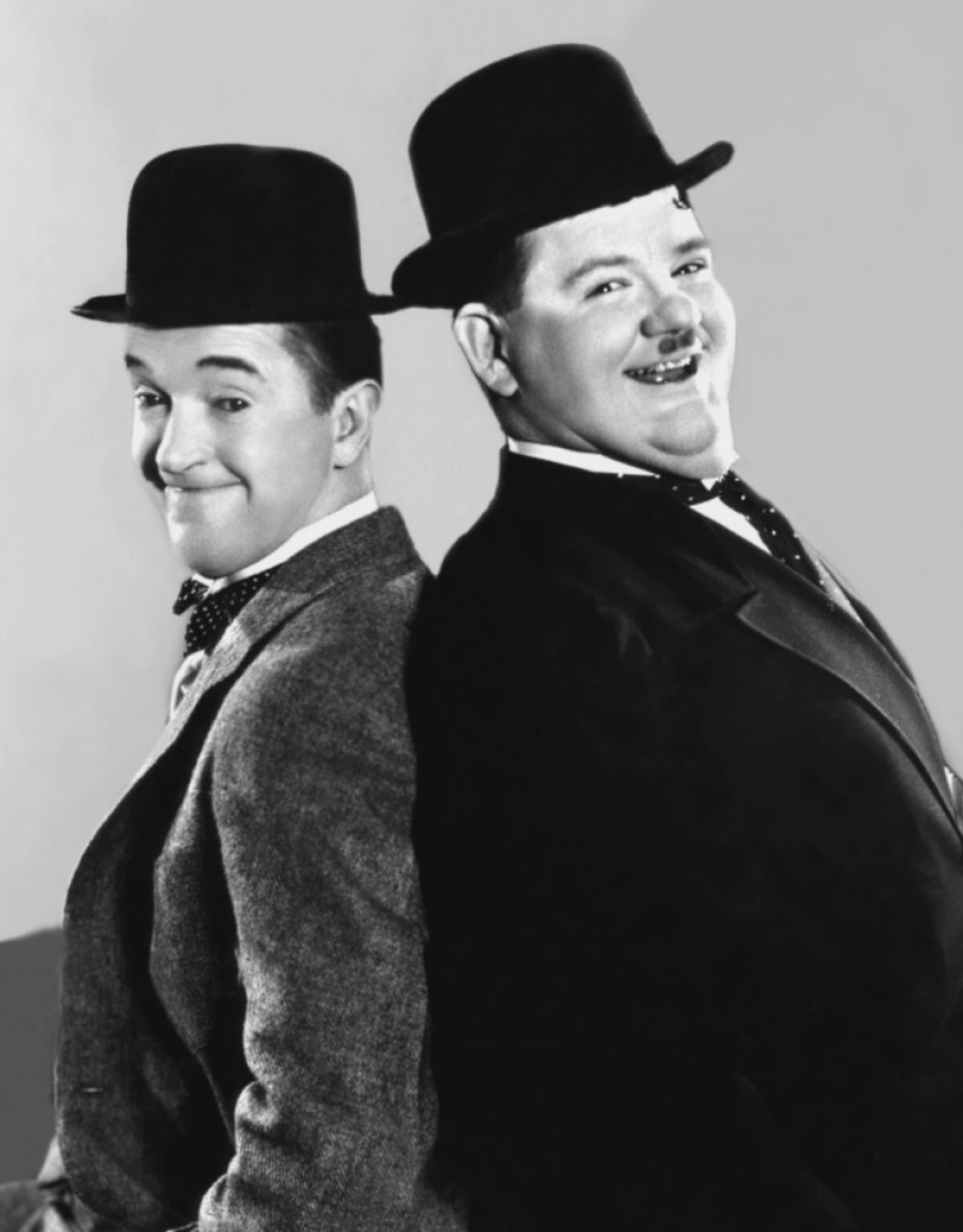
ACTOR (Comedy/Musical) winner:Stan Laurel and Oliver Hardy (The Music Box) nominees: James Cagney (Blonde Crazy); Maurice Chevalier (The Smiling Lieutenant and One Hour With You); The Marx Brothers (Monkey Business); Robert Montgomery (Private Lives)
ACTRESS (Drama) winner:Mae Clarke (Waterloo Bridge) nominees: Constance Bennett (What Price Hollywood?); Joan Crawford (Grand Hotel); Marlene Dietrich (Shanghai Express); Greta Garbo (Susan Lenox (Her Fall and Rise), Mata Hari, Grand Hotel and As You Desire Me); Helen Hayes (The Sin of Madelon Claudet and Arrowsmith); Barbara Stanwyck (The Miracle Woman); Dorothea Wieck (Mädchen in Uniform)
ACTRESS (Comedy/Musical) winner:Norma Shearer (Private Lives) nominees: Joan Blondell (Blonde Crazy); Claudette Colbert (The Smiling Lieutenant); Lynn Fontanne (The Guardsman); Jean Harlow (Platinum Blonde and Red-Headed Woman)
DIRECTOR (Drama) winner: Tod Browning (Freaks) nominees: Edmund Goulding (Grand Hotel); Howard Hawks (Scarface); Rouben Mamoulian (Dr. Jekyll And Mr. Hyde); James Whale (Frankenstein and Waterloo Bridge)
DIRECTOR (Comedy/Musical) winner:René Clair (À Nous La Liberté) nominees: Sidney Franklin (The Guardsman and Private Lives); Ernst Lubitsch (The Smiling Lieutenant and One Hour With You); Yasujirô Ozu (I Was Born, But ...); James Parrott (The Music Box)
SUPPORTING ACTOR (Drama) winner: George Raft (Scarface) nominees: Boris Karloff (Frankenstein); Lewis Stone (The Sin of Madelon Claudet, Mata Hari and Grand Hotel)
SUPPORTING ACTOR (Comedy/Musical) winner: Roland Young (The Guardsman and One Hour With You) nominees: Raimu (Marius)
SUPPORTING ACTRESS (Drama) winner:Miriam Hopkins (Dr. Jekyll And Mr. Hyde) nominees: Ann Dvorak (Scarface); Aline MacMahon (Five Star Final); Anna May Wong (Shanghai Express)
SUPPORTING ACTRESS (Comedy/Musical) winner: Thelma Todd (Monkey Business) nominees:Miriam Hopkins (The Smiling Lieutenant); Una Merkel (Private Lives and Red-Headed Woman)
SCREENPLAY winner:Ben Hecht; continuity and dialogue by Seton I. Miller, John Lee Mahin and W.R. Burnett; from a novel by Armitage Trail (Scarface) nominees: René Clair (À Nous La Liberté); Frances Marion (story), Leonard Praskins (dialogue continuity) and Wanda Tuchock (additional dialogue) (The Champ); Garrett Fort and Francis Edward Faragoh (screenplay), adaptation by John L. Balderston, from the novel Frankenstein: or, The Modern Prometheus by Mary Shelley and the play Frankenstein: An Adventure in the Macabre by Peggy Webling (Frankenstein); Christa Winsloe and Friedrich Dammann (as F.D. Andam); from the play by Christa Winsloe (Mädchen in Uniform); S.J. Perelman and Will B. Johnstone (screenplay); Arthur Sheekman (additional dialogue) (Monkey Business)
SPECIAL AWARDS Lee Garmes (Shanghai Express and Scarface) (Cinematography); C. Roy Hunter (Frankenstein) (Sound); Charles D. Hall and Kenneth Strickfaden (Frankenstein) (Art Direction-Set Decoration); Jack Pierce and Pauline Eells (Frankenstein) (Makeup); Wally Westmore (Dr. Jekyll and Mr. Hyde) (Special Effects)
Other possibilities included Ruth Chatterton (Dodsworth), Bette Davis (The Petrified Forest), Myrna Loy (After The Thin Man and Libeled Lady), Ginger Rogers (Swing Time) and Sylvia Sidney (Fury and Sabotage).
You can find and vote in previous polls by clicking here.
● He was born José Ramón Gil Samaniego in Durango, Mexico, in 1899. At age fourteen, he moved with his family to Los Angeles to escape the Mexican Revolution.
● Novarro made his acting debut with an uncredited part as a starving peasant in Cecil B. DeMille's 1916 costume epic, Joan the Woman.
● After ten more small, usually uncredited bit roles between 1917 and 1921, Novarro scored his breakout role as Rupert of Hentzau in the 1922 version of The Prisoner of Zenda.
● Novarro's biggest role was the title character in Fred Niblo's silent classic, Ben-Hur: A Tale of the Christ. Among his silent works, I can also highly recommend Scaramouche and Ernst Lubitsch's The Student Prince in Old Heidelberg.
● As was the case with many actors of the time, his career suffered with the advent of the talkies. He made his talkie debut in 1929, and of these early efforts, I'd point you to 1931's Mati Hari in which he co-starred with an especially luminous Greta Garbo. MGM dropped his contract in 1935.
● Novarro was a devout Roman Catholic; he was also gay, and was tormented by the conflict between his sexuality and his religious beliefs. Nevertheless, he refused to enter into a sham marriage to satisfy the gossip columnists or his boss, Louis B. Mayer.
● Of his later movies, I am a big fan of his work in the 1949 comic noir The Big Steal, starring Robert Mitchum and Jane Greer. There he is a Mexican police inspector who plays cat-and-mouse with a thief and his pursuers. He also appeared in an episode of The Wild Wild West, a childhood favorite of mine.
● Novarro was brutally murdered in his home in 1968 by two male prostitutes who mistakenly believed Novarro had a large cache of money hidden in his home. They eventually made off with $20, were captured, convicted and served less than ten years each for their crimes.
● And while we're here, how about a few more photos of Ramon Novarro:
(Subsequent to posting this earlier today, I decided to tie in my movie recommendations below with the Oscar-winning film The Artist which Thingy was watching when she gave me the Thingster Award.)
My blog pal Thingy over at Pondering Life has bestowed upon me the coveted Thingster Award. She was watching The Artist—the silent movie that won the Oscar for best picture in 2011—the other day and thought of yours truly.
"Mythical Monkey. The go to guy for great insight on the classics, and not so classic movies."
Thingy created the "Thingster Award" back in April. After winning the Liebster Blog Award, she wrote, "I came up with a scathingly brilliant idea. I shall give out my own awards at the end of each week to blogs I find especially appealing to me. You get no trophy, although, you can take the special banner I have made. I also assume many of you will never know of your special prize, for I shall not tell you. (I'm lazy that way)."
And she's been handing out the Thingster Award ever since.
Just not to me.
Now, I don't usually brood about this sort of thing, but every time she handed one out I thought, "Gee, I wish I had me one of those Thingster Awards." And now I do! To quote Mister Roberts, "I'd rather have it than the Congressional Medal of Honor" (you know, in my case because the Medal of Honor would require an act of extraordinary bravery and heroism, a hard thing to accomplish while sitting in front of a computer in the suburbs of Baltimore).
To return the favor, and since Thingy is apparently in a silent movie mood, here are five suggestions to follow up The Artist:
The Black Pirate—Jean Dujardin, the Oscar-winning star of The Artist, cheerfully acknowledged that he was channeling silent film legend Douglas Fairbanks, Sr., during his performance. So why not cut out the middle man and see Fairbanks for yourself. The Black Pirate is a swashbuckling classic, and if you have a Blu-Ray player, you can see the original color version.
Stella Maris—Remember the scene in The Artist where Peppy Miller fondles the jacket and imagines herself with the hero? That's a direct quote of a scene from the classic Mary Pickford melodrama, Stella Maris, my favorite of all of Pickford's films. There she plays two roles, and so convincingly that if you didn't know better, you'd swear it was two different actresses.
Show People—The story of an unknown girl from the country who makes it big in Hollywood was a staple of the silent era (see, e.g., A Girl's Folly, Souls for Sale, The Extra Girl and Ella Cinders), so much so that Marion Davies (with King Vidor directing) spoofed the genre with this 1928 classic comedy. Look for cameos from just about everybody who was anybody including Douglas Fairbanks, Charlie Chaplin, John Gilbert and even Marion Davies and King Vidor as themselves.
Flesh and the Devil—Speaking of John Gilbert, was his fall from box office grace with the coming of the sound age the inspiration for The Artist? Well, actually it could be any number of silent film greats, but if it was Gilbert, here's one of his best, a noirish romance pairing him with off-screen lover Greta Garbo.
Behind the Screen—And finally, a very funny behind-the-scenes look at the making of a Hollywood movie from the silent era's most popular comedy star, the legendary Charlie Chaplin.
Hope that's of use to you, Thingy, and once again, thank you very much for the award!
A list of silent movies on Turner Classic Movies this July. This is why God created the DVR. (All times Eastern Daylight Savings Time).
July 8
12:00 AM The Thief Of Bagdad (1924)
An Arabian thief sets out on a magical adventure to win a beautiful princess.
Dir: Raoul Walsh Cast: Douglas Fairbanks, Snitz Edwards, Charles Belcher. BW-140 mins
July 10
6:30 AM Bardelys the Magnificent (1926)
A notorious womanizer falls for the woman he has bet he can trick into marriage.
Dir: King Vidor Cast: John Gilbert, Eleanor Boardman, Roy D'Arcy . BW-90 mins
July 10
8:15 AM The Show (1927)
In this silent film, a sideshow dancer secretly loves the show's amoral barker.
Dir: Tod Browning Cast: John Gilbert, Rene Adore, Lionel Barrymore. BW-76 mins
July 10-
9:45 AM A Woman of Affairs (1928)
Prejudice keeps a free spirit from the man she loves, triggering a series of tragedies.
Dir: Clarence Brown Cast: Greta Garbo, John Gilbert, Lewis Stone. BW-91 mins
July 10
11:30 AM Desert Nights (1929)
In this silent film, diamond robbers get caught in a violent sandstorm.
Dir: William Nigh Cast: John Gilbert, Ernest Torrence, Mary Nolan. BW-62 mins
July 15
12:00 AM Seven Years Bad Luck (1921)
In this silent film, a man's attempts to avoid bad luck after he breaks a mirror lead straight to it.
Dir: Max Linder Cast: Max Linder, Thelma Percy, Alta Allen. BW-62 mins
July 15
1:15 AM Seven Chances (1925)
To inherit a fortune, a man races to find a bride by 7 p.m.
Dir: Buster Keaton Cast: Buster Keaton, T. Roy Barnes, Snitz Edwards. BW-56 mins
July 21
10:00 PM Modern Times (1936)
The Tramp struggles to live in a modern industrial society with the help of a young homeless woman.
Dir: Charlie Chaplin Cast: Charlie Chaplin, Paulette Goddard, Henry Bergman. BW-87 min.
July 22
12:00 AM Mickey (1918)
An orphan brought up in a mining settlement is sent to New York to live with her aunt.
Dir: Richard Jones Cast: Mabel Normand, George Nichols, Wheeler Oakman. BW-74 mins
July 29
12:00 AM Phantom (1922)
In this silent film, a store clerk risks his future to pursue his obsession with a beautiful, ghostly woman.
Dir: F. W. Murnau Cast: Alfred Abel, Lil Dagover, Aud Egede Nissen. BW-119 mins
That's films from such Monkey favorites as Douglas Fairbanks, John Gilbert, Max Linder, Charlie Chaplin, Mabel Normand and F.W. Murnau. Mark your calendars!
Best Performance in a Quentin Tarantino Movie
In case you haven't noticed, this is actually a pretty tough category. Several actors and actresses have given career performances in Tarantino's films—Michael Madsen, Samuel L. Jackson, John Travolta, Pam Grier, Robert Forster, Uma Thurman ...
Any one of whom would be a great choice. But I'm going with Christoph Waltz as Col. Hans Landa in Inglourious Basterds. Smart, smarmy, sinister, he might be the only actor in history who could make you sweat bullets simply by eating a strudel.
Best Performance With a Serious Disease
Oscar loves this sort of thing, but generally speaking, the Monkey doesn't. If a cartoon character's performance counted, I'd go with the two-part breast cancer episode of FX's spy spoof Archer. But that's television and we're talking movies, so I'm going with Greta Garbo in Camille. She makes dying look so beautiful and stylish, I almost wish I had tuberculosis.
Best Performance Where You Do a Lot of A-C-T-I-N-G and Arm-Waving
Meryl Streep owns this category, but I'll be honest with you—outside of her latter-day comedies, Meryl Streep's not really my cup of tea. Acting may indeed be hard, but I've always thought the best actors made it look easy. I'll take Cary Grant over Laurence Olivier any day.
I do enjoy some of the great ham actors of history—particularly John Barrymore and Wallace Beery—but among cinema's more serious-minded scenery-chewers, I'm quite fond of Kirk Douglas. And my favorite Kirk Douglas performance is that of bottom-feeder tabloid journalist Chuck Tatum in Billy Wilder's Ace in the Hole, quite possibly the most cynical movie ever made.
Best Performance Where You Just Sit There and Your Eyes Get Sad
Usually with a pop tune playing in the background—a staple of bad television. But at the risk of enraging Douglas Fairbanks, I have to say Lon Chaney, the silent era's man of a thousand faces, did more acting with his eyes than nearly anyone I can think of. Being buried under all that makeup, he had to.
He gave many great performances, including The Hunchback of Notre Dame and The Phantom of the Opera, but maybe the one that depended the most on "sad eyes" was Laugh, Clown, Laugh, the story of an aging circus performer who raises an abandoned girl as his own only to find to his horror and his shame that when she grows to young womanhood he is falling hopelessly in love with her. A brilliant performance.
Best Performance With a Lot of Nudity That Was Probably Unnecessary But Not Unwelcome
The 1970s was the era of gratuitous nudity—at least one scene casually featuring bare breasts was pretty much de rigueur back then, especially in films that aspired to hip sophistication—but looking back at it now, the whole trend seems sexist, exploitative and even a bit creepy. So I'm jumping forward two decades to 1997's Titanic, a film that grossed something like a billion dollars, won the Oscar for best picture and has completely faded from my memory except for Kate Winslet's nude scene.
Bluenosed video store owners excised the footage from VHS copies of the movie without realizing Winslet's shapely bosom was the only part of the movie worth watching. I hope they at least had the good sense to stitch all that discarded tape together into a single endless loop.
Tomorrow: explosions, cross-overs, aging, manly tears and Citizen Kane.
Named for Katie-Bar-The-Door, the Katies are "alternate Oscars"—who should have been nominated, who should have won—but really they're just an excuse to write a history of the movies from the Silent Era to the present day.
To see a list of nominees and winners by decade, as well as links to my essays about them, click the highlighted links:
Remember: There are no wrong answers, only movies you haven't seen yet.
The Silent Oscars
And don't forget to check out the Silent Oscars—my year-by-year choices for best picture, director and all four acting categories for the pre-Oscar years, 1902-1927.
Look at me—Joe College, with a touch of arthritis. Are my eyes really brown? Uh, no, they're green. Would we have the nerve to dive into the icy water and save a person from drowning? That's a key question. I, of course, can't swim, so I never have to face it. Say, haven't you anything better to do than to keep popping in here early every morning and asking a lot of fool questions?










 Posts
Posts

