My purely idiosyncratic list designed to promote the Funny Lady Blogathon now up and running at Movies, Silently. "A baker's dozen" implies pies will be thrown and some of these funny ladies, particularly Mabel Normand, threw a mean one. Things might get messy so dress appropriately—you've been forewarned.
13. Daphne Pollard—standing 4' 9", this diminutive comedienne was a star in Mack Sennett's stable in the mid-1920s.
12. Bebe Daniels—co-starred in the early Harold Lloyd shorts then jumped to Cecil B. DeMille's sex comedies.
11. Jobyna Ralston—the "girl" in most of Harold Lloyd's latter-day features, including Girl Shy, The Freshman and The Kid Brother
10. Constance Talmadge—remembered now for her turn as the "Mountain Girl" in D.W. Griffith's Intolerance, in her day she was beloved for her comedy.
9. Edna Purviance—made more movies with Charlie Chaplin than any other actress.
8. Ossi Oswalda—maybe the least known to American audiences, she was Ernst Lubitsch's go-to girl before he moved to Hollywood.
7. Colleen Moore—this fresh-faced girl-next-door had a knack for finding trouble.
6. Gloria Swanson—long before Norma Desmond, she was playing second fiddle to superstar Teddy the dog for Mack Sennett then graduated to DeMille's groundbreaking sex comedies.
5. Marion Davies—Orson Welles owes somebody an apology: this woman was talented and funny.
4. Clara Bow—the original "It" girl: beautiful, tender, funny and ultimately doomed.
3. Marie Dressler—the star of the first feature-length comedy, 1914's Tillie's Punctured Romance, she made a comeback in 1928 and eventually won an Oscar. (Dressler's the one on the right.)
2. Mary Pickford—number one at the box office, number one in our hearts, number two on this list.
1. Mabel Normand—sometimes credited with throwing the first pie in movie history, she was the beauty who starred with such beasts as Charlie Chaplin and Roscoe "Fatty" Arbuckle.
D.W. Griffith's Intolerance that is, which is playing at the Smithsonian's Freer Gallery of Art on Saturday, March 9, 2013, at 3 p.m., I do believe. The Baltimore-based group Boister will provide live musical accompaniment. Admission is free.
Maybe Katie-Bar-The-Door and I will see you there.
In case you know nothing about it, Intolerance weaves four separate story lines—the life of Christ, the fall of Babylon, the massacre of the Huguenots, and a modern-day story about the victims of an overreaching reform movement—into a three-plus hour spectacle that might be the most ambitious movie ever made. Accounts vary as to how much of his personal fortune Griffith poured into the production—some say as much as $2 million, the most for any film before Gone With The Wind—but there's no question that this was the most lavish production of the silent era.
Or to put it another way, to show the sack of Babylon, Griffith basically built a full-scale replica of the ancient city on a Hollywood backlot and then laid siege to it.
"Imagine," wrote Daniel Eagan in America's Film Legacy, "how audiences in [1916] must have reacted to the sight of walls and battlements four and five stories high, to courtyards set on three different levels and filled with hundreds of costumed extras, to visuals so expensive it's like they were filmed on and made out of gold."
The film opens with the story of a modern-day reform movement determined to improve the spiritual life of the working class even if it kills them. Fueled by jealousy and financed by an autocratic mill owner, the reformers crush the life out of their would-be beneficiaries, particularly "the Dear One" (played so memorably by Mae Marsh), the embodiment of youthful joy and innocence. Only a crabbed, self-righteous hypocrite could find fault with someone so pure; that the reform movement's machinations lead to Dear One's fall is a testament to its destructive purposes.
To underscore the point, Griffith cuts to a scene from the life of Christ, that of a Pharisee praying in public so that others might better observe his piety. "Oh Lord, I thank thee that I am better than other men."
The film's third storyline focuses on the political intrigue in the court of King Charles IX that led to the massacre of Protestants in Paris in the late sixteenth century, while the fourth and final story, about the jealousy between rival religious factions that led to the sack of Babylon, rounds out Griffith's theme, a rousing condemnation of the humorless, meddling, Puritanical impulses that characterize so much of America's reformist zeal on both ends of the political spectrum. Watching it, I thought it was a pity that Griffith never directed a screen version of Sinclair Lewis's Elmer Gantry.
Structurally, Intolerance is as audacious as anything ever attempted on film—four simultaneous stories linked only by a common theme and the generally rising action—with the editing style growing more complex as the action in each story reaches its climax. The film's last half hour, with quick cross-cut shots between a marauding army, a racing car, a speeding train, the slaughter of the Huguenots and the crucifixion of Christ, has been described as a fugue, a concept borrowed from music where two or more voices entering successively and sung in either imitation or counterpoint to build on a common theme.
Griffith's visual fugue later inspired Sergei Eisenstein and other Russian directors to develop the montage—quick shots cut rapidly together to condense several events or a lengthy period of time into a single short sequence.
Questions have persisted almost from the beginning as to Griffith's motives in making Intolerance. For years, historians assumed Intolerance was his apology for the racism of The Birth of a Nation, but more recently, biographers have suggested Griffith was lashing out at those who were looking for an apology. Personally, after watching it in the context of the times, Intolerance looks like the act of a supremely self-confident artist determined to top both himself and his chief competition, Cecil B. DeMille and Thomas H. Ince, who that year directed ambitious historical epics of their own, Joan the Woman and Civilization, respectively.
Whatever his motivations, Griffith succeeded brilliantly.
Which is not to say that all four of Griffith's stories are created equal. Christ's life, for example, gets the least amount of screen time, presumably because Griffith assumed his audience knew the story so well, he needed only reference a particular well-know incident to underscore a point he wanted to make in one of the other story lines.
Too, the story of Protestant-Catholic infighting in sixteenth century France isn't all that interesting even if it does result in a satisfyingly bloody slaughter by the film's end. Without a central figure as compelling as the Dear One or Babylon's Mountain Girl (Constance Talmadge), the court intrigue becomes a bit opaque, delving too deeply into the minutiae of history without giving us someone lovable to root for.
But when it focuses on the modern and Bab- ylonian stories, the film soars. It's telling that in the role of the Dear One, Griffith cast Mae Marsh from his stable of performers instead of his usual go-to girl, Lillian Gish. For truly tragic suffering—and for an ideal of Victorian womanhood that existed only in Griffith's head—no one was better than Gish. But Marsh, with her kewpie doll face, bow-tie mouth and round, startled eyes, was better suited for a role that required joy, passion and an almost childlike innocence. Along with her work in Judith of Bethulia, The Birth of a Nation and Hoodoo Ann, this represents Marsh at the peak of her career.
The film's most unforgettable performance—and for me, the best in any film in 1916—came from Marsh's co-star, Constance Talmadge. In the Babylonian sequence of Intolerance, she plays "the Mountain Girl," a pretty, perky, petulant teenage beauty who finds herself fighting against a palace conspiracy that threatens to topple the kingdom. Wide-eyed and gangly-limbed, Talmadge is as hyperactive as a puppy amped up on kibble and amphetamines, windmilling her way across the screen, and you can't take your eyes off her. Neither could audiences in 1916 and she quickly became a star.
"[I]t's a mark of her skill," Eagan wrote, "that she stands out in a segment filled with orgies, sacrifices, semi-nudity, wild animals, and wholesale destruction."
In short, if you're a connoisseur of mind-blowing cinema, watch this D.W. Griffith epic and consider your mind blown. See you tomorrow—maybe.
In case you know nothing about it, Intolerance weaves four separate story lines—the life of Christ, the fall of Babylon, the massacre of the Huguenots, and a modern-day story about the victims of a overreaching reform movement—into a three-plus hour spectacle that might be the most ambitious movie ever made. Accounts vary as to how much of his personal fortune Griffith poured into the production—some say as much as $2 million, the most for any film before Gone With The Wind—but there's no question that this was the most lavish production of the silent era.
Or to put it another way, to show the sack of Babylon, Griffith basically built a full-scale replica of the ancient city on a Hollywood backlot and then laid siege to it.
Structurally, Intolerance is as audacious as anything ever attempted on film—four simultaneous stories linked only by a common theme and the generally rising action—with the editing style growing more complex as the action in each story reaches its climax. The film's last half hour, with quick cross-cut shots between a marauding army, a racing car, a speeding train, the slaughter of the Huguenots and the crucifixion of Christ, has been described as a fugue, a concept borrowed from music where two or more voices entering successively and sung in either imitation or counterpoint to build on a common theme.
The film's most unforgettable performance—and for me, the best in any film in 1916—came from Constance Talmadge, sister of the better known Norma Talmadge. In the Babylonian sequence of Intolerance, she plays "the Mountain Girl," a pretty, perky, petulant teenage beauty who finds herself fighting against a palace conspiracy that threatens to topple the kingdom. Wide-eyed and gangly-limbed, Talmadge is as hyperactive as a puppy amped up on kibble and amphetamines, windmilling her way across the screen, and you can't take your eyes off her. Neither could audiences in 1916 and she quickly became a star.
"[I]t's a mark of her skill," Eagan wrote, "that she stands out in a segment filled with orgies, sacrifices, semi-nudity, wild animals, and wholesale destruction."
Working primarily in comedies, Talmadge would excel throughout the silent era—look for her in The Matrimaniac, the best of the dozen films Douglas Fairbanks made in 1916, a wild, stunt-filled romantic comedy that no doubt later served as a blueprint for the get-me-to-the-wedding-on-time story lines of Harold Lloyd's Girl Shy and For Heaven's Sake—then retired with the advent of sound, famously telling her sister Norma, "Quit pressing your luck, baby. The critics can't knock those trust funds Mama set up for us."
PICTURE winner:Intolerance (prod. D.W Griffith) nominees:The Chaplin Mutuals (prod. Charles Chaplin); Hell's Hinges (prod. Thomas H. Ince); Judex (prod. Société des Etablissements L. Gaumont) Must-See Movies:Intolerance Recommended Films:Behind The Screen; The Count; The Fireman; The Floorwalker; The Habit of Happiness; Hell's Hinges; Judex; The Matrimaniac; One A.M.; The Pawnshop; Police; The Rink; The Waiter's Ball Of Interest:Civilization; Flirting With Fate; Hævnens nat a.k.a. Blind Justice; His Picture in the Papers; Hoodoo Ann; Joan the Woman; The Mystery of the Leaping Fish; A Natural Born Gambler; Reggie Mixes In; Snow White; The Social Secretary; Sold For Marriage; 20,000 Leagues Under The Sea; Where Are My Children?
ACTRESS winner: Mae Marsh (Hoodoo Ann and Intolerance) nominees: Marguerite Clark (Snow White); Lillian Gish (Sold For Marriage); Norma Talmadge (Going Straight and The Social Secretary)
SUPPORTING ACTOR winner: Eugene Pallette (The Children In The House and Going Straight) nominees: George Fawcett (The Habit Of Happiness); Theodore Roberts (Joan The Woman); Fred Warren (The Matrimaniac)
SUPPORTING ACTRESS winner: Constance Talmadge (Intolerance) nominees: Dorothy G. Cumming (Snow White); Bessie Love (Reggie Mixes In); Musidora (Judex)
SCREENPLAY winner:Anita Loos (His Picture In The Papers (screenplay), Intolerance (titles), The Social Secretary (screenplay), American Aristocracy (story), The Matrimaniac (screenplay) and The Americano (scenario and titles)) nominees:Charles Chaplin (The Chaplin Mutuals); Lois Weber and Phillips Smalley, from a story by L. Payton and F. Hall (Where Are My Children?)
SPECIAL AWARDS Eugene Gaudio, George M. Williamson and J. Ernest Williamson (20,000 Leagues Under The Sea) (Cinematography); D.W. Griffith , James Smith and Rose Smith (Intolerance) (Film Editing); Walter L. Hall (Intolerance) (Art Direction-Set Design)
"That's Typing" Tuesday, in which I share unpolished, unpublished writings from my vast store of unpolished, unpublished writings. On Tuesdays.
I've been busy working on my essay about Chaplin's Mutual Comedies. That, and taking care of the dog who has a hip flexor as a complication of her knee surgery. So I've got nothing.
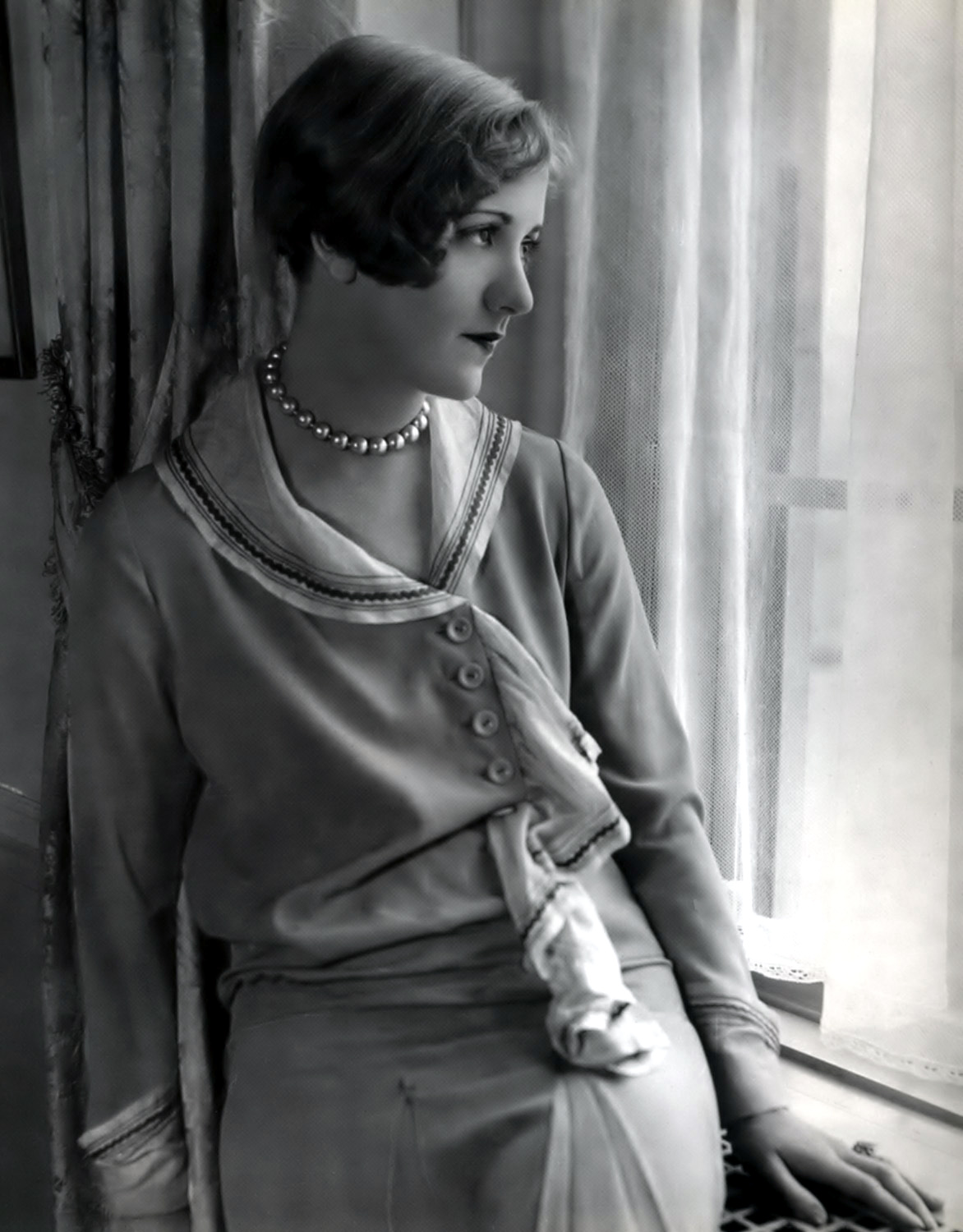
And when you've got nothing, my good friend, Mister Muleboy, advises, post pictures of pretty starlets.
I'm paraphrasing.
I did hear from Lisa Rothstein in the comment section related to That's Typing Tuesday #8, a John Astin quote from The Addams Family ("I haven't seen so much activity since the night I hid the hornet's nest in Aunt Phobia's sleeping bag."). This is what she had to say:
John Astin also appeared, pre-Addams Family, in a 1962 sitcom entitled “I’m Dickens…He’s Fenster” that my husband, Jim Benson of www. TVTimeMachine.com and I’ll be bringing out on DVD this fall. Astin does a lot of physical comedy in the show, which also stars Marty Ingels, and is about two best friends and co-workers in a construction company where things rarely go right. http://www.imdickenshesfenster.com and http://dickensandfenster.com to see clips and for more info about the DVD project.
How about that!
And now, on to pictures of some of my favorite silent actresses:
I've written about Douglas Fairbanks many times, and the salient facts of his life are probably well-known to you: along with wife Mary Pickford and business partner Charlie Chaplin, Fairbanks was the first great film superstar. He co-founded United Artists in 1919, single-handedly invented the action hero genre in 1920, was elected the first president of the Academy of Motion Picture Arts and Sciences in 1927, and received an honorary Oscar in 1940.
After a successful career on Broadway, Fairbanks made his film debut in 1915, but it was really during the following year that he established himself on the silver screen. Including his cameo in the D.W. Griffith epic Intolerance, Fairbanks appeared in a dozen movies in 1916. One, The Good Bad Man, is apparently lost, but the others are readily available.
Here are thumbnail reviews in the order of release (ratings out of five):
His Picture in the Papers—Fairbanks plays Pete Prindle, the amiable but aimless son of a wealthy vegetarian. Pete prefers a diet of meat, booze and cigarettes to the family's line of Prindle's Pre-Digested Prunes, but he can still make pop happy if he can get his picture in the paper and boost the family business. Despite attempting all manner of publicity-getting stunts, including entering an amateur boxing match and wrecking his own car, Pete is a disappointment until he takes on the thugs who seek to muscle in on his father's company.
A pleasant enough comedy. ★★★
The Habit of Happiness—A solid comedy about a college graduate (Fairbanks) determined to put his "habits" for happiness in practice among the denizens of New York's Bowery. The bums are a piece of cake, but the real test comes in the form of an elderly miser who hates life. When gangsters determined to kill the old man for his money show up, Fairbanks has a chance to show off his athletic prowess.
George Fawcett provides solid support as the old grump. ★★★½
Trivia: Fairbanks told dirty jokes to get the extras to laugh in scenes filmed on skid row. When lip readers in the audience complained, the studio reshot Fairbanks's close-ups.
The Good Bad Man—presumed lost, a real pity since this was also the first of the eighteen movies Fairbanks wrote as well as starred in.
Reggie Mixes In—Another comedy with Fairbanks again playing a rich, physically-fit twenty-something with no real purpose in life. This time he takes work as a bouncer in a seedy bar because he's infatuated with a dancer (the always beautiful Bessie Love) and finds himself at odds with the least imposing gangster in movie history, William Lowery in a Trilby hat, striped bow tie and a jacket at least four sizes too small for him. Fairbanks engages in some uncharacteristic knockabout comedy with his butler, played by Joseph Singleton.
★★★
The Mystery of the Leaping Fish—Easily the most oddball entry in the entire Fairbanks oeuvre, this comedy short features a drug-addicted private eye who can barely rouse himself long enough to mainline some of the cocaine he keeps in a large pot on his desk, much less make it down to the beach where smugglers are hoping land a shipment of opium. (That's Fairbanks in the long mustache and tousled hair.)
The comedy is a little broad for my taste, but it scores the highest on the Internet Movie Database among Fairbanks's 1916 comedies. Fortunately, you can judge for yourself by clicking here.
★★★
Flirting with Fate—In a moment of despair, a struggling artist, Augy Holliday (Fairbanks), hires a notorious gunman to kill him. Almost as soon as the contract is set, though, Augy's ship comes in—his paintings sell, a long-lost relative leaves him a fortune and the girl of his dreams agrees to marry him. Luckily for him, this is a comedy, and the rest of the picture involves wild chases and mistaken identities. George Beranger provides memorable support as the would-be assassin.
★★★½
The Half-Breed—The only real dud in the set, The Half-Breed is an overripe melodrama set in the wild west. Fairbanks, virtually unrecognizable in buckskins and coonskin cap, lives alone in the wilderness as a mountain man, making only occasional forays into town. On one trip, though, he finds himself rescuing a saloon girl who is fleeing what I presumed to be her pimp, and she and Fairbanks wind up living together in the forest. The notion of Man in his natural state has appealed to philosophers throughout history—Locke, Rousseau, Thoreau—and there have been some pretty good movies inspired by the idea of getting away from it all, but this isn't one of them.
★½
Intolerance—D.W. Griffith's four-part story about the ill effects of religious fanaticism throughout the ages was the best picture of 1916 (read more about it here), but Fairbanks's role as the Man on the White Horse in the French segment amounts to little more than a cameo. No reason not to see it, though, especially since the restored version is available for instant streaming from Netflix.
★★★★★
Manhattan Madness—After a couple of dramatic turns, Fairbanks is back in his element here as a cowboy visiting friends in Manhattan. He longs to return to the range, but his pals are determined to prove that the big city can be just as wild as the west. On a bet, he stays another week and winds up helping a fair maiden escape from dangerous kidnappers—or does he? Fairbanks reversed the basic story to great effect for his 1917 masterpiece, Wild and Woolly, where he plays a naive city boy who heads west for adventure, not realizing the frontier of his dreams is largely a product of Hollywood's imagination.
★★★
American Aristocracy—Written by Anita Loos, who along with Frances Marion was then in the process of turning title writing into an art form, the tenth Douglas Fairbanks movie of 1916 begins as a satire of what passes for an aristocracy in a nation of over-glorified shopkeepers, with a seaside gathering of bean barons and milk kings dedicated to the proposition that wherever you go, there you'll find someone you can feel superior to—and thus, the wives of distillers can snub the wives of brewers as "social climbers."
"We ain't got any time for upstarts!"
Into this mix arrives Cassius Lee (Fairbanks), an amateur entomologist hot on the trail of the migratory caterpillar. Lee winds up involved with the heiress to the Hicks' Hatpin fortune (played by Jewel Carmen at the peak of her short-lived career) as well as gunrunners smuggling weapons to Mexico during that country's civil war (presumably to be used against the American forces who had intervened in the conflict). But, of course, this is all just an excuse to show off Fairbanks's athletic prowess and we don't get cheated as he scales buildings, springs into moving cars and swings from telephone wires.
Gotta love a man able to leap both porters and park benches in a single bound.
★★★
The Matrimaniac—For me, this is the real gem of the bunch, at least from the standpoint of Douglas Fairbanks. Here, he and one of the silent screen's best comediennes, Constance Talmadge, elope over the objections of her father and a former suitor. Along the way, Fairbanks steps off the train to fetch a minister, then spends the rest of the movie trying to catch up with his bride-to-be when his return is delayed. The result is a wild, stunt-filled romantic comedy that no doubt later served as a blueprint for the get-me-to-the-wedding-on-time storylines of Harold Lloyd's Girl Shy and For Heaven's Sake.
Especially fine is the performance of Fred Warren as the hapless minister—dragged out of the bath by Fairbanks on a moment's notice, he must steal clothes, shoes and various modes of transportation while dodging cops, strongmen and scandal, and winds up conducting the ceremony in the most unlikely of places.
★★★★
The Americano—For the sake of love, justice and, of course, adventure, a young American mining engineer (Fairbanks) intervenes in a Latin American revolution. Although this a straight action-adventure picture, Fairbanks relies as much on wit and guile as physical prowess and given the picture's setting, it's a short step from here to The Mark of Zorro, the film that in 1920 established Fairbanks as history's first and greatest swashbuckling action hero. Alma Rubens plays the love interest.
A word of warning: Tom Wilson, playing the part of Fairbanks's sidekick, wears black-face makeup throughout to portray an African-American, which modern audiences will, at best, find insensitive if not outright offensive. I won't pretend to defend the use of black-face here or anywhere else other than to say that the practice was standard for the era.
Trivia: Filmed on location outside of Tijuana, Mexico, Fairbanks and his crew were taken hostage by one of the local militias fighting in that country's civil war. After paying a ransom, Fairbanks and his crew hustled themselves across the border and finished the film in San Diego, California.
Named for Katie-Bar-The-Door, the Katies are "alternate Oscars"—who should have been nominated, who should have won—but really they're just an excuse to write a history of the movies from the Silent Era to the present day.
To see a list of nominees and winners by decade, as well as links to my essays about them, click the highlighted links:
Remember: There are no wrong answers, only movies you haven't seen yet.
The Silent Oscars
And don't forget to check out the Silent Oscars—my year-by-year choices for best picture, director and all four acting categories for the pre-Oscar years, 1902-1927.
Look at me—Joe College, with a touch of arthritis. Are my eyes really brown? Uh, no, they're green. Would we have the nerve to dive into the icy water and save a person from drowning? That's a key question. I, of course, can't swim, so I never have to face it. Say, haven't you anything better to do than to keep popping in here early every morning and asking a lot of fool questions?




 "Imagine," wrote Daniel Eagan in America's Film Legacy, "how audiences in [1916] must have reacted to the sight of walls and battlements four and five stories high, to courtyards set on three different levels and filled with hundreds of costumed extras, to visuals so expensive it's like they were filmed on and made out of gold."
 The film opens with the story of a modern-day reform movement determined to improve the spiritual life of the working class even if it kills them. Fueled by jealousy and financed by an autocratic mill owner, the reformers crush the life out of their would-be beneficiaries, particularly "the Dear One" (played so memorably by Mae Marsh), the embodiment of youthful joy and innocence. Only a crabbed, self-righteous hypocrite could find fault with someone so pure; that the reform movement's machinations lead to Dear One's fall is a testament to its destructive purposes.
 Griffith's visual fugue later inspired Sergei Eisenstein and other Russian directors to develop the montage—quick shots cut rapidly together to condense several events or a lengthy period of time into a single short sequence.
 But when it focuses on the modern and Bab- ylonian stories, the film soars. It's telling that in the role of the Dear One, Griffith cast Mae Marsh from his stable of performers instead of his usual go-to girl, Lillian Gish. For truly tragic suffering—and for an ideal of Victorian womanhood that existed only in Griffith's head—no one was better than Gish. But Marsh, with her kewpie doll face, bow-tie mouth and round, startled eyes, was better suited for a role that required joy, passion and an almost childlike innocence. Along with her work in Judith of Bethulia, The Birth of a Nation and Hoodoo Ann, this represents Marsh at the peak of her career.
 The film's most unforgettable performance—and for me, the best in any film in 1916—came from Marsh's co-star, Constance Talmadge. In the Babylonian sequence of Intolerance, she plays "the Mountain Girl," a pretty, perky, petulant teenage beauty who finds herself fighting against a palace conspiracy that threatens to topple the kingdom. Wide-eyed and gangly-limbed, Talmadge is as hyperactive as a puppy amped up on kibble and amphetamines, windmilling her way across the screen, and you can't take your eyes off her. Neither could audiences in 1916 and she quickly became a star.
 In case you know nothing about it, Intolerance weaves four separate story lines—the life of Christ, the fall of Babylon, the massacre of the Huguenots, and a modern-day story about the victims of a overreaching reform movement—into a three-plus hour spectacle that might be the most ambitious movie ever made. Accounts vary as to how much of his personal fortune Griffith poured into the production—some say as much as $2 million, the most for any film before Gone With The Wind—but there's no question that this was the most lavish production of the silent era.
 Structurally, Intolerance is as audacious as anything ever attempted on film—four simultaneous stories linked only by a common theme and the generally rising action—with the editing style growing more complex as the action in each story reaches its climax. The film's last half hour, with quick cross-cut shots between a marauding army, a racing car, a speeding train, the slaughter of the Huguenots and the crucifixion of Christ, has been described as a fugue, a concept borrowed from music where two or more voices entering successively and sung in either imitation or counterpoint to build on a common theme.


 I've been busy working on my essay about Chaplin's Mutual Comedies. That, and taking care of the dog who has a hip flexor as a complication of her knee surgery. So I've got nothing.
 John Astin also appeared, pre-Addams Family, in a 1962 sitcom entitled “I’m Dickens…He’s Fenster” that my husband, Jim Benson of www. TVTimeMachine.com and I’ll be bringing out on DVD this fall. Astin does a lot of physical comedy in the show, which also stars Marty Ingels, and is about two best friends and co-workers in a construction company where things rarely go right.


 I've written about Douglas Fairbanks many times, and the salient facts of his life are probably well-known to you: along with wife Mary Pickford and business partner Charlie Chaplin, Fairbanks was the first great film superstar. He co-founded United Artists in 1919, single-handedly invented the action hero genre in 1920, was elected the first president of the Academy of Motion Picture Arts and Sciences in 1927, and received an honorary Oscar in 1940.
 His Picture in the Papers—Fairbanks plays Pete Prindle, the amiable but aimless son of a wealthy vegetarian. Pete prefers a diet of meat, booze and cigarettes to the family's line of Prindle's Pre-Digested Prunes, but he can still make pop happy if he can get his picture in the paper and boost the family business. Despite attempting all manner of publicity-getting stunts, including entering an amateur boxing match and wrecking his own car, Pete is a disappointment until he takes on the thugs who seek to muscle in on his father's company.
 The Habit of Happiness—A solid comedy about a college graduate (Fairbanks) determined to put his "habits" for happiness in practice among the denizens of New York's Bowery. The bums are a piece of cake, but the real test comes in the form of an elderly miser who hates life. When gangsters determined to kill the old man for his money show up, Fairbanks has a chance to show off his athletic prowess.
 The comedy is a little broad for my taste, but it scores the highest on the Internet Movie Database among Fairbanks's 1916 comedies. Fortunately, you can judge for yourself by clicking here.
 The Half-Breed—The only real dud in the set, The Half-Breed is an overripe melodrama set in the wild west. Fairbanks, virtually unrecognizable in buckskins and coonskin cap, lives alone in the wilderness as a mountain man, making only occasional forays into town. On one trip, though, he finds himself rescuing a saloon girl who is fleeing what I presumed to be her pimp, and she and Fairbanks wind up living together in the forest. The notion of Man in his natural state has appealed to philosophers throughout history—Locke, Rousseau, Thoreau—and there have been some pretty good movies inspired by the idea of getting away from it all, but this isn't one of them.
 Into this mix arrives Cassius Lee (Fairbanks), an amateur entomologist hot on the trail of the migratory caterpillar. Lee winds up involved with the heiress to the Hicks' Hatpin fortune (played by Jewel Carmen at the peak of her short-lived career) as well as gunrunners smuggling weapons to Mexico during that country's civil war (presumably to be used against the American forces who had intervened in the conflict). But, of course, this is all just an excuse to show off Fairbanks's athletic prowess and we don't get cheated as he scales buildings, springs into moving cars and swings from telephone wires.
 The Matrimaniac—For me, this is the real gem of the bunch, at least from the standpoint of Douglas Fairbanks. Here, he and one of the silent screen's best comediennes, Constance Talmadge, elope over the objections of her father and a former suitor. Along the way, Fairbanks steps off the train to fetch a minister, then spends the rest of the movie trying to catch up with his bride-to-be when his return is delayed. The result is a wild, stunt-filled romantic comedy that no doubt later served as a blueprint for the get-me-to-the-wedding-on-time storylines of Harold Lloyd's Girl Shy and For Heaven's Sake.
 The Americano—For the sake of love, justice and, of course, adventure, a young American mining engineer (Fairbanks) intervenes in a Latin American revolution. Although this a straight action-adventure picture, Fairbanks relies as much on wit and guile as physical prowess and given the picture's setting, it's a short step from here to The Mark of Zorro, the film that in 1920 established Fairbanks as history's first and greatest swashbuckling action hero. Alma Rubens plays the love interest.




 Posts
Posts


