skip to main |
skip to sidebar

Gish had starred in a string of hits for D.W. Griffith a decade earlier but by 1928, she, like her fellow stars Douglas Fairbanks, Mary Pickford and John Gilbert, had hit the commercial skids.
With contractual control over choice of material, screenplay, co-stars and director, and a $400,000 salary to play around with, Gish opted to make The Wind, a complex psychological drama about a frontier woman whose repressed desires slowly drive her insane, leading to death and tragedy.
Scripted by Frances Marion and directed by a pioneer of the Swedish film industry, Victor Sjöström, The Wind was a critical success — and a box-office bomb.
Gish would make just two more movies — neither a hit — before disappearing from Hollywood for a decade.
The Wind is the story of Letty (Gish) who is forced to live with her sister and brother-in-law in the forbidding environment of the frontier West. Already enduring the ever-present danger of the Texas prairie's howling wind and sandstorms, where men are killed and wild horses driven mad, the threat of an unmarried woman living in close quarters with a man proves too much for the tight-knit social order she has invaded.
Letty has a choice — enter into a loveless marriage or wander homeless in the empty prairie. Of course, she opts for marriage, but she would have done just as well choosing certain death.
Like Catherine Denueve in Roman Polanski's horror classic Repulsion, Letty's repressed desire slowly drives her insane.
In playing Letty, Gish had chosen to subvert her established screen image. For years, as D.W. Griffith's favorite actress, she had played the passive victim of any variety of men looking to relieve her of her treasured virginity. In The Wind, she finally takes up a gun and kills her would-be rapist. After all those years of playing the passive victim, the moment is liberating.
The screenplay initially envisioned a dark ending where an insane Letty wanders into a sand storm to be consumed by the desert, but when studio heads saw the initial cut, they insisted on a happy ending. The cast and crew reluctantly shot a new ending but as it turned out, it didn't much matter. Audiences rapidly acquiring a taste for talkies weren't interested in silent movies anymore or, for that matter, Lillian Gish whom they regarded as a relic of a previous age.
Silent actress turned film historian Louise Brooks also believed there was a concerted Hollywood effort to destroy Lillian Gish's reputation and box-office appeal and that a box office flop was exactly what the studio was hoping for.
It was a simple matter of economics, wrote Brooks in Lulu in Hollywood. Gish was making $400,000 a year and had complete creative control of her career. Emerging star Greta Garbo was making $16,000 and was wholly dependent on the studio to solve the visa problems that would allow her to work. Brooks lays out evidence of the studio's manipulation and then posits Gish's bosses were tired of paying big money to an actress with the power to map her own career when it could pay a younger actress a lot less money to do exactly what they wanted.
Ironically, the studio eventually did to Garbo what it had done to Gish — undercut her career when cheaper actresses came along.
In time, Gish would rebound, returning to the movies during World War II, receiving an Oscar nomination for Duel in the Sun in 1946.
Her best remembered work would come in 1955's gothic noir masterpiece, The Night of the Hunter, where she played a shotgun-toting granny squaring off against Robert Mitchum's homicidal con man preacher.
"She might look fragile," said screenwriter Frances Marion, "but physically and spiritually she was as fragile as a steel rod. Nobody could sway her from her self-appointed course. With a Botticelli face, she had the mind of a good Queen Bess, dictating her carefully thought-out policies and ruling justly, if firmly."
In 1971, Gish received an honorary Oscar in recognition of her "superlative artistry and ... distinguished contribution to the progress of motion pictures." She worked steadily into her nineties and passed away in 1993, just shy of her one hundredth birthday.

The story by novelist Jim Tully was based on his own experiences riding the rails during a period of unemployment and homelessness. Well before the Depression would acquaint much of this film's audience with the life they were seeing on screen, Tully hoped to demythologize poverty, showing, for example, the brutality of "hobo jungles" and the ruthless treatment of the poor at the hands of arbitrary authorities.
Although the film stars the now-legendary Brooks, the screen really belongs to Wallace Beery. He makes his first appearance during the movie's second act, arriving at the camp singing and carrying a keg of beer on his shoulder (some prints have Beery's growling singing voice on the soundtrack of this otherwise silent movie, others do not).
Beery discovers Brooks, who has disguised herself as a boy, is a fugitive with a $1000 bounty on her head. Beery helps her escape from the others and from the police, but whether it's an act of altruism or pure self-interest becomes the central question of the film.
Even with the lovely Louise Brooks on screen, Beery is the one your eyes are drawn to.
This phenomenon — the supporting performance that makes you forget the rest of the movie — was typical of Beery's career. Admittedly, sometimes he could be a distraction, but here he breathes life into a story that had threatened to grind to a halt.
Co-star Louise Brooks was blunt in her criticism of the movie: "[William Wellman] directed the opening sequence with a sure, dramatic swiftness that the rest of the film lacked."
But of Beery, Brooks said, "His Oklahoma Red is a little masterpiece."
She's right. Beery plays Oklahoma Red as complex man rather than as a stock villain and watching his internal contradictions play out is the main reason to track down this film. It's probably his most overlooked performance in a career that included starring roles in Grand Hotel, Dinner At Eight, Treasure Island and Min And Bill, and Oscar nominations for The Big House and The Champ, the latter a winner for Beery in 1931.
But Brooks was also right about the film overall. The action is repetitive, the acting outside that of Beery and Brooks is amateurish and for a movie inspired by a desire to show what riding the rails was really like, its insights sometimes feel shallow and cliched.
Still, Brooks is very good in the movie and her performance brought her to the attention of German director P.W. Pabst.
The rest, as they say, is history ...
Yesterday, I posted a list of my favorite silent era character actors. Today, it's actresses.
10. Miriam Cooper—"The Friendless One" in D.W. Griffith's Intolerance, she was a Method actress before the Method, once staring so intently into a Klieg light during a close-up, her eyesight was permanently damaged.
9. Clarine Seymour—Griffith cast her as the "bad" girl against Lillian Gish's "good" one in True-Heart Susie, but she proved so much more interesting than the heroine, she subverted the whole story. She died a year later on the cusp of stardom.
8. Gladys Brockwell—memorable as a hooker with a heart of stone in 7th Heaven and a homeless women with a pivotal secret in Lon Chaney's The Hunchback of Notre Dame.
7. Zasu Pitts—her quavering, sing-song voice turned her into comic relief during the sound era, but she was the avaricious shrew in von Stroheim's Greed, the love interest in The Wedding March, and Mary Pickford's only friend in The Little Princess.
6. Olga Baclanova—remembered now as the evil seductress in Freaks, she was at her best in Paul Leni's The Man Who Laughs and Josef von Sternberg's The Docks of New York.
5. Anita Page—a personal favorite, she was Joan Crawford's arch-nemesis, on-stage and off, in Our Dancing Daughters and Our Modern Maidens.
4. Edna Purviance—Chaplin's go-to girl in nearly forty shorts and features.
3. Louise Brooks—in Germany, she was a star, but in Hollywood, she was strictly supporting. And if you've seen A Girl in Every Port, The Show Off and It's the Old Army Game, you know she was one of the best.
2. Musidora—her iconic portrayal of spy master Irma Vep in Louis Feuillade's classic serial Les Vampires made crime so appealing, French police temporarily halted production.
1. "The Girl" (Bebe Daniels / Mildred Davis / Jobyna Ralston)—There was always a girl in Harold Lloyd's comedies, almost always named simply "The Girl," but she was, in fact, played by three very different actresses: the spunky Bebe Daniels (1915-1919), the demure Mildred Davis (1919-1923) and the soulful Jobyna Ralston (1923-1927). Daniels went on to bigger and better things with Cecil B. DeMille, Davis married Lloyd in real life and retired, and Ralston, well, she played second fiddle to Clara Bow and a squadron of airplanes in the first Oscar-winning picture Wings. But as "the Girl," they were all just wonderful. (Click here to read Annette D’Agostino Lloyd's essay on "the Girl." And no, she's no relation to Harold.)
Tomorrow: Silent Supporting Players Who Were Better In The Sound Era
I think I reprint this post every year ...
"There is no Garbo, there is no Dietrich, there is only Louise Brooks!"
 Or so curator Henri Langlois said when asked why he had chosen to prominently display a huge portrait of Louise Brooks rather than Greta Garbo or Marlene Dietrich at the entrance of the Musee National d'Art Moderne in Paris on the occasion of its retrospective of the first sixty years of motion pictures.
I wonder how many essays about Louise Brooks begin with that quote. All of them, probably.
Langlois was overselling his case—after all, I wouldn't want to imagine a movie history without Greta Garbo and Marlene Dietrich—but I wouldn't want to imagine one without Brooks either. She made just twenty-three movies and she's not nearly as celebrated as her two counterparts, but in 1929 at least, there was no actress better than Louise Brooks, and when Langlois reintroduce her to a world that had forgotten her after a twenty-five year exile, perhaps he was entitled to a bit of hyperbole.
 Brooks's brief but unforgettable film career followed the trajectory of an early NASA rocket—straight up, then straight down, with some crazy loops in the middle and a spectacular explosion at the end. She combined brains, elegant beauty, and scorching sex appeal with a party-girl work ethic self-destructive enough to end ten careers. She made no apologies for preferring sex, jazz and alcohol to a steady job, and she burned every bridge she ever crossed, some while she was still standing on them, until finally there were no bridges left to burn.
"I have a gift for enraging people," she once said, "but if I ever bore you, it'll be with a knife."
Twice married, twice divorced, Brooks conducted well-documented affairs with Charles Chaplin, Washington Redskins owner George Preston Marshall, movie producer Walter Wanger, and many others, including an experimental one-night stand with Greta Garbo. CBS founder William Paley, who was briefly involved with Brooks in his youth, was so fond of her that when she hit the skids after her movie career, he helped her with a monthly stipend for the rest of her life.
 Born in Cherryvale, Kansas, in 1906 to an indulgent lawyer father and a social-crusading mother with the maternal instincts of an "alligator," Brooks became a dancer at an early age and as a teenager joined the Denishawn Dancers (working with the legendary Martha Graham). Later she danced with the George White Scandals and the Ziegfeld Follies. "I learned how to act by watching Martha Graham dance," Brooks said, "and I learned how to dance by watching Charlie Chaplin act."
She made her movie debut in 1925 for Paramount Pictures, appearing in eleven films over a three year period, playing the quintessential flapper across from such actors as Adolphe Menjou and W.C. Fields. She had an insatiable appetite for the Hollywood nightlife, was a regular at William Randolph Hearst's San Simeon castle, and was a fixture in the gossip columns. Her "black helmet hairdo" was one of the ten most influential haircuts in history, according to InStyle magazine, and she was one of the most photographed celebrities of her time.
But it wasn't until 1928, when she made Howard Hawks's A Girl In Every Port and William A. Wellman's Beggars of Life, that she really made an impression as an actress.
Her contemporaries, schooled in the art of silent film overacting, thought she was doing nothing on screen; years later, it's clear she was a method actress before the method had been invented. "The great art of films does not consist in descriptive movement of face and body," she said, "but in the movements of thought and soul transmitted in a kind of intense isolation." As with the works of Buster Keaton, Brooks's understated, internal approach gives her performances a modern feel, very much in contrast to her contemporary, Greta Garbo, who wouldn't completely shed her silent film theatrics until 1933. Brooks never had any to lose.
With her work in A Girl in Every Port and Beggars of Life, Brooks came to the attention of German director Georg Wilhelm Pabst, a collaboration that would result in the best work of both their careers.
 Pabst, an Austrian born in what is now the Czech Republic, was one of the leading directors in Germany's important and influential film industry. After making movies with Greta Garbo (The Joyless Street, her first outside of Sweden) and Brigitte Helm (who later played the lead in Metropolis), Pabst set his sights on a movie version of a pair of stage plays, Erdgeist (Earth Spirit) and Der Büchse Die Pandora (Pandora's Box), two well-known works by German playwright Frank Wedekind.
In his two plays, Wedekind had set out to expose the secret lusts and private immoralities of Berlin's ruling class, with the action centering on the manipulations and cruelty of a prostitute named Lulu. Wedekind described Lulu as a "monster," but Pabst re-envisioned her as "sweetly innocent" and unaware of the evil she inspired, shifting the moral responsibility for the resulting tragedy to a flaw in her upper class patrons.
It was bold idea for a story well-fixed in the mind of a German public in no mood to acknowledge their role in the decadence and growing weakness of the Weimar Republic. "[M]y playing of the tragic Lulu with no sense of sin," Brooks wrote later, "remained generally unacceptable for a quarter of a century."
 In Brooks, Pabst saw the precise combination of innocence and unapologetic sexual appetite he was looking for in his Lulu. The problem was, she was under contract to Paramount Pictures and the studio had its own plans for the actress. Sitting in post-production was a silent movie, The Canary Murder Case—Brooks played the "Canary" of the title, a blackmailing singer turned murder victim—which the studio wanted to re-shoot as a "talkie."
Typical of the industry as a whole, though, Paramount saw the advent of sound not just as a technical challenge, but also an opportunity to slash salaries and dump difficult stars (such as Wallace Beery and Clara Bow), using the cost of converting to the new technology as an excuse. Never a fan of the business side of acting to begin with, Brooks balked when the studio informed her she would be doing the work of dubbing The Canary Murder Case for less pay. She quit on the spot, at which time studio head B.P. Schulberg informed her of Pabst's offer.
Legend has it that Marlene Dietrich was waiting in Pabst's outer office to test for Pandora's Box when a cable arrived saying that Brooks had left Paramount and was available to play Lulu. For Brooks, it was a fateful decision.
 The first scene of Pan- dora's Box sets the tone. We first see Lulu in her spacious apartment in the city, friendly, smiling, fresh-faced—with a bottle of brandy tucked under her left elbow to pay off the meter reader with less than what she owes, and even though he's old enough to know better, he can't help thinking such a lovely, innocent smile is for him only. And it is for him only, at least until the next man arrives at the door.
Any number of men open this particular Pandora's box without much regard to the cost to their dignity, social standing or bank accounts: Schigolch, a pimp and a leech, Lulu's first "patron," respectable until he met her, now an alcoholic bum with holes in his shoes; Dr. Schön, a wealthy publisher with a high-society fiancee, who lusts after Lulu and hates himself for it; and his son, Alwa, who adores her even as she cheerfully tells him she is incapable of love. There's even a Countess (played by a reluctant Alice Roberts, who didn't realize she was to play what was perhaps the first overtly lesbian character in movie history) who longs for Lulu with an unrequited passion.
 Like Josef von Sternberg who was busy making a very similar movie, The Blue Angel with the aforementioned Marlene Dietrich, Pabst had men pegged as nothing much more than big animals with pants on—in one scene he shows Schön rutting like a pig in white tie and tails—and it comes as no great surprise that the last man in Lulu's life, Jack the Ripper, proves to be the biggest animal of all, albeit with a different agenda on his mind.
Lulu is blessed with a sort of short-term moral amnesia that it makes it possible to forget from moment to moment that her relationships with other people flow, or should flow, in two directions. As Brooks plays her, Lulu is a child in a woman's body, and that childlike innocence at the core of Brooks's approach is the key to the movie. Lulu is a flame who attracts men to their destruction, but because there's no malevolence in her, the audience never turns on her as they might a typically scheming femme fatale.
No doubt that's why Pabst so preferred Brooks to Dietrich. "It's a part that can't be played by her type," Brooks said later of Dietrich in a rare interview. Pabst agreed, saying, "Dietrich was too old and too obvious—one sexy look and the picture would have become a burlesque."
Pandora's Box is not a perfect movie. At 133 minutes, it's about half an hour too long for a silent film, and Pabst never really solved the structural problem of stitching two stories together. But Brooks's performance is extraordinary, quite unlike anything that had come before it and so far ahead of its time, years would pass before it found an audience.
 Premiering in Berlin in January 1929, Germans were outraged that Pabst had chosen an American to play their beloved Lulu and were offended that he had dared show Berlin's upper classes in a less than flattering light. The movie fared no better when it reached the U.S. in December of that same year. Already a relic of the Silent Era, Pandora's Box sank without a ripple.
Undeterred, Pabst began work on a follow-up to Pandora's Box in June, 1929. Diary Of A Lost Girl (Tagebuch einer Verlorenen) is an adaptation of Margarete Böhme's novel about a girl who is seduced and raped only to be sent to a brutal reform school by a hypocritical father who himself has a taste for young girls.
In choosing to make Diary of a Lost Girl, Brooks turned down an offer of $10,000 from a Paramount Pictures now desperate to avoid the expense of finding another actress to dub her voice in The Canary Murder Case. With this second rejection, Brooks burned all but the last of her Hollywood bridges. B.P. Schulberg, the head of Paramount, put the word out that Brooks's voice was unsuitable for talkies and she was blackballed from most of the major studios. It was years before Brooks grasped the significance of her decision.
The resulting collaboration between Brooks and Pabst is not quite as good as Pandora's Box, but Brooks's performance may be even better. The movie blogger L'Eclisse has observed that while she's not convinced the movie works, "What is indisputable ... is the gravity of Brooks’ performance. She is delicate, subtle, vulnerable, intuitive, and a host of other immortal adjectives."
Certainly the performance proves Pandora's Box was no fluke.
As an innocent victim made to suffer outrageously at the hands of others, Brooks's character in this one, Thymian, is very nearly a polar opposite of Lulu. Yet in both movies, Brooks serves as a prism refracting upper class hypocrisy into its full spectrum of hidden sin. Discovering her father has seduced and impregnated the family housekeeper, a woman not much older than herself, Thymian turns to her father's lecherous business partner for solace, an unscrupulous lech who takes full advantage of the opportunity.
 Brooks noted she played the scene as a ballet, an emo- tionally complex scene in which an "'innocent' young girl" (the quotation marks around "innocent" are Brooks's own) subtly maneuvers a "wary lecher" without any idea of what is at stake, knowing only that her father has hurt her. For Thymian, to faint dead away in her lover's arms was the consummation promised in romance novels. For the lecher, consummation was something else.
The subsequent rape, implied but not shown, leaves Thymian pregnant which, in the eyes of the hypocrites who raised her, is her own fault, a sin worthy of harsh punishment.
Filming those scenes must have been an uncomfortable reminder of a pivotal incident from Brooks's own childhood when as a nine year old she was sexually molested by a neighbor only to have her mother blame her for seducing the man when she came home crying. Brooks wrote later that the episode haunted her for the rest of her life and shaped her feelings about love and sex.
"Love is a publicity stunt," she said bluntly, "and making love—after the first curious raptures—is only another petulant way to pass the time waiting for the studio to call."
After Thymian gives birth, her baby is given over to a midwife and Thymian herself is sent to a girl's reformatory, which like the girl's school in Mädchen In Uniform, which followed two years later, seethes with authoritarian cruelty and repressed desire. That Thymian's life improves when she escapes the reform school to work in a brothel should tell you everything you need to know about Pabst's opinion of reform schools, and I think Pabst, like fellow German directors Fritz Lang (M) and Leontine Sagan (Mädchen In Uniform), was groping to diagnose the very real sickness in German society that would soon bring Adolf Hitler to power.
 Censors heavily edited Diary of a Lost Girl on its release, the French version being so cut up (the entire brothel sequence was excised), the movie's screenwriter thought the film had broken half way through its premiere. Still, despite making no impression in America, Diary of a Lost Girl was enough of a success in Europe that Brooks made a third movie, Prix de Beauté, a truly European effort with a screenplay from Pabst and French director René Clair, and direction by Italian Augusto Genina.
The film was a hit, yet despite Pabst's promise to turn her into an international star to rival Garbo, Brooks was bored with Europe and after three movies there, returned to an indifferent America. The hard work of making films in a language not her own held no interest for her, no matter how much fame or fortune was in the offing.
"Your life is exactly like Lulu's," Pabst angrily told her on parting, "and you will end the same way." He wasn't far wrong.
Although her European films had had no impact on the American market and she was still in bad odor after snubbing Paramount, Brooks did find small roles in four pictures, and made her belated sound debut in the execrable comedy short Windy Riley Goes Hollywood, directed by the still-disgraced Roscoe "Fatty" Arbuckle under an assumed name. All four movies are terrible and Brooks, who admitted she knew nothing about how to project her voice for the microphone, is pretty bad in them.
Still, in 1931, William Wellman, who had directed Brooks in Beggars of Life, offered her the female lead in his next picture, James Cagney's gangster classic, The Public Enemy. Brooks initially said yes, then changed her mind and abruptly left Hollywood to be with then-lover George Preston Marshall. The role went instead to Jean Harlow and made her an instant star.
Brooks had burned her last bridge. There was nowhere to go but down.
"That Hollywood treatment is murder, just murder," she said later. "It isn't that people turn their heads not to speak to you, they don't see you, you're not a person anymore. The people who've dined with you and you've spent weekends with, they look right at you, you don't exist."
By the time she realized she missed acting, it was too late. "I never gave away anything without wishing I had kept it," she said later, composing her own epitaph, "nor kept anything without wishing I had given it away."
 Brooks returned to Hollywood in 1936 and appeared in a pair of Westerns, including her last film, Overland Stage Raiders with John Wayne a year before his breakthrough in Stagecoach, then spent another two years in Hollywood waiting for offers that never came. When she left California in 1940, she left for good. She was thirty-four.
Brooks fell back on dancing for a while, working on the stage in Chicago, and even opened a dance studio in Wichita, Kansas, but she was as impatient and ill-tempered as ever, alienating clients and driving away business. Eventually she retreated to New York, working as a salesgirl, maid and finally as an "escort."
 She said later that only Paley's monthly stipend kept her from suicide. "How I have existed fills me with horror," she wrote, "for I have failed in everything—spelling, arithmetic, riding, swimming, tennis, golf, dancing, singing, acting, wife, mistress, whore, friend. Even cooking. And I do not excuse myself with the usual excuse of not trying. I tried with all my heart."
She was "a very strong woman," a friend said after her death, "but whose strength annihilated her, I think, and I always felt she was a lost soul."
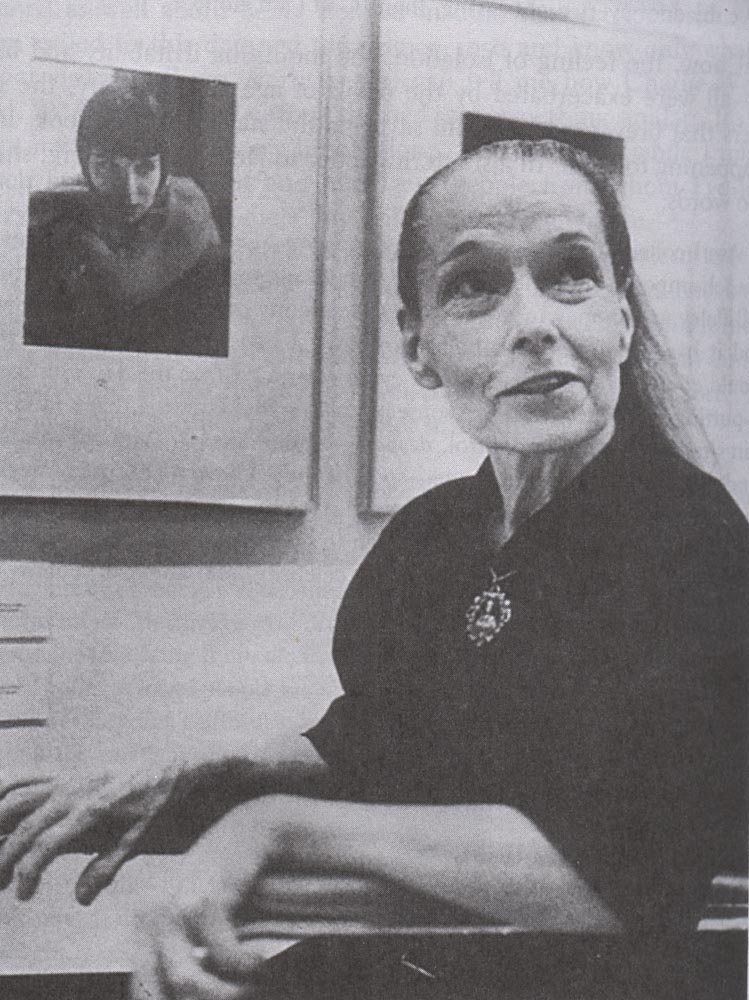
Then by chance in 1953, Brooks's neighbor had a conversation with James Card, curator of the George Eastman House of Photography in Rochester, N.Y., who mentioned that he had been searching for years to find Brooks. The neighbor introduced the two, and Brooks and Card began a correspondence that led Brooks to relocate to Rochester and begin writing a series of respected essays about the Silent Era, collected under the title Lulu in Hollywood. In 1957, Henri Langlois held his film retrospective in Paris and reintroduced Brooks to a world finally ready to recognize her talent.
More than a quarter of a century after she had turned her back on fame, fame forgave her. She is now regarded as one of the greatest actresses of the Silent Era.
 Brooks lived out the rest of her life in Rochester, writing, painting, reading voraciously, entertaining friends, occasionally lecturing to students at the Eastman House, but otherwise avoiding the public that had rediscovered her. In her later years, she suffered from arthritis and emphysema, living, like a character from the Proust she loved, in memories of things past.
"In my dreams," she said not long before her death, "I am not crippled. In my dreams, I dance."
Two first round races here at the Monkey look like they'll go down to the wire. While Mary Pickford and Janet Gaynor continue to wrestle in the mud (literally. It's like a scene out of Stripes), Louise Brooks and Clara Bow are locked in a tight battle of their own.
Fortunately, they have taken a decidedly higher road with their campaigns ...
Voting in part one of round one ends at 11:59 p.m. Eastern time.


 As I mentioned a couple of days ago, Monty of All Good Things is once again conducting his mammoth March Madness Favorite Actress Tournament—128 actresses in all, competing in head-to-head, single-elimination contests, looking for the answer to the question "Who is your all-time favorite classic actress?"
To facilitate the effort, Monty has asked me to host the Silent Era/1930s bracket. Beginning today, I'll be previewing the first round match-ups that you'll be seeing here at the Monkey.
Voting starts March 5.
Greta Garbo
 Tourney Sub-Bracket and Seeding: "They Had Faces" #1
Birth Name: Greta Lovisa Gustafsson
Birth Date: September 18, 1905
Birthplace: Stockholm, Sweden
Height: 5' 7½"
Film Debut: Herr och fru Stockholm (How Not To Dress) (1920)
Academy Awards: 3 nominations, no wins (honorary award, 1955)
Silent Oscars/Katie Awards: Best Actress 1926 (Flesh and the Devil), Best Actress (Drama) 1932-33 (Queen Christina), Best Actress (Drama) 1936 (Camille)
Three More To See: Anna Christie, Grand Hotel, Ninotchka
versus
Anna May Wong
 Tourney Bracket and Seeding: "They Had Faces" #8
Birth Name: Wong Liu Tsong
Birth Date: January 3, 1905
Birthplace: Los Angeles, California
Height: 5' 7"
Film Debut: The Red Lantern (1919)
Academy Awards: none
Silent Oscars/Katie Awards: Best Actress (1922) (The Toll of the Sea)
Three More To See: The Thief of Bagdad, Piccadilly, Shanghai Express
The winner of this match-up will face the winner of:
Clara Bow
 Tourney Bracket and Seeding: "They Had Faces" #4
Birth Name: Clara Gordon Bow
Birth Date: July 29, 1905
Birthplace: Brooklyn, New York
Height: 5' 3½"
Film Debut: Beyond the Rainbow (1922)
Academy Awards: none
Silent Oscars/Katie Awards: Best Actress (1927) (It), Best Supporting Actress (1927-28) (Wings)
Three More To See: Mantrap, The Wild Party, Call Her Savage
versus
Louise Brooks
 Tourney Bracket and Seeding: "They Had Faces" #5
Birth Name: Mary Louise Brooks
Birth Date: November 14, 1906
Birthplace: Cherryvale, Kansas
Height: 5' 2"
Film Debut: The Street of Forgotten Men (1925)
Academy Awards: none
Silent Oscars/Katie Awards: Best Actress (1929-30) (Pandora's Box and Diary of a Lost Girl)
Three More To See: A Girl in Every Port, Beggars of Life and Prix de beauté
 "Looking up at him, I thought this is no actor but the hero of all mythology brought miraculously to life, a purely beautiful being."—Louise Brooks, on meeting John Wayne for the first time
PICTURE (Drama)
winner: High Noon (prod. Stanley Kramer)
nominees: The Bad and the Beautiful (prod. John Houseman); Bend of the River (prod. Aaron Rosenberg); The Narrow Margin (prod. Stanley Rubin)
Must-See Drama:
PICTURE (Comedy/Musical)
winner: Singin' In The Rain (prod. Arthur Freed)
nominees: The Importance of the Being Earnest (prod. Teddy Baird); Limelight (prod. Charles Chaplin); Monkey Business (prod. Howard Hawks); Pat and Mike (prod. Lawrence Weingarten); The Quiet Man (prod. Merian C. Cooper and John Ford)
Must-See Comedy/Musical:
PICTURE (Foreign Language)
winner: Ikiru (prod. Sôjirô Motoki)
nominees: Casque d’Or (prod. Raymond Hakim, Robert Hakim and André Paulvé); Le plaisir (prod. Édouard Harispuru, M. Kieffer and Max Ophüls); Jeux interdits (Forbidden Games) (prod. Robert Dorfmann); Saikaku ichidai onna (The Life of Oharu) (prod. Hideo Koi and Kenji Mizoguchi); Umberto D. (prod. Giuseppe Amato, Vittorio De Sica and Angelo Rizzoli)
Must-See Foreign Language:
ACTOR (Drama)
winner: Takashi Shimura (Ikiru)
nominees: Gary Cooper (High Noon); Kirk Douglas (The Bad and the Beautiful); José Ferrer (Moulin Rouge); Stewart Granger (Scaramouche and The Prisoner of Zenda); Charles McGraw (The Narrow Margin); Robert Mitchum (Macao, The Lusty Men and Angel Face); Robert Ryan (On Dangerous Ground); James Stewart (Bend of the River)
ACTOR (Comedy/Musical)
winner: John Wayne (The Quiet Man)
nominees: Cary Grant (Monkey Business); Gene Kelly (Singin' In The Rain); Michael Redgrave (The Importance of Being Earnest); Spencer Tracy (Pat And Mike)
ACTRESS (Drama)
winner: Shirley Booth (Come Back, Little Sheba)
nominees: Marlene Dietrich (Rancho Notorious); Julie Harris (The Member of the Wedding); Jennifer Jones (Ruby Gentry); Jean Simmons (Angel Face); Lana Turner (The Bad and the Beautiful); Marie Windsor (The Narrow Margin)
ACTRESS (Comedy/Musical)
winner: Maureen O'Hara (The Quiet Man)
nominees: Joan Greenwood (The Importance of Being Earnest); Katharine Hepburn (Pat and Mike); Judy Holliday (The Marrying Kind); Anna Magnani (Le carrosse d'or a.k.a. The Golden Coach); Debbie Reynolds (Singin' In The Rain); Ginger Rogers (Monkey Business)
DIRECTOR (Drama)
winner: Fred Zinnemann (High Noon)
nominees: René Clément (Jeux interdits a.k.a. Forbidden Games); Vittorio De Sica (Umberto D.); Akira Kurosawa (Ikiru); Anthony Mann (Bend of the River); Kenji Mizoguchi (Saikaku ichidai onna a.k.a. The Life of Oharu); Max Ophüls (Le plaisir)
DIRECTOR (Comedy/Musical)
winner: Stanley Donen and Gene Kelly (Singin' In The Rain)
nominees: Anthony Asquith (The Importance of Being Earnest); Charles Chaplin (Limelight); George Cukor (Pat and Mike); John Ford (The Quiet Man)
SUPPORTING ACTOR
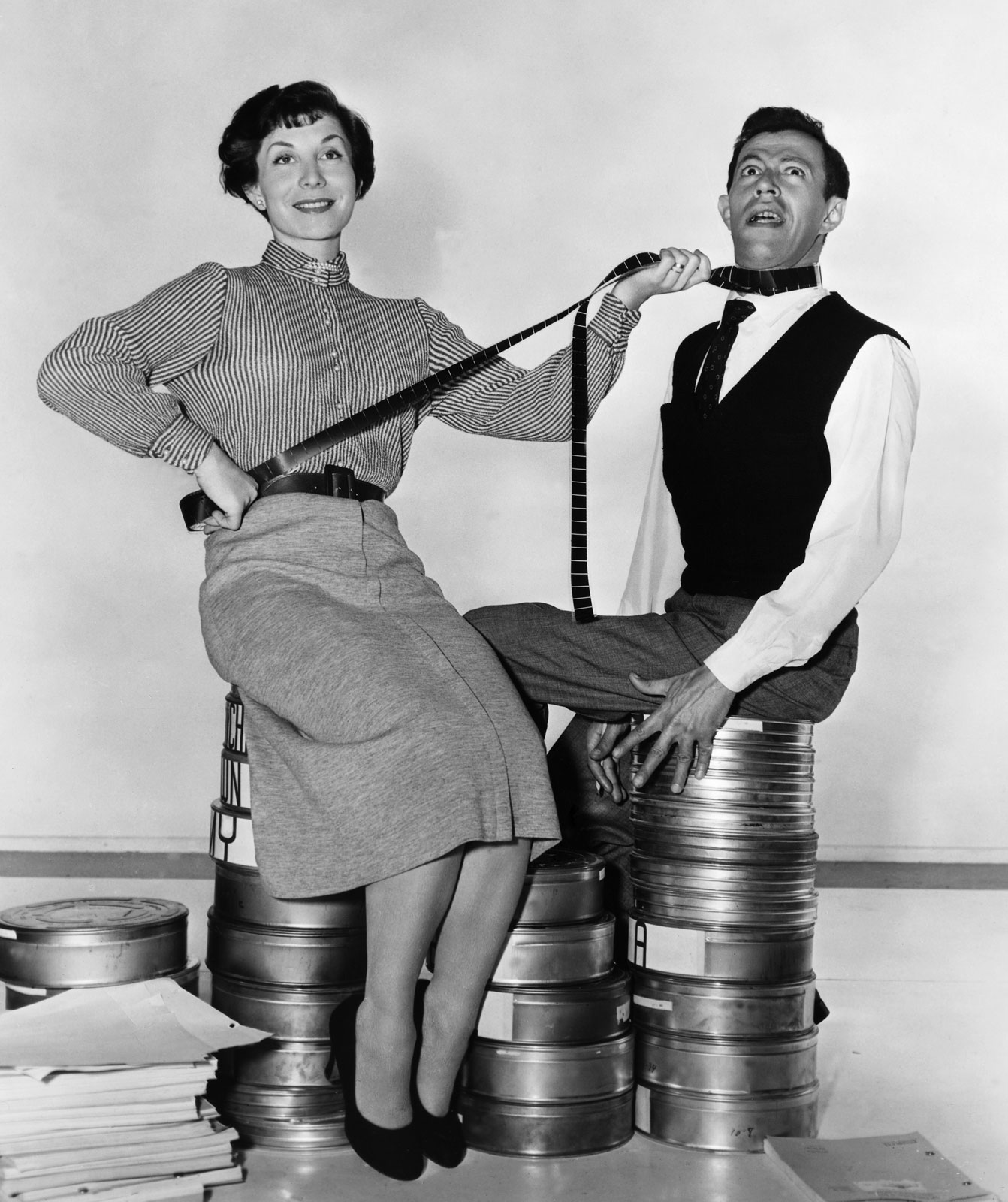
winner: Donald O'Connor (Singin' In The Rain)
nominees: Ward Bond (The Quiet Man); Barry Fitzgerald (The Quiet Man); Buster Keaton (Limelight); Victor McLaglen (The Quiet Man)
SUPPORTING ACTRESS
winner: Jean Hagen (Singin' In The Rain)
nominees: Edith Evans (The Importance of Being Earnest); Gloria Grahame (The Bad and the Beautiful); Katy Jurado (High Noon); Margaret Rutherford (The Importance of Being Earnest)
SCREENPLAY
winner: Adolph Green and Betty Comden (Singin' In The Rain)
nominees: Carl Foreman, from the story "The Tin Star" by John W. Cunningham (High Noon); Akira Kurosawa, Shinobu Hashimoto and Hideo Oguni (Ikiru); Frank S. Nugent, from a story by Maurice Walsh (The Quiet Man)
SPECIAL AWARDS
"Make 'Em Laugh" (Singin' In The Rain) music and lyrics by Arthur Freed and Nacio Herb Brown (Song)









 Posts
Posts

