skip to main |
skip to sidebar

But for a couple of years in 1930 and 1931, Mae Clarke was on a real roll. In fact, no actress in 1931 appeared in more must-see movies than Mae Clarke.
In addition to her acquaintance with Cagney's breakfast in The Public Enemy, she also played (1) Molly Malloy, a hooker with a heart of gold who befriends a death row inmate in the comedy The Front Page (later re-made as His Girl Friday); (2) the mad scientist's much put-upon fiancee in Frankenstein; and in one of the few lead roles of her career, an American chorus girl-turned-prostitute in the first and best version of the tragic romance Waterloo Bridge.
In that last one, Clarke meets a naive soldier boy on the London bridge where she plies her trade. This being wartime, he falls in love quickly and asks her to marry him.
For a prostitute, she has enough integrity not to jump at the offer, but she likes the boy enough to go with him to his family's country estate. There, she confesses all to the boy's mother.
If you've ever read the novel Camille by Alexandre Dumas fils, you'll have a pretty good idea where this is going. Hollywood, for all its posturing, has always had some pretty reactionary ideas about love, marriage and the moneyed classes.
Directed by James Whale — mostly known now for the early Universal horror movies — Waterloo Bridge clocks in at a brisk 81 minutes and Clarke is compelling enough to sweep you along with what is, to be honest, a load of romantic hokum. But I like romantic hokum and I like Mae Clarke, so I can unreservedly recommend Waterloo Bridge.
An undercurrent of melancholy runs below the surface of Clarke's performance so that even her happiest moments foreshadow her doom.
Clarke later chalked up her onscreen soulfullness to offscreen self-doubt that at times threatened to consume her.
Based on a play by Pulitzer Prize winner Robert E. Sherwood, there is no villain in this piece other than cold, hard reality. It's the sort of movie that critics of the day dismissed as a "woman's picture" — and dismiss now as a "chick flick" — and if you're tempted to give this one a miss because it features tears and romance, well, you're a dope.
Like Katie-Bar-The-Door, Clarke was born in Philadelphia, Pennsylvania. Unlike Katie, she started her career as a dancer, signed a contract with Universal Studios.
After the triumph of 1931, though, Clarke was in an automobile accident that broke her jaw and scarred her face — and just that quickly, her time as a star was over.
She was in and out of a sanitarium over the next couple of years and Universal canceled her contract.
After that, Clarke was reduced to playing supporting roles in movies, often trading on her infamy with the grapefruit to get work. She eventually moved on to television, appearing on the likes of Dragnet and Perry Mason.
She worked steadily until her retirement in 1970.
Clarke died of cancer in 1992 at the age of eighty-one.
By the way, her ex-husband Lewis Brice (Fanny's brother) enjoyed the grapefruit scene so much, he would frequently buy a ticket for the Times Square theater where The Public Enemy played twenty-four hours a day, ducking in just long enough to see his ex-wife get smacked with a grapefruit.
Boy, you have to wonder what that marriage was like.

Gish had starred in a string of hits for D.W. Griffith a decade earlier but by 1928, she, like her fellow stars Douglas Fairbanks, Mary Pickford and John Gilbert, had hit the commercial skids.
With contractual control over choice of material, screenplay, co-stars and director, and a $400,000 salary to play around with, Gish opted to make The Wind, a complex psychological drama about a frontier woman whose repressed desires slowly drive her insane, leading to death and tragedy.
Scripted by Frances Marion and directed by a pioneer of the Swedish film industry, Victor Sjöström, The Wind was a critical success — and a box-office bomb.
Gish would make just two more movies — neither a hit — before disappearing from Hollywood for a decade.
The Wind is the story of Letty (Gish) who is forced to live with her sister and brother-in-law in the forbidding environment of the frontier West. Already enduring the ever-present danger of the Texas prairie's howling wind and sandstorms, where men are killed and wild horses driven mad, the threat of an unmarried woman living in close quarters with a man proves too much for the tight-knit social order she has invaded.
Letty has a choice — enter into a loveless marriage or wander homeless in the empty prairie. Of course, she opts for marriage, but she would have done just as well choosing certain death.
Like Catherine Denueve in Roman Polanski's horror classic Repulsion, Letty's repressed desire slowly drives her insane.
In playing Letty, Gish had chosen to subvert her established screen image. For years, as D.W. Griffith's favorite actress, she had played the passive victim of any variety of men looking to relieve her of her treasured virginity. In The Wind, she finally takes up a gun and kills her would-be rapist. After all those years of playing the passive victim, the moment is liberating.
The screenplay initially envisioned a dark ending where an insane Letty wanders into a sand storm to be consumed by the desert, but when studio heads saw the initial cut, they insisted on a happy ending. The cast and crew reluctantly shot a new ending but as it turned out, it didn't much matter. Audiences rapidly acquiring a taste for talkies weren't interested in silent movies anymore or, for that matter, Lillian Gish whom they regarded as a relic of a previous age.
Silent actress turned film historian Louise Brooks also believed there was a concerted Hollywood effort to destroy Lillian Gish's reputation and box-office appeal and that a box office flop was exactly what the studio was hoping for.
It was a simple matter of economics, wrote Brooks in Lulu in Hollywood. Gish was making $400,000 a year and had complete creative control of her career. Emerging star Greta Garbo was making $16,000 and was wholly dependent on the studio to solve the visa problems that would allow her to work. Brooks lays out evidence of the studio's manipulation and then posits Gish's bosses were tired of paying big money to an actress with the power to map her own career when it could pay a younger actress a lot less money to do exactly what they wanted.
Ironically, the studio eventually did to Garbo what it had done to Gish — undercut her career when cheaper actresses came along.
In time, Gish would rebound, returning to the movies during World War II, receiving an Oscar nomination for Duel in the Sun in 1946.
Her best remembered work would come in 1955's gothic noir masterpiece, The Night of the Hunter, where she played a shotgun-toting granny squaring off against Robert Mitchum's homicidal con man preacher.
"She might look fragile," said screenwriter Frances Marion, "but physically and spiritually she was as fragile as a steel rod. Nobody could sway her from her self-appointed course. With a Botticelli face, she had the mind of a good Queen Bess, dictating her carefully thought-out policies and ruling justly, if firmly."
In 1971, Gish received an honorary Oscar in recognition of her "superlative artistry and ... distinguished contribution to the progress of motion pictures." She worked steadily into her nineties and passed away in 1993, just shy of her one hundredth birthday.

If that's not complicated enough, into this mix comes a sensational new act — a scullery maid turned dancer (Anna May Wong) — and overnight, what was once new is now old hat.
And that includes the boss's affections. He tracks Wong down to her room in back of a Chinese restaurant in Limehouse and the sparks fly.
I'd never heard of Gray or Ritchard, and I only knew Thomas as the "nose twitcher" in Mr. Deeds Goes to Town, but Wong was a veteran of both the silent and early sound eras, and this is one of her best performances. In a supporting role, she steals the movie, turning what at first plays like a dull backstage romance into a tragedy of race, class and social manners, with Wong and the owner not welcome in his world, not welcome in hers.
That a silent film should deal so frankly with such subject matter will come as a surprise to no one familiar with the medium. Motion pictures of the era were considered adult fare and frequently dealt with themes — adultery, abortion, homosexuality, racism — that would soon become verboten under 1934's Production Code.
Not until the 1960s would Hollywood again wade into the shark-infested waters of such mature topics, and (I would argue) tentatively at that.
Wong made a name for herself in 1922's The Toll of the Sea, Hollywood's first technicolor feature. Ten years later, she would more than hold her own against the legendary Marlene Dietrich in Shanghai Express.
But the racism of the era largely relegated her talent to minor parts in forgettable movies with lead roles going to the likes of Helen Hayes and Myrna Loy in "yellow face."
In fact, Irving Thalberg rejected Wong for the lead in The Good Earth — based on Pearl Buck's award-winning novel about Chinese peasants — because she didn't fit his idea of what a Chinese woman should look like. He opted to cast German-born Luise Rainer instead.
Ironically, Wong also found disfavor among Chinese-Americans for playing stereotypical Asians on screen.
Wong left Hollywood in the early '40s and passed away in 1961 at the age of 56.
In 2022, the United States Mint included Wong as part of its American Women Quarters Program, the first Asian-American so honored. The following year, Mattel created an Anna May Wong doll for Asian American and Pacific Islander Heritage Month.
Fun note: For the opening credits, the producers slapped ads on the sides of double decker buses featuring the names of the movie, director, producer, writer, and stars. The opening credits literally drive past the camera through London's West End traffic.

The story by novelist Jim Tully was based on his own experiences riding the rails during a period of unemployment and homelessness. Well before the Depression would acquaint much of this film's audience with the life they were seeing on screen, Tully hoped to demythologize poverty, showing, for example, the brutality of "hobo jungles" and the ruthless treatment of the poor at the hands of arbitrary authorities.
Although the film stars the now-legendary Brooks, the screen really belongs to Wallace Beery. He makes his first appearance during the movie's second act, arriving at the camp singing and carrying a keg of beer on his shoulder (some prints have Beery's growling singing voice on the soundtrack of this otherwise silent movie, others do not).
Beery discovers Brooks, who has disguised herself as a boy, is a fugitive with a $1000 bounty on her head. Beery helps her escape from the others and from the police, but whether it's an act of altruism or pure self-interest becomes the central question of the film.
Even with the lovely Louise Brooks on screen, Beery is the one your eyes are drawn to.
This phenomenon — the supporting performance that makes you forget the rest of the movie — was typical of Beery's career. Admittedly, sometimes he could be a distraction, but here he breathes life into a story that had threatened to grind to a halt.
Co-star Louise Brooks was blunt in her criticism of the movie: "[William Wellman] directed the opening sequence with a sure, dramatic swiftness that the rest of the film lacked."
But of Beery, Brooks said, "His Oklahoma Red is a little masterpiece."
She's right. Beery plays Oklahoma Red as complex man rather than as a stock villain and watching his internal contradictions play out is the main reason to track down this film. It's probably his most overlooked performance in a career that included starring roles in Grand Hotel, Dinner At Eight, Treasure Island and Min And Bill, and Oscar nominations for The Big House and The Champ, the latter a winner for Beery in 1931.
But Brooks was also right about the film overall. The action is repetitive, the acting outside that of Beery and Brooks is amateurish and for a movie inspired by a desire to show what riding the rails was really like, its insights sometimes feel shallow and cliched.
Still, Brooks is very good in the movie and her performance brought her to the attention of German director P.W. Pabst.
The rest, as they say, is history ...
On September 14-16, In The Good Old Days Of Classic Hollywood is hosting The Lauren Bacall Blogathon. For reasons I won't go into here, I can't post on the day of, so instead I offer up this early post as my way of encouraging you to please make a note on your calendars and check out the blogathon.
At the heart of every Howard Hawks action movie is the concept of the professional doing his job, and doing it well, despite the imminent threat of death, an idealized code of conduct Hemingway called "grace under pressure." We're all going to die sooner or later, Hawks seems to be saying, can't we at least do it with a bit of dignity and honor and laughter and good company?
That, above all, I think, is at the core of what is known as "a Hawksian woman," one who can laugh and provide good company in the face of death.
Whatever else a Howard Hawks drama is about, usually a woman meets a man and grows up enough to prove worthy of him and his cadre of professional associates (what one might loosely think of his family).
His comedies, in contrast, are about a man proving worthy enough of a woman to start a family (through marriage).
To Have and Have Not, so far as I can remember, is the one Hawks movie that takes that comedy formulation — the man proving worthy of the woman — and applies it to a dramatic situation. Do you know To Have and Have Not? In it, Harry Morgan (Humphrey Bogart) has retreated from the messy political world into a cocoon of isolationism so complete he's willing to ignore the fascists in charge of the local government even as they are shooting his clients and making his life and the lives of his friends miserable.
Into that mix comes Marie "Slim" Browning (Lauren Bacall in her first film role), teaching him how to whistle and forcing him to realize that no matter how much he thinks he's successfully avoided sticking his neck out, his neck is out there, on the block, along with the necks of his "family" (Eddie, Frenchy, Cricket and, finally, Slim herself).
Whether he likes it or not, the Cause is his and he can either fight for it or go down the tubes anyway. So he fights, and in so doing, becomes worthy of Lauren Bacall, the toughest of tough young broads ever to grace the screen.
Katie-Bar-The-Door is still out of town, so Mister Muleboy and I again met at the AFI-Silver, this time for the Charlie Chaplin talkie Limelight.
This was Chaplin's third sound picture and the last film he made in the United States. I guess everybody has their favorite Chaplin talkie — I assume most would choose The Great Dictator (1940), his savage spoof of Adolf Hitler, while others might go for Monsieur Verdoux (1947), a black comedy about a serial killer whose latest victim simply refuses to die.
Me, I prefer Limelight.
It's the story of an alcoholic has-been (Chaplin) who rescues a suicidal ballerina (Claire Bloom), nurses her back to health, gets her on her feet again. During the day, she talks about her troubles; at night he dreams of his past as London's greatest music hall comedian. Once she recovers, her career takes off while his continues to decline. Along the way, a love triangle of sorts develops, with the ballerina torn between her platonic devotion to Chaplin while falling deeply in love with a shy young composer (played in a nice Freudian twist by Chaplin's son Sydney).
Chief among the film's delights is the casting of Buster Keaton as his stage partner, the only time these two silent comedy legends appeared in a movie together. Both men were past their primes here — Chaplin hadn't had an unalloyed success since Modern Times in 1936 and Keaton's heyday was even more distant, with his peak years running from just 1920 to 1928 — and Keaton's appearance is not much more than a cameo. But boy, what a cameo.
In their scene together, Chaplin's has-been teams up with Keaton's has-been to perform a silent sketch where two clumsy musicians destroy a piano and a violin mid-concert. If you've ever seen Chaplin in, say, The Pawnshop or Keaton in The Boat, you know just how much damage these guys can do.
Chaplin always played well off an opposite number — think of Roscoe Arbuckle, Eric Campbell, Mack Swain and Harry Myers — and his and Keaton's contrasting styles, the clown and the stoneface, work especially well. For a few minutes, the two legends defy the passage of time and remind us of what made them so special in the first place.
The novelty of seeing the silent era's two greatest comics together at last would be enough to make the film worth watching, but Chaplin also revisits the Tramp in at least three scenes, albeit with a different moustache and a check vest. Sure, he's not twenty-five anymore, but he can still bring it.
There's something poignant about watching a fading legend facing his loss of talent, energy and inspiration so directly, and those scenes where the has-been looks out on an empty theater that once was filled with cheering fans must have been particularly haunting for Chaplin as his real-life audience deserted him. But Chaplin being Chaplin, he finds an answer: to inspire the next generation, the only immortality an artist ever really knows.
Nigel Bruce — better known as Dr. Watson to Basil Rathbone's Sherlock Holmes — turns in a good supporting performance as a theater manager, and there's a long ballet sequence reminiscent of The Red Shoes that I thought was quite beautiful. There's also a terrific silent gag about a high-end prostitute working the theater crowd that was worthy of Ernst Lubitsch.
Which is not to suggest that Limelight is a perfect film. Far from it. It suffers from the same flaw as all of Chaplin's sound pictures — he talks too much! In the silent era, Chaplin's Tramp could speak volumes with a single look. In the sound era, he simply speaks volumes. And frankly, as a moral philosopher, Chaplin is a hackneyed windbag.
Too, your opinion of Limelight depends on your willingness to tolerate Chaplin's return to the theme that haunted most of his work — his compulsive need to rescue damsels in distress. No doubt he was replaying, consciously or not, his boyhood situation with his mentally-ill mother, but the fact is, damsels who are chronically in need are beyond help, and the rest get better and move on, which suggests that the compulsion to rescue them is less about helping others and more about courting rejection and self-pity.
At least here, Chaplin at last finds the only solution to the dilemma that really works. I'll leave it to you to discover what that is.
Look, I'm not one of those people forever crabbing about Chaplin and sentimentality. Sentimentality is just a way of saying "an appeal to emotion rather than reason" and I happen to think that that's exactly what the movies are for, to bypass the frontal lobes and head straight for the lizard brain where love and anger and fear reside. If a movie can make me think, fine; but it had better make me feel something first or it's wasting my time.
My quibble here is that, at least where the ballerina's story is concerned, Chaplin more insists on the sentiment than actually creating it.
Still, the good far outweighs the bad.
I'd like to tell you that Limelight was a critical and commercial success, but the fact is, the film never received a proper release in the United States. When the film was completed, Chaplin boarded a boat to visit his home in England, and as soon as the ship cleared the harbor, the U.S. government declared Chaplin an undesirable alien and revoked his visa.
There were two types of anti-Communists in the 1940s and '50s: those seeking to best the Soviet Union in the existential struggle of the Cold War (e.g., Harry Truman, Dwight Eisenhower, George Kennan, George Marshall); and those seeking to destroy their political and personal enemies with scurrilous accusations (Joe McCarthy, HUAC). Chaplin was a victim of the latter. He wouldn't return to America for twenty years.
The odd situation with Limelight did lead to the answer to a trivia question that film fans often get wrong: name the movie for which Chaplin won a competitive Oscar. In 1972, fans of Chaplin realized Limelight had never played in Los Angeles, so they rented a theater for a week and screened it, making it eligible for an Oscar under the rules of the time. Chaplin's original score received a nomination and when the envelope was opened, Chaplin had won. It was a sentimental gesture, but then Chaplin was a sentimental man so it seems fitting.
Awards or no, though, Chaplin achieved his immortality — he continues to inspire artists and will for as long as films are shown.
 I'm working on a review of the classic Mary Pickford film Stella Maris, which if I work well this week, will be up by Friday. But the whole point of the review is to encourage you to see the movie, so why not cut out the middle man?
 In terms of its narrative, Stella Maris has both feet planted firmly in the Charles Dickens tradition, with a rich girl (Pickford) crossing paths with a poor one (an unrecognizable Pickford in a dual role). Great, melodramatic stuff.
Whoever uploaded this to YouTube very cleverly left off the soundtrack. That's how they get you, in case you didn't know—the movie itself is in the public domain, but the soundtrack isn't and so the studio can reassert control of the movie through the music rights. That's why It's A Wonderful Life isn't on television twenty-eight hours a day during the Christmas season anymore—the film itself is in the public domain, but the score isn't.
Which is a real problem for a talkie, but a silent movie, well, I just provide my own soundtrack, probably Oscar Peterson's Night Train, which is what I've been listening to lately.
 Before Marlene Dietrich, before Ingrid Bergman, Sophia Loren or even Greta Garbo, Polish film star Pola Negri made the journey from Europe to Hollywood and found fame in America, the first European film actress to succeed on both sides of the Atlantic.
She was born Barbara Apolonia Chałupiec in what is now Poland in 1897, fashioning the name "Pola Negri" for herself (after Italian poet Ada Negri) during her confinement to a sanitarium for tuberculosis. After Russian authorities sent Negri's father to Siberia as a revolutionary, Negri and her mother moved to Warsaw where Negri studied ballet and eventually found success on the stage and screen.
 During World War I, she moved to Berlin where she caught the attention of Ernst Lubitsch who signed her to a movie contract at Universum Film AG ("UFA"), Germany's best studio and, until the Nazis took power in 1933, one of the most influential in the world. After a half dozen low-budget films with other directors, Lubitsch in 1918 cast Negri as the lead in Die Augen der Mumie Ma—"The Eyes of the Mummy."
We remember Lubitsch now for his witty, sophisticated comedies, but during his early career in Germany, he alternated between broad farces and serious dramas. The former usually starred Ossi Oswalda, the latter, Negri. Despite its lurid title, The Eyes of the Mummy wasn't a horror picture but a tragic romance, the story of a young woman (Negri) rescued from the Egyptian tombs where her captor (Emil Jannings) has held her for years only to find him stalking her anew through the posh capitals of Europe.
 The Eyes of the Mummy is a minor entry in the Lubitsch canon, and Negri is still a raw young actress (she was just twenty-one when filming began), but somebody connected with the film—the screenwriters, Lubitsch, Negri—knew something about the psychology of stalking from the point of view of both the stalker and the victim, and Negri is effective as a lusty child-woman slavishly devoted to whichever man possesses her at any given moment.
 Better is Lubitsch's next collaboration with Negri, a film version of Prosper Mérimée's novel, Carmen. Adapted to film as early as 1907, the story of a soldier who throws over his family, his fiancee and his honor for a beautiful gypsy smuggler with tragic results has spawned dozens of versions over the years and was familiar enough to audiences that Charlie Chaplin could film a spoof of it, A Burlesque on Carmen, in 1915. Stripped of its Spanish setting, Carmen is essentially a retelling of Eve and the apple, and while I agree with Nero Wolfe's sidekick Archie Goodwin that "[n]o man was ever taken to hell by a woman unless he already had a ticket in his pocket, or at least had been fooling around with timetables," that doesn't mean this oft-repeated formula doesn't work; indeed, it forms the basis of much of literature, film noir and some of the more brutal aspects of many of the world's cultures.
 The key to Carmen is, of course, the actress playing the title role. You have to believe that an honorable man would throw away his good name, a promising career and a faithful fiancee for a romp with a treacherous tramp. Although the print of Carmen has deteriorated beyond repair in places, it's still possible to see what both Don José and movie audiences saw in Pola Negri's Carmen—she's ripe and sensual, with large eyes full of promises she has no intention of keeping.
Better men than Don José have given up a whole lot more for a whole lot less.
 "Love is disgusting," Negri herself later opined, "when you no longer possess yourself."
Negri and Lubitsch made a total of eight movies together, each better than the one before it. In addition to The Eyes of the Mummy and Carmen, they made Madame DuBarry (a.k.a Passion) and Rausch (both 1919), Sumurun (a.ka. One Arabian Night) (1920), Die Bergkatze ("The Wildcat") (1921), Die Flamme (1923) and Forbidden Paradise (made in Hollywood in 1924 for Paramount).
Negri's collaboration with Lubitsch made her an international star, and so great was her reputation that the U.S. finally dropped its embargo of German films (instituted during the war) just to satisfy popular curiosity. After the success of Carmen (released in the United States in 1921 as Gypsy Blood), Negri signed with Paramount and arrived in New York in September 1922.
 She quickly supplanted Theda Bara as silent film's top sex symbol and while (thanks to the vagaries of film preservation) I can't compare Negri to Bara's most famous role, Cleopatra, if Bara's surviving film A Fool There Was is any indicator, Negri was lightyears beyond her in terms of projecting sexuality on the screen. Was Negri a great actress? I'm not sure. But judging from the reaction of audiences when her European films finally made their way to America, she was revolutionary.
The films with Lubitsch also represented Negri at the top of her popularity. Despite begging her to come to Hollywood, Paramount didn't really know what to do with Negri and as her star faded, she became even more theatrical and haughty, which poisoned her relationship to both the studio and her audience.
 When in 1926, the press decided her engagement to the recently deceased Rudolph Valentino was a fabrication, the public was done with her. To her dying day, Negri insisted that the engagement was real and told the Los Angeles Times shortly before her death, "Rudy was the great love of my life. I remember him with great regret. Somehow, the fates changed what wasn't to be. You can't rage with anger against it, and even though you love someone, you like to be with them and want to marry them and hope that it will all work out this time ... but he died, just when we were engaged to be married."
She was also briefly engaged to Charlie Chaplin who jilted her soon after giving her a $15,000 engagement ring. Negri's revenge? She gave the ring to her Forbidden Paradise co-star, Rod La Rocque.
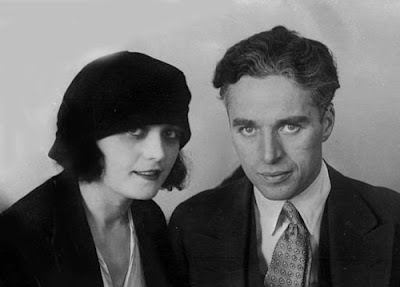 She later married a Georgian prince, Serge Mdivani, who left her for an opera singer after Negri lost her fortune in the stock market crash of 1929. After their divorce, Negri lived with Margaret West, a Texas oil heiress, until the latter's death in 1963.
"No one could believe that we were closest friends, that nothing sexual was involved," she wrote in her autobiography. "Yet it is true. She was as close a friend as I've ever had."
 When talkies came in, Negri's thick accent relegated her to supporting roles. Despite a measure of success in such films as A Woman Commands—she had a hit with the song "Paradise"—she retreated to Europe and retired in 1943, making one last picture in 1964, The Moon-Spinners, at Walt Disney's personal behest. Her London press conference promoting the film was a sensation—she showed up with a live cheetah on a chain leash.
Negri died on August 1, 1987, in San Antonio, Texas. She was 90 years old.
I once told my pal, Mister Muleboy, I wanted to be able to reprint an old post every day of the year. I was only half joking. This one is from 2009.
"There is no Garbo, there is no Dietrich, there is only Louise Brooks!"
 Or so curator Henri Langlois said when asked why he had chosen to prominently display a huge portrait of Louise Brooks rather than Greta Garbo or Marlene Dietrich at the entrance of the Musee National d'Art Moderne in Paris on the occasion of its retrospective of the first sixty years of motion pictures.
I wonder how many essays about Louise Brooks begin with that quote. All of them, probably.
Langlois was overselling his case—after all, I wouldn't want to imagine a movie history without Greta Garbo and Marlene Dietrich—but I wouldn't want to imagine one without Brooks either. She made just twenty-three movies and she's not nearly as celebrated as her two counterparts, but in 1929 at least, there was no actress better than Louise Brooks, and when Langlois reintroduce her to a world that had forgotten her after a twenty-five year exile, perhaps he was entitled to a bit of hyperbole.
 Brooks's brief but unforgettable film career followed the trajectory of an early NASA rocket—straight up, then straight down, with some crazy loops in the middle and a spectacular explosion at the end. She combined brains, elegant beauty, and scorching sex appeal with a party-girl work ethic self-destructive enough to end ten careers. She made no apologies for preferring sex, jazz and alcohol to a steady job, and she burned every bridge she ever crossed, some while she was still standing on them, until finally there were no bridges left to burn.
"I have a gift for enraging people," she once said, "but if I ever bore you, it'll be with a knife."
Twice married, twice divorced, Brooks conducted well-documented affairs with Charles Chaplin, Washington Redskins owner George Preston Marshall, movie producer Walter Wanger, and many others, including an experimental one-night stand with Greta Garbo. CBS founder William Paley, who was briefly involved with Brooks in his youth, was so fond of her that when she hit the skids after her movie career, he helped her with a monthly stipend for the rest of her life.
 Born in Cherryvale, Kansas, in 1906 to an indulgent lawyer father and a social-crusading mother with the maternal instincts of an "alligator," Brooks became a dancer at an early age and as a teenager joined the Denishawn Dancers (working with the legendary Martha Graham). Later she danced with the George White Scandals and the Ziegfeld Follies. "I learned how to act by watching Martha Graham dance," Brooks said, "and I learned how to dance by watching Charlie Chaplin act."
She made her movie debut in 1925 for Paramount Pictures, appearing in eleven films over a three year period, playing the quintessential flapper across from such actors as Adolphe Menjou and W.C. Fields. She had an insatiable appetite for the Hollywood nightlife, was a regular at William Randolph Hearst's San Simeon castle, and was a fixture in the gossip columns. Her "black helmet hairdo" was one of the ten most influential haircuts in history, according to InStyle magazine, and she was one of the most photographed celebrities of her time.
But it wasn't until 1928, when she made Howard Hawks's A Girl In Every Port and William A. Wellman's Beggars of Life, that she really made an impression as an actress.
Her contemporaries, schooled in the art of silent film overacting, thought she was doing nothing on screen; years later, it's clear she was a method actress before the method had been invented. "The great art of films does not consist in descriptive movement of face and body," she said, "but in the movements of thought and soul transmitted in a kind of intense isolation." As with the works of Buster Keaton, Brooks's understated, internal approach gives her performances a modern feel, very much in contrast to her contemporary, Greta Garbo, who wouldn't completely shed her silent film theatrics until 1933. Brooks never had any to lose.
With her work in A Girl in Every Port and Beggars of Life, Brooks came to the attention of German director Georg Wilhelm Pabst, a collaboration that would result in the best work of both their careers.
 Pabst, an Austrian born in what is now the Czech Republic, was one of the leading directors in Germany's important and influential film industry. After making movies with Greta Garbo (The Joyless Street, her first outside of Sweden) and Brigitte Helm (who later played the lead in Metropolis), Pabst set his sights on a movie version of a pair of stage plays, Erdgeist (Earth Spirit) and Der Büchse Die Pandora (Pandora's Box), two well-known works by German playwright Frank Wedekind.
In his two plays, Wedekind had set out to expose the secret lusts and private immoralities of Berlin's ruling class, with the action centering on the manipulations and cruelty of a prostitute named Lulu. Wedekind described Lulu as a "monster," but Pabst re-envisioned her as "sweetly innocent" and unaware of the evil she inspired, shifting the moral responsibility for the resulting tragedy to a flaw in her upper class patrons.
It was bold idea for a story well-fixed in the mind of a German public in no mood to acknowledge their role in the decadence and growing weakness of the Weimar Republic. "[M]y playing of the tragic Lulu with no sense of sin," Brooks wrote later, "remained generally unacceptable for a quarter of a century."
 In Brooks, Pabst saw the precise combination of innocence and unapologetic sexual appetite he was looking for in his Lulu. The problem was, she was under contract to Paramount Pictures and the studio had its own plans for the actress. Sitting in post-production was a silent movie, The Canary Murder Case—Brooks played the "Canary" of the title, a blackmailing singer turned murder victim—which the studio wanted to re-shoot as a "talkie."
Typical of the industry as a whole, though, Paramount saw the advent of sound not just as a technical challenge, but also an opportunity to slash salaries and dump difficult stars (such as Wallace Beery and Clara Bow), using the cost of converting to the new technology as an excuse. Never a fan of the business side of acting to begin with, Brooks balked when the studio informed her she would be doing the work of dubbing The Canary Murder Case for less pay. She quit on the spot, at which time studio head B.P. Schulberg informed her of Pabst's offer.
Legend has it that Marlene Dietrich was waiting in Pabst's outer office to test for Pandora's Box when a cable arrived saying that Brooks had left Paramount and was available to play Lulu. For Brooks, it was a fateful decision.
 The first scene of Pan- dora's Box sets the tone. We first see Lulu in her spacious apartment in the city, friendly, smiling, fresh-faced—with a bottle of brandy tucked under her left elbow to pay off the meter reader with less than what she owes, and even though he's old enough to know better, he can't help thinking such a lovely, innocent smile is for him only. And it is for him only, at least until the next man arrives at the door.
Any number of men open this particular Pandora's box without much regard to the cost to their dignity, social standing or bank accounts: Schigolch, a pimp and a leech, Lulu's first "patron," respectable until he met her, now an alcoholic bum with holes in his shoes; Dr. Schön, a wealthy publisher with a high-society fiancee, who lusts after Lulu and hates himself for it; and his son, Alwa, who adores her even as she cheerfully tells him she is incapable of love. There's even a Countess (played by a reluctant Alice Roberts, who didn't realize she was to play what was perhaps the first overtly lesbian character in movie history) who longs for Lulu with an unrequited passion.
 Like Josef von Sternberg who was busy making a very similar movie, The Blue Angel with the aforementioned Marlene Dietrich, Pabst had men pegged as nothing much more than big animals with pants on—in one scene he shows Schön rutting like a pig in white tie and tails—and it comes as no great surprise that the last man in Lulu's life, Jack the Ripper, proves to be the biggest animal of all, albeit with a different agenda on his mind.
Lulu is blessed with a sort of short-term moral amnesia that it makes it possible to forget from moment to moment that her relationships with other people flow, or should flow, in two directions. As Brooks plays her, Lulu is a child in a woman's body, and that childlike innocence at the core of Brooks's approach is the key to the movie. Lulu is a flame who attracts men to their destruction, but because there's no malevolence in her, the audience never turns on her as they might a typically scheming femme fatale.
No doubt that's why Pabst so preferred Brooks to Dietrich. "It's a part that can't be played by her type," Brooks said later of Dietrich in a rare interview. Pabst agreed, saying, "Dietrich was too old and too obvious—one sexy look and the picture would have become a burlesque."
Pandora's Box is not a perfect movie. At 133 minutes, it's about half an hour too long for a silent film, and Pabst never really solved the structural problem of stitching two stories together. But Brooks's performance is extraordinary, quite unlike anything that had come before it and so far ahead of its time, years would pass before it found an audience.
 Premiering in Berlin in January 1929, Germans were outraged that Pabst had chosen an American to play their beloved Lulu and were offended that he had dared show Berlin's upper classes in a less than flattering light. The movie fared no better when it reached the U.S. in December of that same year. Already a relic of the Silent Era, Pandora's Box sank without a ripple.
Undeterred, Pabst began work on a follow-up to Pandora's Box in June, 1929. Diary Of A Lost Girl (Tagebuch einer Verlorenen) is an adaptation of Margarete Böhme's novel about a girl who is seduced and raped only to be sent to a brutal reform school by a hypocritical father who himself has a taste for young girls.
In choosing to make Diary of a Lost Girl, Brooks turned down an offer of $10,000 from a Paramount Pictures now desperate to avoid the expense of finding another actress to dub her voice in The Canary Murder Case. With this second rejection, Brooks burned all but the last of her Hollywood bridges. B.P. Schulberg, the head of Paramount, put the word out that Brooks's voice was unsuitable for talkies and she was blackballed from most of the major studios. It was years before Brooks grasped the significance of her decision.
The resulting collaboration between Brooks and Pabst is not quite as good as Pandora's Box, but Brooks's performance may be even better. The movie blogger L'Eclisse has observed that while she's not convinced the movie works, "What is indisputable ... is the gravity of Brooks’ performance. She is delicate, subtle, vulnerable, intuitive, and a host of other immortal adjectives."
Certainly the performance proves Pandora's Box was no fluke.
As an innocent victim made to suffer outrageously at the hands of others, Brooks's character in this one, Thymian, is very nearly a polar opposite of Lulu. Yet in both movies, Brooks serves as a prism refracting upper class hypocrisy into its full spectrum of hidden sin. Discovering her father has seduced and impregnated the family housekeeper, a woman not much older than herself, Thymian turns to her father's lecherous business partner for solace, an unscrupulous lech who takes full advantage of the opportunity.
 Brooks noted she played the scene as a ballet, an emo- tionally complex scene in which an "'innocent' young girl" (the quotation marks around "innocent" are Brooks's own) subtly maneuvers a "wary lecher" without any idea of what is at stake, knowing only that her father has hurt her. For Thymian, to faint dead away in her lover's arms was the consummation promised in romance novels. For the lecher, consummation was something else.
The subsequent rape, implied but not shown, leaves Thymian pregnant which, in the eyes of the hypocrites who raised her, is her own fault, a sin worthy of harsh punishment.
Filming those scenes must have been an uncomfortable reminder of a pivotal incident from Brooks's own childhood when as a nine year old she was sexually molested by a neighbor only to have her mother blame her for seducing the man when she came home crying. Brooks wrote later that the episode haunted her for the rest of her life and shaped her feelings about love and sex.
"Love is a publicity stunt," she said bluntly, "and making love—after the first curious raptures—is only another petulant way to pass the time waiting for the studio to call."
After Thymian gives birth, her baby is given over to a midwife and Thymian herself is sent to a girl's reformatory, which like the girl's school in Mädchen In Uniform, which followed two years later, seethes with authoritarian cruelty and repressed desire. That Thymian's life improves when she escapes the reform school to work in a brothel should tell you everything you need to know about Pabst's opinion of reform schools, and I think Pabst, like fellow German directors Fritz Lang (M) and Leontine Sagan (Mädchen In Uniform), was groping to diagnose the very real sickness in German society that would soon bring Adolf Hitler to power.
 Censors heavily edited Diary of a Lost Girl on its release, the French version being so cut up (the entire brothel sequence was excised), the movie's screenwriter thought the film had broken half way through its premiere. Still, despite making no impression in America, Diary of a Lost Girl was enough of a success in Europe that Brooks made a third movie, Prix de Beauté, a truly European effort with a screenplay from Pabst and French director René Clair, and direction by Italian Augusto Genina.
The film was a hit, yet despite Pabst's promise to turn her into an international star to rival Garbo, Brooks was bored with Europe and after three movies there, returned to an indifferent America. The hard work of making films in a language not her own held no interest for her, no matter how much fame or fortune was in the offing.
"Your life is exactly like Lulu's," Pabst angrily told her on parting, "and you will end the same way." He wasn't far wrong.
Although her European films had had no impact on the American market and she was still in bad odor after snubbing Paramount, Brooks did find small roles in four pictures, and made her belated sound debut in the execrable comedy short Windy Riley Goes Hollywood, directed by the still-disgraced Roscoe "Fatty" Arbuckle under an assumed name. All four movies are terrible and Brooks, who admitted she knew nothing about how to project her voice for the microphone, is pretty bad in them.
Still, in 1931, William Wellman, who had directed Brooks in Beggars of Life, offered her the female lead in his next picture, James Cagney's gangster classic, The Public Enemy. Brooks initially said yes, then changed her mind and abruptly left Hollywood to be with then-lover George Preston Marshall. The role went instead to Jean Harlow and made her an instant star.
Brooks had burned her last bridge. There was nowhere to go but down.
"That Hollywood treatment is murder, just murder," she said later. "It isn't that people turn their heads not to speak to you, they don't see you, you're not a person anymore. The people who've dined with you and you've spent weekends with, they look right at you, you don't exist."
By the time she realized she missed acting, it was too late. "I never gave away anything without wishing I had kept it," she said later, composing her own epitaph, "nor kept anything without wishing I had given it away."
 Brooks returned to Hollywood in 1936 and appeared in a pair of Westerns, including her last film, Overland Stage Raiders with John Wayne a year before his breakthrough in Stagecoach, then spent another two years in Hollywood waiting for offers that never came. When she left California in 1940, she left for good. She was thirty-four.
Brooks fell back on dancing for a while, working on the stage in Chicago, and even opened a dance studio in Wichita, Kansas, but she was as impatient and ill-tempered as ever, alienating clients and driving away business. Eventually she retreated to New York, working as a salesgirl, maid and finally as an "escort."
 She said later that only Paley's monthly stipend kept her from suicide. "How I have existed fills me with horror," she wrote, "for I have failed in everything—spelling, arithmetic, riding, swimming, tennis, golf, dancing, singing, acting, wife, mistress, whore, friend. Even cooking. And I do not excuse myself with the usual excuse of not trying. I tried with all my heart."
She was "a very strong woman," a friend said after her death, "but whose strength annihilated her, I think, and I always felt she was a lost soul."
Then by chance in 1953, Brooks's neighbor had a conversation with James Card, curator of the George Eastman House of Photography in Rochester, N.Y., who mentioned that he had been searching for years to find Brooks. The neighbor introduced the two, and Brooks and Card began a correspondence that led Brooks to relocate to Rochester and begin writing a series of respected essays about the Silent Era, collected under the title Lulu in Hollywood. In 1957, Henri Langlois held his film retrospective in Paris and reintroduced Brooks to a world finally ready to recognize her talent.
More than a quarter of a century after she had turned her back on fame, fame forgave her. She is now regarded as one of the greatest actresses of the Silent Era.
 Brooks lived out the rest of her life in Rochester, writing, painting, reading voraciously, entertaining friends, occasionally lecturing to students at the Eastman House, but otherwise avoiding the public that had rediscovered her. In her later years, she suffered from arthritis and emphysema, living, like a character from the Proust she loved, in memories of things past.
"In my dreams," she said not long before her death, "I am not crippled. In my dreams, I dance."







 Posts
Posts

