skip to main |
skip to sidebar
 Before Marlene Dietrich, before Ingrid Bergman, Sophia Loren or even Greta Garbo, Polish film star Pola Negri made the journey from Europe to Hollywood and found fame in America, the first European film actress to succeed on both sides of the Atlantic.
She was born Barbara Apolonia Chałupiec in what is now Poland in 1897, fashioning the name "Pola Negri" for herself (after Italian poet Ada Negri) during her confinement to a sanitarium for tuberculosis. After Russian authorities sent Negri's father to Siberia as a revolutionary, Negri and her mother moved to Warsaw where Negri studied ballet and eventually found success on the stage and screen.
 During World War I, she moved to Berlin where she caught the attention of Ernst Lubitsch who signed her to a movie contract at Universum Film AG ("UFA"), Germany's best studio and, until the Nazis took power in 1933, one of the most influential in the world. After a half dozen low-budget films with other directors, Lubitsch in 1918 cast Negri as the lead in Die Augen der Mumie Ma—"The Eyes of the Mummy."
We remember Lubitsch now for his witty, sophisticated comedies, but during his early career in Germany, he alternated between broad farces and serious dramas. The former usually starred Ossi Oswalda, the latter, Negri. Despite its lurid title, The Eyes of the Mummy wasn't a horror picture but a tragic romance, the story of a young woman (Negri) rescued from the Egyptian tombs where her captor (Emil Jannings) has held her for years only to find him stalking her anew through the posh capitals of Europe.
 The Eyes of the Mummy is a minor entry in the Lubitsch canon, and Negri is still a raw young actress (she was just twenty-one when filming began), but somebody connected with the film—the screenwriters, Lubitsch, Negri—knew something about the psychology of stalking from the point of view of both the stalker and the victim, and Negri is effective as a lusty child-woman slavishly devoted to whichever man possesses her at any given moment.
 Better is Lubitsch's next collaboration with Negri, a film version of Prosper Mérimée's novel, Carmen. Adapted to film as early as 1907, the story of a soldier who throws over his family, his fiancee and his honor for a beautiful gypsy smuggler with tragic results has spawned dozens of versions over the years and was familiar enough to audiences that Charlie Chaplin could film a spoof of it, A Burlesque on Carmen, in 1915. Stripped of its Spanish setting, Carmen is essentially a retelling of Eve and the apple, and while I agree with Nero Wolfe's sidekick Archie Goodwin that "[n]o man was ever taken to hell by a woman unless he already had a ticket in his pocket, or at least had been fooling around with timetables," that doesn't mean this oft-repeated formula doesn't work; indeed, it forms the basis of much of literature, film noir and some of the more brutal aspects of many of the world's cultures.
 The key to Carmen is, of course, the actress playing the title role. You have to believe that an honorable man would throw away his good name, a promising career and a faithful fiancee for a romp with a treacherous tramp. Although the print of Carmen has deteriorated beyond repair in places, it's still possible to see what both Don José and movie audiences saw in Pola Negri's Carmen—she's ripe and sensual, with large eyes full of promises she has no intention of keeping.
Better men than Don José have given up a whole lot more for a whole lot less.
 "Love is disgusting," Negri herself later opined, "when you no longer possess yourself."
Negri and Lubitsch made a total of eight movies together, each better than the one before it. In addition to The Eyes of the Mummy and Carmen, they made Madame DuBarry (a.k.a Passion) and Rausch (both 1919), Sumurun (a.ka. One Arabian Night) (1920), Die Bergkatze ("The Wildcat") (1921), Die Flamme (1923) and Forbidden Paradise (made in Hollywood in 1924 for Paramount).
Negri's collaboration with Lubitsch made her an international star, and so great was her reputation that the U.S. finally dropped its embargo of German films (instituted during the war) just to satisfy popular curiosity. After the success of Carmen (released in the United States in 1921 as Gypsy Blood), Negri signed with Paramount and arrived in New York in September 1922.
 She quickly supplanted Theda Bara as silent film's top sex symbol and while (thanks to the vagaries of film preservation) I can't compare Negri to Bara's most famous role, Cleopatra, if Bara's surviving film A Fool There Was is any indicator, Negri was lightyears beyond her in terms of projecting sexuality on the screen. Was Negri a great actress? I'm not sure. But judging from the reaction of audiences when her European films finally made their way to America, she was revolutionary.
The films with Lubitsch also represented Negri at the top of her popularity. Despite begging her to come to Hollywood, Paramount didn't really know what to do with Negri and as her star faded, she became even more theatrical and haughty, which poisoned her relationship to both the studio and her audience.
 When in 1926, the press decided her engagement to the recently deceased Rudolph Valentino was a fabrication, the public was done with her. To her dying day, Negri insisted that the engagement was real and told the Los Angeles Times shortly before her death, "Rudy was the great love of my life. I remember him with great regret. Somehow, the fates changed what wasn't to be. You can't rage with anger against it, and even though you love someone, you like to be with them and want to marry them and hope that it will all work out this time ... but he died, just when we were engaged to be married."
She was also briefly engaged to Charlie Chaplin who jilted her soon after giving her a $15,000 engagement ring. Negri's revenge? She gave the ring to her Forbidden Paradise co-star, Rod La Rocque.
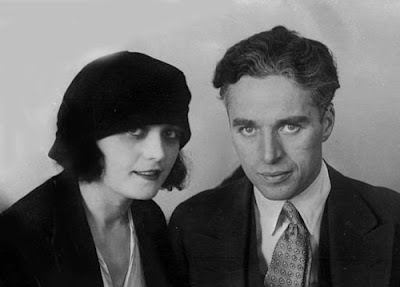 She later married a Georgian prince, Serge Mdivani, who left her for an opera singer after Negri lost her fortune in the stock market crash of 1929. After their divorce, Negri lived with Margaret West, a Texas oil heiress, until the latter's death in 1963.
"No one could believe that we were closest friends, that nothing sexual was involved," she wrote in her autobiography. "Yet it is true. She was as close a friend as I've ever had."
 When talkies came in, Negri's thick accent relegated her to supporting roles. Despite a measure of success in such films as A Woman Commands—she had a hit with the song "Paradise"—she retreated to Europe and retired in 1943, making one last picture in 1964, The Moon-Spinners, at Walt Disney's personal behest. Her London press conference promoting the film was a sensation—she showed up with a live cheetah on a chain leash.
Negri died on August 1, 1987, in San Antonio, Texas. She was 90 years old.
 So what's the most difficult part of reviewing silent movies, you might ask. That's easy: the fact that something like 80% of them no longer exist.
For a case in point, take Cleopatra, the 1917 blockbuster starring Theda Bara. It was far and away the most popular movie of that year. Not only did it finish atop the list of top grossing movies of 1917, but you see references to it all over the place—for example, Roscoe Arbuckle spoofing Bara's famous dance in his comedy short The Cook (which you can see here).
Unfortunately,the last print of Cleopatra was destroyed in a fire in the 1930s, not an uncommon fate for films of that era which were printed on silver nitrate—nitrate being a key component of gunpowder.
 All that remains of Cleopatra are some stills and a legend. Unfortunately, it's impossible to judge a silent film by its legendary status. Too many times, a lost film has acquired a reputation for greatness, then been rediscovered and turned out to be a tremendous letdown. Based on stills alone, Alla Nazimova's Salome, for example, was considered a classic; then the film itself was rediscovered and turned out to be a train wreck, nearly unwatchable.
Add in that Bara's fame was very brief—only about four years—and that her most famous surviving film, A Fool There Was (1915), reveals a rather stiff performance, and I'm inclined to think Bara's success was more a matter of notoriety than actual talent. I could be wrong—lots of people will disagree—and if a complete copy of Cleopatra turns up in somebody's attic one day, I'll cheerfully revisit the question.
Anyway, here's all that remains of the most popular movie of 1917, Cleopatra:
 Forget auteur theory, formalism, genre studies or any of that other film school claptrap, the unifying thread running through any well-rounded and not so well-rounded film education is Oscar trivia. People who wouldn't know Follow Focus from the French New Wave can tell you every Oscar winner from the first ceremony to the present day; fanatics have known for years that Citizen Kane should have won best picture of 1941; and even the most casual filmgoers will fight ninety-nine rounds over the latest Oscar snub.
But when it comes to movies made before the Oscars were invented, well, for most of us, they might as well have never been made at all.
 And why? Because we like a winner and even more, we like crabbing about our favorite loser. The Academy of Motion Picture Arts and Sciences didn't start handing out awards until 1929, and no movie made before August 1, 1927, was eligible. If the Academy had come up with the Oscars in, say, 1924, we'd all have an opinion about whether Greed should have won best picture over Sherlock Jr. or The Thief of Bagdad. But the Academy didn't and even lifelong film buffs will cheerfully shrug and admit they've never seen any of those pictures, much less have an opinion about them.
Without winners and losers, there's no controversy—and in America, at least, no controversy means nothing to talk about. I tell you, silent movies will never be as popular as they ought to be until we have something to argue about.
So I'm starting the argument, here, now.
The "Silent Oscars" are my choices for best picture, director, screenplay and all four acting categories for the years before the Academy began handing out awards, beginning with 1915 and running through July 31, 1927. I might get every single pick wrong, but you've got start somewhere—and besides, based on past history, getting it wrong is what the Oscars are all about.
Let the argument begin.
PICTURE
winner: Les Vampires (prod. Société des Etablissements L. Gaumont)
nominees: The Birth Of A Nation (prod. D.W. Griffith); The Cheat (prod. Cecil B. DeMille); The Italian (prod. Thomas H. Ince); Regeneration (prod. William Fox)
Must-See Movies: The Birth Of A Nation; Les Vampires
Recommended Films: Assunta Spina;The Cheat; Fatty's Tintype Tangle; His New Job; The Italian; Posle Smerti a.k.a. After Death; Regeneration; The Tramp
Of Interest: Alice in Wonderland; The Coward; A Fool There Was
 ACTOR
ACTOR
winner: George Beban (The Italian)
nominees: Roscoe Arbuckle (The Keystone Comedies); Charles Chaplin (The Essanay Comedies)
 ACTRESS
winner: Francesca Bertini (Assunta Spina and La signora delle camelie)
nominees: Theda Bara (A Fool There Was); Geraldine Farrar (Carmen)
 DIRECTOR
winner: Louis Feuillade (Les Vampires)
nominees: D.W. Griffith (The Birth of a Nation); Raoul Walsh (Regeneration)
 SUPPORTING ACTOR
winner: Sessue Hayakawa (The Cheat)
nominees: Marcel Lévesque (Les Vampires); Henry B. Walthall (The Birth of a Nation)
 SUPPORTING ACTRESS
winner: Musidora (Les Vampires)
nominees: Anna Q. Nilsson (Regeneration); Clara Williams (The Italian)
 SCREENPLAY
winner: Raoul Walsh and Walter C. Hackett, from the autobiography My Mamie Rose by Owen Frawley Kildare (Regeneration)
nominees: Louis Feuillade (Les Vampires); Thomas H. Ince and C. Gardner Sullivan (The Italian)
 SPECIAL AWARDS: G.W. "Billy" Bitzer (The Birth Of A Nation) (Cinematography); D.W. Griffith, Joseph Henabery, James Smith, Rose Smith and Raoul Walsh (The Birth Of A Nation) (Film Editing); Robert Goldstein and Clare West (The Birth Of A Nation) (Costumes); Frank Wortman (The Birth Of A Nation) (Set Design)
Boy, what an obscure bunch of winners, you're no doubt thinking, and I agree with you. Two years ago, I doubt I had heard of any of them except Sessue Hayakawa and Raoul Walsh—the former you may remember for his Oscar-nominated performance as the commandant of the Japanese POW camp in The Bridge on the River Kwai, the latter for directing such films as White Heat and The Roaring Twenties. The rest of them? Not a chance.
But let's face it, other than Charlie Chaplin, The Birth of a Nation and maybe Theda Bara, all of 1915's potential choices are pretty obscure.
 If the Silent Oscars were simply about trying to predict what the Academy might have chosen in 1915, then The Birth of a Nation would be the big winner, taking home awards for best picture, director, cinematography, editing, set design, costumes and acting awards for Lillian Gish and maybe Henry B. Walthall, making it the early silent era's equivalent of Gone With The Wind, which cleaned up at the Oscars a quarter of a century later.
But that's not quite what the Silent Oscars are all about. Aside from the fact that the Academy wasn't founded until 1927, its rather conventional wisdom is wrong more often than it's right. The Academy over the years has shown a real prejudice against comedies, commercial flops, foreign films and "mere" entertainment—which explains why Cary Grant and Alfred Hitchcock never won competitive Oscars—and there's no reason to think it would have done any better just because the films were silent.
The Birth of a Nation, the story of two families torn apart by the American Civil War and its aftermath, has some extraordinary sequences, particularly the battle scenes and the assassination of Abraham Lincoln, but ultimately director D.W. Griffith's heedless devotion to the historical myths underlying the movie's source material—an unapologetically racist novel called The Clansman—renders the movie nearly unwatchable to a modern audience.
Even the most charitable reading of the movie, that it is a Faulkneresque tragedy about American apartheid told through the eyes of a triumphant white supremacist, can't explain away the tedious romance that dominates the film's second half. For all its importance to film history—its box office success pretty much guaranteed the future of the motion picture—The Birth of a Nation is a deeply-flawed, would-be masterpiece. (Read more about it here.)
Besides, just because you may not have heard of my choices doesn't mean that an audience in 1915 wouldn't have. Les Vampires was a huge hit in France, Francesca Bertini was Italy's most famous actress during the silent era, The Cheat and Regeneration were big hits in the U.S., and while The Italian flopped at the box office, it proved to be a major influence on directors of the time, with specific shots echoed in such films as The Immigrant, 7th Heaven and The Cameraman.
 My choice for best picture, Les Vampires, you're familiar with, if only because I wrote 2000 words about it (here) last week. The ten-part, seven hour serial written and directed by Louis Feuillade tells the story of a criminal organization, The Vampires, that terrorizes Belle Époque Paris, corrupting those it can, murdering those it can't. Feuillade's serials, which both glamorized crime and anticipated the anxieties that came to define the 20th century—violence, paranoia, alienation, conspiracy, terrorism— influenced directors as diverse as Luis Buñuel, Fritz Lang and Alfred Hitchcock.
"All the roots of the thriller and suspense genres," David Thomson has written, "are in Feuillade's sense that evil, anarchy and destructiveness speak to the frustrations banked up in modern society."
Although she doesn't show up until the serial's third chapter, Musidora as the sinister, seductive Irma Vep is the real star of the show, robbing, murdering and kidnapping her way into the hearts of a generation of Frenchmen. The surrealists worshiped her amoral sexuality," Tom Gunning wrote, "and the revolutionary poet Louis Aragon later claimed that Irma Vep's dark bodysuit inspired the youth of France with fantasies of rebellion."
Musidora also starred in Feuillade's next serial, Judex, and later produced and directed her own films.
The serial has a wonderfully nutty quality, showing us a simultanously whimsical and dangerous Paris where you can lean out a second-story window and wind up with a lasso around your neck, where every cupboard hides a body, every hatbox a head, and your neighbor's loft conceals a cannon. "[T]he orginality of Lang and Hitchcock" (Thomson again) "fall into place when one has seen Feuillade: Mabuse is the disciple of Fantômas; while Hitchcock's persistent faith in the man who wears high heels, in the crop-spraying plane that will swoop down to kill, and in a world mined for the complacent is inherited from Feuillade."
Simply put, despite being a product of the early silent era, Les Vampires more than any other work from the first thirty years of film history (1888-1918) feels like it was written for a 21st century audience and is my choice for best picture of 1915.
 Francesca Bertini, my choice as 1915's best actress in a leading role, was Italy's first great star and inspired one of the two significant genres that characterized silent Italian cinema, the "diva" film. Similar to Hollywood's film noir of the post-war era, diva films told tales of beautiful, aristocratic women who destroy men as a sort of bloodsport.
In Assunta Spina, Bertini's seemingly trivial attempt to provoke her fiance to jealousy leads to a brutal beating, and her seduction of a corrupt judge to secure preferential treatment for her imprisoned fiance leads to disaster. Rather than playing a cartoonish vamp, however, Bertini's characterization is heartbreakingly three dimensional.
Likewise, her performance in La signora delle camelie, an early adaptation of the Dumas novel Camille, is both intimate and deeply-felt, and the anguish she conveys as she juggles true love, tuberculosis and the demands of her crass profession, rivals anything the great Greta Garbo managed in the 1936 version of the same story.
In her essay "Naturalism and the Diva: Francesca Bertini in Assunta Spina," Lea Jacobs argues that Bertini's "pictorial" style of acting—the broad, stylized gestures that modern audiences find so off-putting—is not so much representational as akin to a dance, with a rhythm and use of space reminiscent of Sarah Bernhardt. "An appreciation of this kind of acting," she writes, "involves not only an attention to the grace and aptness of the gestures employed, but also, how they mobilize the space of the set and exhaust the range of emotional possibilities of the situation. Rather than being 'read' for their meaning, they should be savored like a jazz musician's improvisations on a well known theme."
(The other Italian genre was the "Maciste" film, named for the heroic strongman at the center of Giovanni Pastrone's 1914 classic, Cabiria. Also known as "swords and sandals" cinema, the Maciste films focused on Italy's glorious past, a subject of particular interest at a time when the unified nation of Italy was only fifty-five years old and still groping for a national identity. After the debacle of World War I, Mussolini and his fascist supporters rode a wave of "strongman" sentiment to power.)
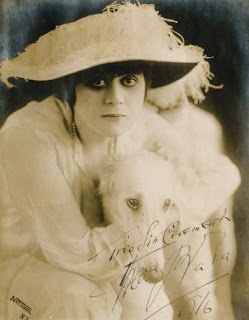 You might also want to check out Theda Bara in A Fool There Was. Bara was one of Hollywood biggest stars during this era, playing the original "vamp," a seducer and destroyer of men (in real life, she was a devoted wife and ardent feminist). The story of woman who seduces a married man and slowly destroys him, A Fool There Was serves as a reminder of just how long the plot of Fatal Attraction has been kicking around—since the Garden of Eden, I'm thinking.
Unfortunately, this Victorian morality tale doesn't answer the question of whether Bara's fame was based on talent or the notoriety of the roles she played. Nearly everything else she ever did, including her triumph, 1917's Cleopatra, was destroyed in a studio fire in 1937, so this is pretty much all you get. (Dawn at Noir and Chick Flicks posted a nice review of A Fool There Was yesterday. Check it out here.)
The best performance by an actor in 1915 was given by Sessue Hayakawa. The Cheat, directed by Cecil B. DeMille, is the story of a rich, spoiled housewife (Fanny Ward) whose profligate spending is driving her husband to financial ruin. Rather than give up her lavish lifestyle, she embezzles a charity's funds then turns to an Asian businessman (Hayakawa) for an emergency loan. Long on the receiving end of Ward's flirtatious attentions, and impatient to consummate their emotional affair, Hayakawa gives her the money but insists she sleep with him in lieu of payment.
 When she takes the money but reneges on her end of the bargain, Hayakawa brands her flesh with a heated iron—one of the most startling scenes of this or any other era.
Like Francesca Bertini, however, Hayakawa elevated this potentially trashy material with a terrific performance.
At a time when The Birth of a Nation could play on Americans' fears of interracial sex to sell $16 million worth of tickets, DeMille no doubt intended the explicit attraction between Hayakawa and Ward as a means to provoke the xenophobic passions of his audience. But Hayakawa brings such elegance and subtlety to the role that, prior to his brutal act of violence, a modern audience is likely to find him the only sympathetic character on the screen.
The years before the United States' entry into World War I represented a brief moment of acceptance for Asians in the American film industry and with the box office success of The Cheat, Hayakawa became a major star. Later, he and his wife, actress Tsuru Aoki, formed their own production company and made several films together, most of which are now lost.
Rising anti-Asian sentiment in the early 1920s, however, put an end to Hayakawa's Hollywood career. After failing to find work in his native Japan, Hayakawa moved to France and launched a second film career. After World War II, he returned to Hollywood and earned an Oscar nomination for his supporting performance in The Bridge on the River Kwai.
 An even bigger sensation at the box office was Raoul Walsh's film of crime and redemp- tion, Regeneration. Based on Owen Kildare's autobiography My Mamie Rose, Regeneration is the story of a small-time hood who meets a social worker and fights to go straight. The film is even-handed in its portrayal of Kildare, showing his suffering as a child at the hands of abusive stepparents, but not flinching from his crimes as an adult.
Walsh must have liked the basic story—a violent man goes potty over a dame—because he directed variations of it for the rest of his career, including High Sierra and The Strawberry Blonde.
Walsh filmed most of Regeneration on location in New York's slums and saloons, lending the film a documentary feel. His real coup, though, was the casting of veteran actress Anna Q. Nilsson, whom Walsh later accurately described as "ravishing." (You may remember her, along with Buster Keaton and H.B. Warner, as one of the "waxworks" who plays bridge with Norma Desmond in Sunset Boulevard.)
With the Progressive politics of Teddy Roosevelt and Woodrow Wilson in full flower, films with a social message were almost a cliche during this era. In addition to Regeneration, you might also check out A Corner in Wheat (1909), Traffic in Souls (1913), Where Are My Children? (1916) and the last film I'll mention in this post, Thomas H. Ince's The Italian, all of which are preserved in the National Film Registry.
 While my other choices for the best films and perform- ances of 1915 are obscure by the standards of today, my choice for best actor in a lead role, George Beban in The Italian, is obscure by any standard. Although the film has been deemed worthy for inclusion in the Film Registry, it was not a box office success in 1915 and Beban himself appeared in only twenty films during his career. Still, it's one of the best films and best performances of the year and worth the effort to track down.
The Italian was one of several films about immigrants to emerge from this period of history, an issue understandably of interest to audiences since immigration from Europe to the U.S. had recently reached its peak of more than a million persons a year, with more than 13.5 million first-generation immigrants living in the U.S. The story of an immigrant who arrives in New York with the American Dream of prosperity and upward mobility in his heart only to find poverty, crime and disillusionment must have been a familiar one.
Despite a successful career on Broadway—Beban was able to command a salary of $7000 and percentage of the profits—The Italian was his first film and it takes him a few scenes to find his legs. In fact, I got the sense while watching the film that most everybody was learning on the job—and maybe they were—but by the time the film kicks into gear, with Beban's Beppo Donnetti traveling steerage from Italy to New York, Beban is in complete command of his craft.
"The actor's style is boisterous but grounded in psychological truth," wrote Daniel Eagan in America's Film Legacy. "He is also an astute judge of his audience. He knows when to appeal to viewers' sympathies and when to pull back, something that could not always be said about his contemporaries."
Beban's descent into despair as his child falls ill and then his icy rage at the politician who used him then spit him out in his hour of need is moving, and his planned revenge chilling—a terrific performance in a small, but unforgettable movie.
 Even More Trivia: Lastly I want to mention Frank Keenan who played a supporting role as the father in another highly-touted movie, The Coward. Keenan isn't good in this or any other movie but I bring him up because in my researches I discovered that in his day he was known as a "furniture actor," which turns out to be an old theater term meaning an actor who habitually turns up for work drunk and has to lean on the furniture to keep from falling down
You learn something new every day.
 I have a drop-dead lawyer-business deadline tomorrow so of course I've been watching movies. I've got two unrelated projects going at the moment: the essay for best supporting actor of 1930-31 (which you know about) and an ongoing project to flesh out my knowledge of Silent Era movies, some of the results of which I hope to share with you around the time I finish writing about the best movies of 1933—which at my current pace might be around the time my six year old niece graduates from college.
In the meantime, in honor of Halloween this weekend, I thought I'd mention an unusual vampire movie I saw yesterday, A Fool There Was, directed by Frank Powell in 1915.
It stars Theda Bara as "The Vampire." You remember Theda Bara, don't you? She was Hollywood's hottest sex symbol for a brief time in the late 1910's, most famously appearing in 1917's Cleopatra wearing, well, not much.
A Fool There Was, based on a Rudyard Kipling poem of all things, begins well enough. Bara, decked out in 1915's version of the nine's, sets her eyes on a wealthy American diplomat, played by Edward José (no, I'd never heard of him either. Primarily a director, he did occasionally step out from behind the camera, starring in, for example, The Perils Of Pauline), rearranging her schedule to travel on the same trans-Atlantic steam ship with him, seducing him in route.
 And then the movie turned into the poor man's Pandora's Box, with the young and wild Theda Bara taking full advantage of the diplomat, spending his money, ruining his career, separating him from his family and his self-respect. And it slowly dawned on me that Bara wasn't so much a "vampire" as a "vamp," in Merriam-Webster's description, "a woman who uses her charm or wiles to seduce and exploit men."
The word "vamp" in this sense (it's also part of a shoe) is a shortened form of the word "vampire," and as a metaphor for a woman who sucks a man dry, it largely comes from this movie and Theda Bara.
You probably would have figured that out long before I did. But there you have it.
Theda Bara, by the way, was thirty when she hit it big in Hollywood, and she lived a long time, but her career didn't. The public ate up Bara and then by 1919, spit her back out again, hungry for the next big thing, tired of Bara's broadly-played "vamp" roles.
It didn't help that the public routinely confused the parts Bara played with Bara herself and women in particular took such an intense dislike to her that they were known to call the police if she spoke to their children. In fact, she wasn't much of a vamp in real life if her marriage to Charles Brabin is any indication. They were married in 1921 and stayed married until Bara's death in 1955 did them part.
"I have the face of a vampire," she later said, "but the heart of a feminist."
 As for her professional abilities, it's a hard question to assess now. Nearly all of her films were destroyed in a studio fire in 1937, including her greatest triumph, Cleopatra, of which only a forty second fragment remains. I tracked down A Fool There Was simply to see something of Bara's legend for myself, but made as it was before D.W. Griffith's groundbreaking The Birth Of A Nation, which practically invented what we think of as a motion picture, A Fool There Was plays like a well-meaning amateur's home movie and with its static direction and simplistic characterizations, there really was no acting on Bara's part to be done.
You may want to check it out as I did, to satisfy your curiosity.
A Fool There Was is available on DVD.

 Before Marlene Dietrich, before Ingrid Bergman, Sophia Loren or even Greta Garbo, Polish film star Pola Negri made the journey from Europe to Hollywood and found fame in America, the first European film actress to succeed on both sides of the Atlantic.
 During World War I, she moved to Berlin where she caught the attention of Ernst Lubitsch who signed her to a movie contract at Universum Film AG ("UFA"), Germany's best studio and, until the Nazis took power in 1933, one of the most influential in the world. After a half dozen low-budget films with other directors, Lubitsch in 1918 cast Negri as the lead in Die Augen der Mumie Ma—"The Eyes of the Mummy."
 The Eyes of the Mummy is a minor entry in the Lubitsch canon, and Negri is still a raw young actress (she was just twenty-one when filming began), but somebody connected with the film—the screenwriters, Lubitsch, Negri—knew something about the psychology of stalking from the point of view of both the stalker and the victim, and Negri is effective as a lusty child-woman slavishly devoted to whichever man possesses her at any given moment.
 Better is Lubitsch's next collaboration with Negri, a film version of Prosper Mérimée's novel, Carmen. Adapted to film as early as 1907, the story of a soldier who throws over his family, his fiancee and his honor for a beautiful gypsy smuggler with tragic results has spawned dozens of versions over the years and was familiar enough to audiences that Charlie Chaplin could film a spoof of it, A Burlesque on Carmen, in 1915. Stripped of its Spanish setting, Carmen is essentially a retelling of Eve and the apple, and while I agree with Nero Wolfe's sidekick Archie Goodwin that "[n]o man was ever taken to hell by a woman unless he already had a ticket in his pocket, or at least had been fooling around with timetables," that doesn't mean this oft-repeated formula doesn't work; indeed, it forms the basis of much of literature, film noir and some of the more brutal aspects of many of the world's cultures.
 The key to Carmen is, of course, the actress playing the title role. You have to believe that an honorable man would throw away his good name, a promising career and a faithful fiancee for a romp with a treacherous tramp. Although the print of Carmen has deteriorated beyond repair in places, it's still possible to see what both Don José and movie audiences saw in Pola Negri's Carmen—she's ripe and sensual, with large eyes full of promises she has no intention of keeping.
 "Love is disgusting," Negri herself later opined, "when you no longer possess yourself."
 She quickly supplanted Theda Bara as silent film's top sex symbol and while (thanks to the vagaries of film preservation) I can't compare Negri to Bara's most famous role, Cleopatra, if Bara's surviving film A Fool There Was is any indicator, Negri was lightyears beyond her in terms of projecting sexuality on the screen. Was Negri a great actress? I'm not sure. But judging from the reaction of audiences when her European films finally made their way to America, she was revolutionary.
 When in 1926, the press decided her engagement to the recently deceased Rudolph Valentino was a fabrication, the public was done with her. To her dying day, Negri insisted that the engagement was real and told the Los Angeles Times shortly before her death, "Rudy was the great love of my life. I remember him with great regret. Somehow, the fates changed what wasn't to be. You can't rage with anger against it, and even though you love someone, you like to be with them and want to marry them and hope that it will all work out this time ... but he died, just when we were engaged to be married."
 She later married a Georgian prince, Serge Mdivani, who left her for an opera singer after Negri lost her fortune in the stock market crash of 1929. After their divorce, Negri lived with Margaret West, a Texas oil heiress, until the latter's death in 1963.
 When talkies came in, Negri's thick accent relegated her to supporting roles. Despite a measure of success in such films as A Woman Commands—she had a hit with the song "Paradise"—she retreated to Europe and retired in 1943, making one last picture in 1964, The Moon-Spinners, at Walt Disney's personal behest. Her London press conference promoting the film was a sensation—she showed up with a live cheetah on a chain leash.







 Posts
Posts

