skip to main |
skip to sidebar
 Baby Doll, Tennessee Williams's Southern Gothic black comedy about a bankrupt businessman who has promised not to touch his young bride until her twentieth birthday, was easily the most controversial movie of 1956—or any other year ending in 6, I imagine. In the movie's first scene, a scantily clad Carroll Baker is asleep in a crib, sucking her thumb, while her frustrated husband (Karl Malden) watches her through a peephole.
From there, it gets weird.
Time called it "[j]ust possibly the dirtiest American-made motion picture that has ever been legally exhibited," the League of Decency slapped it with its lowest rating—"C" for condemned— and Cardinal Spellman threatened any Catholic who saw it with excommunication.
No wonder it was a hit!
As Kim Morgan of Sunset Gun put it, Baby Doll is "one of the most notoriously erotic mainstream movies ever produced at that time. A movie that's still sexy today, and sexy in that perfectly unhealthy, steamy, creamy and twisted way—the only way that works."
Amen.
PICTURE (Drama)
winner: The Searchers (prod. Merian C. Cooper)
nominees: The Bad Seed (prod. Mervyn LeRoy); Forbidden Planet (prod. Nicholas Nayfack); Giant (prod. Henry Ginsburg and George Stevens); Invasion of the Body Snatchers (prod. Walter Wanger); The Killing (prod. James B. Harris); Lust for Life (prod. John Houseman); Written on the Wind (prod. Albert Zugsmith)
PICTURE (Comedy/Musical)
winner: Baby Doll (prod. Elia Kazan)
nominees: The Girl Can't Help It (prod. Frank Tashlin); High Society (prod. Sol C. Siegel); The King And I (prod. Charles Brackett); The Rainmaker (prod. Hal B. Wallis)
PICTURE (Foreign Language)
winner: Un condamné à mort s'est échappé ou Le vent souffle où il veut (A Man Escaped) (prod. Alain Poiré and Jean Thuillier)
nominees: Akasen chitai (Street of Shame) (prod. Masaichi Nagata); Aparajito (prod. Satyajit Ray); Biruma no tategoto (The Burmese Harp) (prod. Masayuki Takaki); Bob le flambeur (prod. Jean-Pierre Melville and Serge Silberman); Gervaise (prod. Agnès Delahaie (as Annie Dorfmann)); Sôshun (Early Spring) (prod. Shôchiku Film)
ACTOR (Drama)
winner: John Wayne (The Searchers)
nominees: Kirk Douglas (Lust For Life); Sterling Hayden (The Killing); James Mason (Bigger Than Life); Kevin McCarthy (Invasion of the Body Snatchers)
ACTOR (Comedy/Musical)
winner: Yul Brynner (The King And I)
nominees: Paul Douglas (The Solid Gold Cadillac); Danny Kaye (The Court Jester); Burt Lancaster (The Rainmaker)
ACTRESS (Drama)
winner: Ingrid Bergman (Anastasia)
nominees: Nancy Kelly (The Bad Seed); Dorothy McGuire (Friendly Persuasion); Vera Miles (The Wrong Man); Maria Schell (Gervaise)
ACTRESS (Comedy/Musical)
winner: Carroll Baker (Baby Doll)
nominees: Katharine Hepburn (The Rainmaker); Judy Holliday (The Solid Gold Cadillac); Deborah Kerr (The King And I); Marilyn Monroe (Bus Stop)
DIRECTOR (Drama)
winner: John Ford (The Searchers)
nominees: Robert Bresson (Un condamné à mort s'est échappé ou Le vent souffle où il veut a.k.a. A Man Escaped); Don Siegel (Invasion of the Body Snatchers); Douglas Sirk (Written On The Wind); George Stevens (Giant)
DIRECTOR (Comedy/Musical)
winner: Jean-Pierre Melville (Bob le flambeur)
nominees: Elia Kazan (Baby Doll); Walter Lang (The King And I)
SUPPORTING ACTOR
winner: Elisha Cook, Jr. (The Killing)
nominees: Richard Basehart (Moby Dick); Ward Bond (The Searchers); James Dean (Giant); Anthony Quinn (Lust for Life); Eli Wallach (Baby Doll)
SUPPORTING ACTRESS
winner: Dorothy Malone (Written On The Wind)
nominees: Mildred Dunnock (Baby Doll); Helen Hayes (Anastasia); Mercedes McCambridge (Giant); Marie Windsor (The Killing)
SCREENPLAY
winner: Daniel Mainwaring, from the Collier's magazine serial by Jack Finney (Invasion Of The Body Snatchers)
nominees: Auguste Le Breton and Jean-Pierre Melville (Bob le flambeur); Robert Bresson, from the memoir by André Devigny (Un condamné à mort s'est échappé ou Le vent souffle où il veut a.k.a. A Man Escaped); Stanley Kubrick (screenplay), Jim Thompson (dialogue), from the novel Clean break by Lionel White (The Killing); Frank S. Nugent, from the novel by Alan Le May (The Searchers); Tennessee Williams, from his one-act plays 27 Wagons Full of Cotton and The Long Stay Cut Short (Baby Doll)
SPECIAL AWARDS
Winton C. Hoch (The Searchers) (Cinematography); "Love Me Tender" (Love Me Tender) music and lyrics by Elvis Presley and Vera Matson (Song); A. Arnold Gillespie, Irving G. Riles and Wesley C. Miller (Forbidden Planet) (Special Effects)
 That pop-pop-popping sound you've been hearing all morning is people's heads exploding as they scroll down the page and see that the Three Stooges have won an award for best actor in a comedy.
The Three Stooges?! What the what?!
And yet the fact is, the Stooges are the best known comedy team in the history of film, still popular (or passionately unpopular) after all these years and I think they are long overdue for some critical recognition.
 Did you know they once got an Oscar nomination? They did—or their work did anyway—for the 1934 two-reeler Men in Black. And in 2002, Punch Drunks was selected by the Library of Congress for the National Film Registry. 1940 represents the team at their peak, with arguably the two finest shorts of their career, You Nazty Spy!—a pointed satire of Hitler that beat Chaplin's The Great Dictator into theaters by ten months—and A Plumbing We Will Go, with Curly's attempts to fix a leaky shower serving as the funniest demonstration of the worthlessness of good intentions ever committed to film.
As for Joan Fontaine, the first (I think) living recipient of a Katie-Bar-The-Door Award and my pick for the year's best actress in a drama, she might be the most one-note actress ever to create an indelible screen image. She played submissive, cringing doormats better than anybody—in not only Rebecca, but also Suspicion, Letter From An Unknown Woman, and in a supporting role in The Women—but she couldn't do much else, and I often wonder whether her primary talent was for getting cast in parts perfectly suited to her limited gifts. If so, she's still ahead of me, and I imagine she'll be around feuding with her sister long after I'm gone.
 Speaking of her ongoing feud with Olivia de Havilland, I don't know about you, but I find it strangely comforting that they're still at it, like knowing that the sun will come up in the morning. They've been fighting longer than the Cleveland Indians have gone without a World Series title, if that means anything to you, since Franklin Roosevelt was president and there were 48 stars on the flag. Think of all the people who were born, lived, grew old and died during the time that Joan Fontaine and Olivia de Havilland haven't been speaking to each other. That's constancy, man, a strange sort of fidelity more enduring than most marriages.
Just because you're related to somebody doesn't mean you have to like them, I guess.
PICTURE (Drama)
winner: The Grapes Of Wrath (prod. Darryl F. Zanuck)
nominees: Foreign Correspondent (prod. Walter Wanger); The Letter (prod. William Wyler); Rebecca (prod. David O. Selznick); The Thief Of Bagdad (prod. Alexander Korda)
PICTURE (Comedy/Musical)
winner: The Philadelphia Story (prod. Joseph L. Mankiewicz)
nominees: The Great Dictator (prod. Charles Chaplin); His Girl Friday (prod. Howard Hawks); Pinocchio (prod. Walt Disney); The Shop Around The Corner (prod. Ernst Lubitsch)
PICTURE (Foreign Language)
winner: Ahí está el detalle (You're Missing The Point) (prod. Jesús Grovas)
ACTOR (Drama)
winner: Henry Fonda (The Grapes Of Wrath)
nominees: Gary Cooper (The Westerner); Errol Flynn (The Sea Hawk); Raymond Massey (Abe Lincoln In Illinois); Laurence Olivier (Rebecca); Conrad Veidt (The Thief Of Bagdad)
ACTOR (Comedy/Musical)
winner: The Three Stooges (You Nazty Spy!; A Plumbing We Will Go; Nutty But Nice; How High Is Up?; From Nurse To Worse; No Census, No Feeling; Cookoo Cavaliers; and Boobs In Arms)
nominees: Charles Chaplin (The Great Dictator); Brian Donlevy (The Great McGinty); W.C. Fields (The Bank Dick); Cary Grant (His Girl Friday and My Favorite Wife); William Powell (I Love You Again); James Stewart (The Philadelphia Story and The Shop Around The Corner)
ACTRESS (Drama)
winner: Joan Fontaine (Rebecca)
nominees: Bette Davis (All This, And Heaven Too and The Letter); Vivien Leigh (Waterloo Bridge)
ACTRESS (Comedy/Musical)
winner: Rosalind Russell (His Girl Friday)
nominees: Irene Dunne (My Favorite Wife); Katharine Hepburn (The Philadelphia Story); Ann Sheridan (Torrid Zone); Margaret Sullavan (The Shop Around The Corner)
DIRECTOR (Drama)
winner: John Ford (The Grapes of Wrath)
nominees: Michael Curtiz (The Sea Hawk); Alfred Hitchcock (Rebecca and Foreign Correspondent); William Wyler (The Westerner and The Letter)
DIRECTOR (Comedy/Musical)
winner: George Cukor (The Philadelphia Story)
nominees: Charles Chaplin (The Great Dictator); Howard Hawks (His Girl Friday); Ernst Lubitsch (The Shop Around The Corner); Preston Sturges (The Great McGinty and Christmas in July)
SUPPORTING ACTOR
winner: Cary Grant (The Philadelphia Story)
nominees: Ralph Bellamy (His Girl Friday); Walter Brennan (The Westerner); Jack Oakie (The Great Dictator); George Sanders (Rebecca and Foreign Correspondent); John Carradine (The Grapes of Wrath)
SUPPORTING ACTRESS
winner: Judith Anderson (Rebecca)
nominees: Jane Dorwell (The Grapes Of Wrath); Ruth Hussey (The Philadelphia Story); Gail Patrick (My Favorite Wife); Virginia Weidler (The Philadelphia Story)
SCREENPLAY
winner: Nunnally Johnson, from the novel by John Steinbeck (The Grapes Of Wrath)
nominees: Charles Chaplin (The Great Dictator); Donald Ogden Stewart, from the play by Philip Barry (The Philadelphia Story); Robert E. Sherwood and Joan Harrison (screenplay), Philip MacDonald and Michael Hogan (adaptation), from the novel by Daphne Du Maurier (Rebecca); Samuel Raphelson, from a play by Miklós László (The Shop Around The Corner)
SPECIAL AWARDS
George Barnes (Rebecca) (Cinematography); Lodge Cunningham (His Girl Friday) (Sound); "When You Wish Upon A Star" (Pinocchio) music by Leigh Harline; lyrics by Ned Washington (Song)
A great year in film history that needs no introduction—which is a good thing because I haven't written one.
PICTURE (Drama)
winner: Gone With The Wind (prod. David O. Selznick)
nominees: Goodbye, Mr. Chips (prod. Victor Saville); Gunga Din (prod. George Stevens); The Hunchback Of Notre Dame (prod. Pandro S. Berman); Only Angels Have Wings (prod. Howard Hawks); The Roaring Twenties (prod. Hal B. Wallis); Stagecoach (prod. John Ford); Wuthering Heights (prod. Samuel Goldwyn)
PICTURE (Comedy/Musical)
winner: The Wizard Of Oz (prod. Mervyn LeRoy)
nominees: Destry Rides Again (prod. Joe Pasternak); Mr. Smith Goes To Washington (prod. Frank Capra); Ninotchka (prod. Ernst Lubitsch); The Women (prod. Hunt Stromberg)
PICTURE (Foreign Language)
winner: La règle du jeu (The Rules Of The Game) (prod. Claude Renoir, Sr.)
ACTOR (Drama)
winner: Clark Gable (Gone With The Wind)
nominees: James Cagney (The Roaring Twenties); Robert Donat (Goodbye, Mr. Chips); Henry Fonda (Young Mr. Lincoln); Cary Grant (Gunga Din and Only Angels Have Wings); Laurence Olivier (Wuthering Heights); Basil Rathbone (The Hound Of The Baskervilles and The Adventures Of Sherlock Holmes)
ACTOR (Comedy/Musical)
winner: James Stewart (Mr. Smith Goes To Washington and Destry Rides Again)
nominees: Don Ameche (Midnight); Melvyn Douglas (Ninotchka); W.C. Fields (You Can't Cheat An Honest Man)
ACTRESS (Drama)
winner: Vivien Leigh (Gone With The Wind)
nominees: Ingrid Bergman (Intermezzo: A Love Story); Bette Davis (Dark Victory and The Old Maid); Irene Dunne (Love Affair); Merle Oberon (Wuthering Heights); Barbara Stanwyck (Union Pacific)
ACTRESS (Comedy/Musical)
winner: Judy Garland (The Wizard Of Oz)
nominees: Jean Arthur (Mr. Smith Goes To Washington); Claudette Colbert (Midnight); Joan Crawford (The Women); Marlene Dietrich (Destry Rides Again); Greta Garbo (Ninotchka)
DIRECTOR (Drama)
winner: John Ford (Stagecoach)
nominees: Victor Fleming (Gone With The Wind); Howard Hawks (Only Angels Have Wings); William Wyler (Wuthering Heights)
DIRECTOR (Comedy/Musical)
winner: Victor Fleming (The Wizard Of Oz)
nominees: Frank Capra (Mr. Smith Goes To Washington); Ernst Lubitsch (Ninotchka); Jean Renoir (La règle du jeu a.k.a. The Rules Of The Game)
SUPPORTING ACTOR
winner: Thomas Mitchell (Stagecoach, Only Angels Have Wings, Mr. Smith Goes To Washington, Gone With The Wind and The Hunchback Of Notre Dame)
nominees: Ray Bolger, Jack Haley and Bert Lahr (The Wizard Of Oz); Frank Morgan (The Wizard Of Oz); Robert Preston (Union Pacific); Claude Rains (Mr. Smith Goes To Washington)
SUPPORTING ACTRESS
winner: Hattie McDaniel (Gone With The Wind)
nominees: Olivia de Havilland (Gone With The Wind); Geraldine Fitzgerald (Wuthering Heights); Kay Francis (In Name Only); Margaret Hamilton (The Wizard Of Oz); Butterfly McQueen (Gone With The Wind)
SCREENPLAY
winner: Anita Loos and Jane Murfin, from the play by Clare Boothe (The Women)
nominees: Jean Renoir and Carl Koch (La règle du jeu a.k.a. The Rules Of The Game); Charles Brackett, Walter Reisch and Billy Wilder; story by Melchior Lengyel (Ninotchka); Sidney Buchman; story by Lewis R. Foster (Mr. Smith Goes To Washington)
SPECIAL AWARDS
"Over The Rainbow" (The Wizard Of Oz) music by Harold Arlen; lyrics by E.Y. Harburg (Song); Max Steiner (Gone With The Wind) (Score)
The first round of voting in the Classic Hollywood directors bracket is complete. Alfred Hitchcock won an easy victory over Billy Wilder (although several readers commented that it was a frustrating choice).
On the other hand, John Ford and Howard Hawks finished in a dead heat. So to break the tie, here's another question: which of these classic Westerns do you prefer?
Rio Bravo
 or
or
The Searchers
 (Vote in the poll at the top right hand side of the page.)
You have until Tuesday evening to decide.
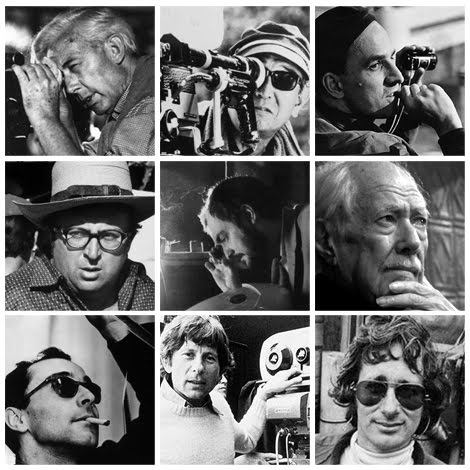
 It occurred to me that if Erik Beck of the Boston Becks can come up with his list of the 100 best directors of all time and Monty of All Good Things can run a Classic Stars Match Play Tournament, there's no reason I can't horn in on their action and run an all-time great directors tournament.
Admittedly, I don't have time for a full-blown March Madness style tourney with 64 participants, but I can handle a sweet 16, divided into four brackets, The Silent Era, Classic Hollywood, Art House Favorites and The Modern Era.
Here are the match-ups:
SILENT ERA
D.W. Griffith v. Louis Feuillade
Charles Chaplin v. Buster Keaton
CLASSIC HOLLYWOOD
Alfred Hitchcock v. Billy Wilder
John Ford v. Howard Hawks
ART HOUSE FAVORITES
Ingmar Bergman v. Stanley Kubrick
Akira Kurosawa v. Federico Fellini
MODERN ERA
Woody Allen v. The Coen Brothers
Martin Scorsese v. Steven Spielberg
Admittedly, that leaves out a lot of favorites, both yours and mine, but what is life without disappointment and frustration.
The rounds will go off in staggered starts—Classic Hollywood today, the Modern Era tomorrow, etc.—and you'll have five days to vote on each match-up. Round Two will start next Wednesday.
Here's the Tale of the Tape for today's contestants:
Alfred Hitchcock
 Born: August 13, 1899 (London, England)
Directorial Debut: Number 13 (1922) (unfinished)
Academy Awards: 5 nominations, no wins
Katie-Bar-The-Door Awards (for direction): 4 wins: The 39 Steps (1935); The Lady Vanishes (1938); Vertigo (1958); Psycho (1960) (all in the category of Drama)
Three More To See: Notorious, Rear Window and North By Northwest
Billy Wilder
 Born: June 22, 1906 (Sucha, Galicia, Austria-Hungary [now Sucha Beskidzka, Malopolskie, Poland])
Directorial Debut: Mauvaise Graine (1934)
Academy Awards: 21 nominations (including 8 for direction), 6 wins, including two for direction—The Lost Weekend (1945) and The Apartment (1960)
Katie-Bar-The-Door Awards (for direction): 3 wins: Double Indemnity (1944) (Drama), and Some Like It Hot (1959) and The Apartment (1960) (both Comedy/Musical)
Three More To See: Sunset Boulevard, Stalag 17 and Sabrina
John Ford
 Born: February 1, 1894 (Cape Elizabeth, Maine)
Directorial Debut: The Tornado (1917)
Academy Awards: 6 nominations (including 5 for direction); 4 wins—The Informer (1935); The Grapes Of Wrath (1940); How Green Was My Valley (1941) and The Quiet Man (1952)
Katie-Bar-The-Door Awards (for direction): 3 wins—Stagecoach (1939), The Grapes Of Wrath (1940) and The Searchers (1956) (all for Drama)
Three More To See: My Darling Clementine (1946), She Wore A Yellow Ribbon (1949) and The Man Who Shot Liberty Valence (1962)
Howard Hawks
 Born: May 30, 1896 (Goshen, Indiana)
Directorial Debut: The Road To Glory (1926)
Academy Awards: 1 nomination, 0 wins
Katie-Bar-The-Door Awards (for direction): 3 wins—Scarface (1931-32) (Drama), Bringing Up Baby (1938) (Comedy/Musical) and Rio Bravo (1959) (Drama)
Three More To See: His Girl Friday, The Big Sleep and Red River
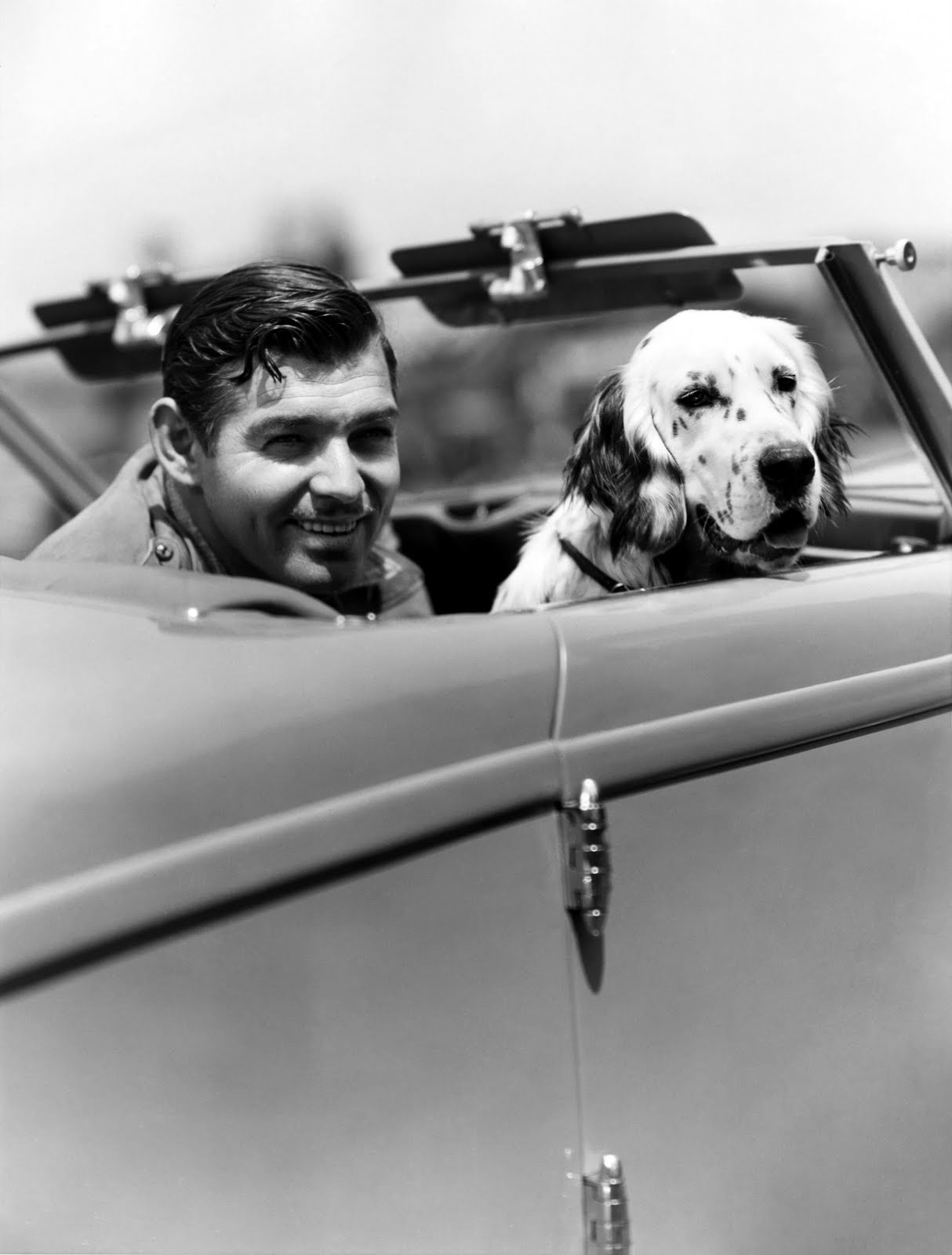
Clark Gable, who be 110 today ...
 ... and John Ford, who would be 117.
 If I live long enough, I'll write a full biography of each of them, in Gable's case in connection with either It Happened One Night or Gone With The Wind, in Ford's either Stagecoach, The Grapes of Wrath or The Searchers, maybe all three.
Just one more reason not to have a heart attack while shoveling snow.
[To read Part One of this essay, click here. To read Part Two, click here. For Part Three, click here, and for Part Four, click here.]
V. Later Comedies and Lubitsch's Legacy
 After Trouble In Paradise and Design For Living, "comedies without music" he called them, Lubitsch returned to the comfort of the operetta form he had perfected during the first days of sound. The story of a randy army officer ordered to woo a wealthy widow in order to save the country from bankruptcy, The Merry Widow—made while on loan to MGM—was the most polished and least suggestive of his five musicals. The Hays Office, by 1934 enforcing the Production Code, objected to several scenes and required extensive cutting before it would approve the film for release. (Fortunately, this footage was saved and has been restored.)
The Merry Widow received good reviews and won an Oscar for art direction, but with production costs of $1.6 million, it was the most expensive musical made to date and wound up losing money. It was also the last pairing of stars Maurice Chevalier and Jeanette MacDonald. The former found himself relegated to smaller and smaller parts and eventually returned to France; the latter paired up with Nelson Eddy and made commercially successful movies for the next decade, though in retrospect, none are as satisfying as those she made with Lubitsch.
 After the commercial failure of The Merry Widow, Lubitsch did not direct another movie for three years. In the meantime, he took a job as production manager at Paramount, becoming the only director to ever run a major studio. I'd like to say it was an inspired choice, but in fact, Lubitsch had never been able to delegate authority easily and wound up interfering in many of the sixty productions a year he oversaw without really being able to contribute anything substantive, a result that pleased no one.
"I think I am possessed only of a fascination for the work I have chosen to do," he said later. "I am so engrossed by the production of a film that I literally think of nothing else. I have no hobby, no outside interests and want none."
He was unceremoniously dismissed as head of production in early 1936.
The time away from the director's chair, though, gave Lubitsch time to consider what kind of film he really wanted to make. Whipsawed on the one hand by the enforcement of the Production Code which had effectively forbidden the racier aspects of his style; and on the other by the aggressive style of the screwball comedy which made his gentle approach passe, Lubitsch temporarily lost confidence in his ability to make a successful picture.
 He eventually figured it out, though not at Paramount, moving in 1939 to MGM, where he directed Greta Garbo in Ninotchka and James Stewart in The Shop Around The Corner, two of his best comedies, both preserved in the National Film Registry. In 1942, he made what is arguably his best movie, To Be Or Not To Be, an anti-war comedy starring Jack Benny and in the last role of her career, Carole Lombard. Blasted by critics at the time as being in bad taste, To Be Or Not To Be has become a particular favorite of critics over the intervening years and was included in the National Film Registry in 1996, one of five Lubitsch movies so honored.
"None of us thought we were making anything but entertainment for the moment," John Ford said later. "Only Ernst Lubitsch knew we were making art."
"Lubitsch had the greatest sense of humor of any individual I've ever met," said director Joseph M. Newman. "The actors all loved him. He had a very human quality about him. He was the type of man that became your friend after you met him once. A great man."
 His most faithful disciple was fellow German refugee Billy Wilder, who wrote the screenplay to Ninotchka and later directed such classics as Double Indemnity, Sunset Boulevard, Some Like It Hot and The Apartment. Over his desk, Wilder posted a sign "How would Lubitsch do it?" But despite winning six Oscars during his career, Wilder ultimately concluded he had never measured up to his mentor. "His art is lost," he said. "That most elegant of screen magicians took his secret with him."
In 1943, Lubitsch received an Oscar nomination for Heaven Can Wait, the third nomination of his career, but once again, he did not win. In March 1947, as it became clear that Lubitsch's health was failing, the Academy presented him with a special award "[f]or his distinguished contributions to the art of the motion picture."
 "With the passing years," wrote his biographer Scott Eyman, "it became increasingly clear that Ernst Lubitsch had accomplished something only vouchsafed the greatest artists: he had created a self-contained universe with a sensibility so singular, behavioral beauties so intense, that it forever altered the world view of those lucky enough to experience it. He believed in his dreams so strongly that millions of others came to believe in them as well, and the fact that the values and style of Lubitsch's work constituted the finest examples of the discarded heritage of elegant screen comedy made his everlasting, gentle brilliance even more poignant."
Ernst Lubitsch died of a heart attack in November,1947.
"No more Lubitsch," Billy Wilder lamented at the funeral.
"Worse than that," said William Wyler. "No more Lubitsch films."

 Baby Doll, Tennessee Williams's Southern Gothic black comedy about a bankrupt businessman who has promised not to touch his young bride until her twentieth birthday, was easily the most controversial movie of 1956—or any other year ending in 6, I imagine. In the movie's first scene, a scantily clad Carroll Baker is asleep in a crib, sucking her thumb, while her frustrated husband (Karl Malden) watches her through a peephole.











 Posts
Posts

