skip to main |
skip to sidebar
 Joan Crawford was a complicated woman—which is to say that like all of us, she had her good points and her bad points. She was catty and cruel, she was uneducated and insecure about it, she had the morals of an alley cat and her failures as a mother are legendary. But she also had a tremendous work ethic, always tried to improve herself, and as far as I can tell, she never phoned in a performance, not even in the execrable sci-fi horror flick, Trog, which proved to be her last.
And she was always willing to take a shot at Norma Shearer, which is a plus all by itself.
 A lot has been written over the years about Joan Crawford's private life, particularly with regard to her sexuality and her parenting skills, so much so that the scandals have completely obscured her work as an actress. But if I were handing out awards based on people's private lives, we'd wind up with a roster full of nice people and very few good movies. Only to the extent that I can discern a clear relationship between a person's off-screen life and their on-screen work will I tend to dwell on the former. Beyond that, celebrity gossip bores me. In fact, as far as I can tell, when they're not working, most celebrities are actually pretty dull people.
Besides, in his biography Possessed: The Life of Joan Crawford, Donald Spoto states flatly that the infamous "No wire hangers!" incident never happened. But then a lot of famous incidents never happened—J. Edgar Hoover didn't wear dresses, Walt Disney wasn't cryogenically frozen, and the military-industrial complex didn't assassinate John F. Kennedy.
 Fans of the novel might be tempted to complain that Hollywood sanitized and simplified James M. Cain's original vision. But let's face it, no novel ending with the line "Let's get stinko" was going to make it to the big screen intact in 1945. Besides, the final product is plenty violent for all but the most bloodthirsty among us and as cynical about human behavior as the darkest film noir. Mildred Pierce isn't a perfect movie, just a great one and Crawford gave her best performance in it.
What else do you need to know. Anchors Aweigh is the one where Gene Kelly dances with Jerry the Mouse, The Naughty Nineties is the one with the most complete (and best) version of Abbott and Costello's "Who's On First?" routine. And Children of Paradise is considered by many to be the best movie France has ever produced.
Have at it.
PICTURE (Drama)
winner: Brief Encounter (prod. Noel Coward)
nominees: And Then There Were None (prod. René Clair); Detour (prod. Leon Fromkess); The Lost Weekend (prod. Charles Brackett); Mildred Pierce (prod. Jerry Wald); The Southerner (prod. Robert Hakim and David L. Loew); They Were Expendable (prod. John Ford); A Tree Grows In Brooklyn (prod. Louis D. Lighton)
PICTURE (Comedy/Musical)
winner: Anchors Aweigh (prod. Joe Pasternak)
nominees: Blithe Spirit (prod. Noel Coward); I Know Where I'm Going! (prod. Michael Powell and Emeric Pressburger)
PICTURE (Foreign Language)
winner: Les enfants du paradis (Children Of Paradise) (prod.Raymond Borderie and Fred Orain)
nominees: Roma, città aperta (Rome, Open City) (prod. Giuseppe Amato, Ferruccio De Martino and Roberto Rossellini)
ACTOR (Drama)
winner: Ray Milland (The Lost Weekend)
nominees: Jean-Louis Barrault (Les enfants du paradis a.k.a. Children Of Paradise); Trevor Howard (Brief Encounter); James Mason (The Seventh Veil); Robert Montgomery (They Were Expendable); Edward G. Robinson (Scarlet Street)
ACTOR (Comedy/Musical)
winner: Bud Abbott and Lou Costello (The Naughty Nineties)
nominees: Rex Harrison (Blithe Spirit); Gene Kelly (Anchors Aweigh); Roger Livesey (I Know Where I'm Going!)
ACTRESS (Drama)
winner: Joan Crawford (Mildred Pierce)
nominees: Arletty (Les enfants du paradis a.k.a. Children Of Paradise); Joan Bennett (Scarlet Street); Peggy Anne Garner (A Tree Grows In Brooklyn); Celia Johnson (Brief Encounter); Anna Magnani (Roma, città aperta a.ka. Rome, Open City); Gene Tierney (Leave Her To Heaven)
ACTRESS (Comedy/Musical)
winner: Wendy Hiller (I Know Where I'm Going!)
nominees: Kay Hammond (Blithe Spirit); Barbara Stanwyck (Christmas In Connecticut)
DIRECTOR (Drama)
winner: Marcel Carné (Les enfants du paradis a.k.a. Children Of Paradise)
nominees: René Clair (And Then There Were None); Michael Curtiz (Mildred Pierce); John Ford (They Were Expendable); Elia Kazan (A Tree Grows In Brooklyn); Fritz Lang (Scarlet Street); David Lean (Brief Encounter); Jean Renoir (The Southerner); Billy Wilder (The Lost Weekend)
DIRECTOR (Comedy/Musical)
winner: George Sidney (Anchors Aweigh)
nominees: Michael Powell and Emeric Pressburger (I Know Where I'm Going!)
SUPPORTING ACTOR
winner: Boris Karloff (The Body Snatcher)
nominees: Jack Carson (Mildred Pierce); James Dunn (A Tree Grows In Brooklyn); Dan Duryea (Scarlet Street); Robert Mitchum (The Story Of G.I. Joe)
SUPPORTING ACTRESS
winner: Margaret Rutherford (Blithe Spirit)
nominees: Eve Arden (Mildred Pierce); Joan Blondell (A Tree Grows In Brooklyn); Ann Blyth (Mildred Pierce); Maria Casares (Les enfants du paradis a.k.a. Children of Paradise)
SCREENPLAY
winner: Ted Slesinger and Frank Davis, from the novel by Betty Smith (A Tree Grows In Brooklyn)
nominees: Anthony Havelock-Allan, David Lean and Ronald Neame; from a play by Noel Coward (Brief Encounter); Charles Brackett and Billy Wilder, from the novel by Charles R. Jackson (The Lost Weekend); Ranald MacDougall, from the novel by James M. Cain (Mildred Pierce); Frank Wead from a book by William L.White (They Were Expendable)
SPECIAL AWARDS
Joseph H. August (They Were Expendable) (Cinematography); Val Lewton (Career Achievement Award)
When we celebrate great directors—Hitchcock, Kurosawa, Ford—we are actually often celebrating wildly different qualities. Sometimes it's the gift of an Ingmar Bergman (remember a chess-playing grim reaper in The Seventh Seal?) to translate a deeply personal vision into an unforgettable image. At other times it's the knack of a William Wyler (who directed the most Oscar-winning performances in history) for coaxing award-winning performances from his actors. And at yet other times, it's the sheer determination of a Marcel Carné (who directed Children of Paradise during the Nazi occupation of France) to conjure a masterpiece from nothing under the most difficult of circumstances.
 To turn a personal obsession into one of the greatest movies of all time, Danish director Carl Theodor Dreyer had to become a combination of all three.
Dreyer was already slated to direct a movie about Joan of Arc when he discovered in a Paris library the complete transcript of the trial that led to her execution. Poring over the court's meticulous notes, Dreyer became obsessed with the Joan revealed in the give and take of the trial. Dreyer threw out Joseph Delteil's screenplay, which was a more traditional account of Joan's life, and instead wrote his own screenplay focusing the story solely on the interrogation.
The result, as the opening titles put it, is a portrait of Joan "not in armor, but simple and human." It's also one of the best movies ever made about the collision of religious faith and worldly cynicism.
Dreyer subscribed to what Ernest Hemingway later called the iceberg theory of storytelling, that if you focus on the core of the story and get the details right, then like the seventh-eights of the iceberg that's underwater, the audience will intuitively sense the parts of the story that you've left out. In directing The Passion of Joan of Arc, Dreyer stripped away everything—subplots, politics, and especially showy, kabuki-style acting—that distracted from the emotional core of his story.
He even went so far as to bar the cast from wearing make-up, unprecedented in the Silent Era. The brutal demands Dreyer made on his star, Maria Fal- conetti, were legendary. To get the performance he wanted from Falconetti, a stage actress known for light comedy, Dreyer had her kneel on the stone floor of the set for weeks on end, blank all emotion from her face and do take after endless take. In addition to cropping her long hair, Dreyer insisted over Falconetti's objection that in a key scene where the judges cut her hair in preparation for her execution, her head be shaved for real. And when a doctor is brought in to bleed the ailing Joan, Dreyer took a knife to Falconetti's arm and opened a vein.
Reportedly, the suffering etched in every line of her face was genuine, the tears well-earned.
Dreyer was as demanding of every performer in the movie, from his star to the extras. For the duration of shooting which ran from May to November 1927, he required that his performers stay in character as much as possible and keep their heads shaved in monkish tonsure-style haircuts. As Gary Morris pointed out in an essay for Bright Lights Film Journal, this included even those actors whose characters wore caps that entirely covered their heads. Likewise Dreyer built an elaborate, three- dim- ensional set and then never showed it, shooting nearly the entire movie in a series of close-ups, possibly using more close-ups than any other movie in history. Yet following the iceberg principle again, the reality is there in the background so that without drawing attention to the set or stopping to pat himself on the back for the effort, you never question that what you're seeing is real.
Can you image a director now who would blow a substantial chunk of his budget to create such an elaborate set and then not shove it in your face every minute to the detriment of the final product? Because it stripped away every ex- traneous detail, Dreyer's version of the Joan story doesn't delve into the political or military conflict that drove the trial, nor does it directly answer the question of whether Joan was a saint (the Catholic church declared her to be so in 1920; my own religious background makes no allowance for such a possibility). Dreyer made clear, however, where his sympathies lay. As Roger Ebert noted in his review of the movie, the judges are photographed in a harsh white light that exposes every wrinkle and blemish that "seem to reflect a diseased inner life. Falconetti, by contrast, is shot in softer grays." Joan looks like a saint, bedeviled by corrupt, venal men with a worldly axe to grind.
In many ways, The Passion of Joan of Arc is the opposite of what I usually I like in a silent movie. It's a heavy drama, laden with dialogue (which of course must be read on intertitle cards that appear between scenes). Except at the end, it features little of the visual lyricism that can eliminate the need for pages of exposition. And yet, Dreyer, who along with Marguerite Beaugé edited the movie, found an effective rhythm as he cut between close-ups of Joan, her inquisitors and the intertitle cards, a rhythm that steadily increases the tension until it explodes, like screwing a lid tightly onto a pot of boiling water.
Dreyer's approach to filmmaking was idiosyncratic, wholly at odds with, say, F.W. Murnau's, who was aiming to make movies a purely visual experience. And yet because he did make it work, Dreyer managed a nearly unique achievement, a movie so modern in its look and its pared-down approach to storytelling, that if I didn't know better, I would have assumed it was made forty years later. That we can see this movie at all almost qualifies as a miracle in itself. Censors went to work on the movie soon after Dreyer completed it and then the film was lost to fire—twice. The negative was destroyed soon after its premiere and Dreyer cobbled together another print out of scraps from the cutting room floor only to see that print destroyed in a fire too. Dreyer died in 1968 believing that his finest achievement was lost forever.
Then in 1981, while cleaning out a janitor's closet in an insane asylum in Oslo of all places, workers discovered a complete copy of the original print, apparently ordered by a forgotten doctor to show to his patients fifty years before. Often these rediscovered lost films prove to be a disappointment that cannot live up to idealized memories; The Passion of Joan of Arc proved to be even better. Critics hailed it as a masterpiece, a word too casually tossed around, but for once they were right.Of my three nominees for best director, Luis Buñuel made the most influential movie, the sixteen-minute surrealist experiment Un Chien Andalou, possibly the best example of experimental film ever created. Victor Sjöström (credited here as Victor Seastrom) is better known now for his performance as an aging professor in Ingmar Bergman's classic Wild Strawberries, but in his native Sweden he is remembered as the father of Swedish cinema and he directed fifty-five movies in his career. Hand-picked by star Lillian Gish for The Wind, he directed a near textbook example of a silent movie that sheds the need for dialogue and he did it under grueling conditions in the Mojave Desert.
In other years, either of these nominees would have been an excellent choice for a Katie Award.
 In the case of The Passion of Joan of Arc, Dreyer made neither an influential movie nor a textbook example of anything. He simply made the best movie of the year and without his determination, it wouldn't have been made at all.
Dreyer followed The Passion of Joan of Arc with an atmospheric foray into the horror genre, Vampyr. Although some now believe it rivals Murnau's Nosferatu as the best vampire movie ever made, Vampyr flopped so miserably at its premiere in Berlin that Dreyer fell into a deep depression and didn't direct another movie for ten years.
In his career, Dreyer directed a total of twenty-three movies, including Day of Wrath (1943) and Ordet (1955); he wrote forty-nine others. He directed his last movie in 1964, just four years before his death at the age of 79.

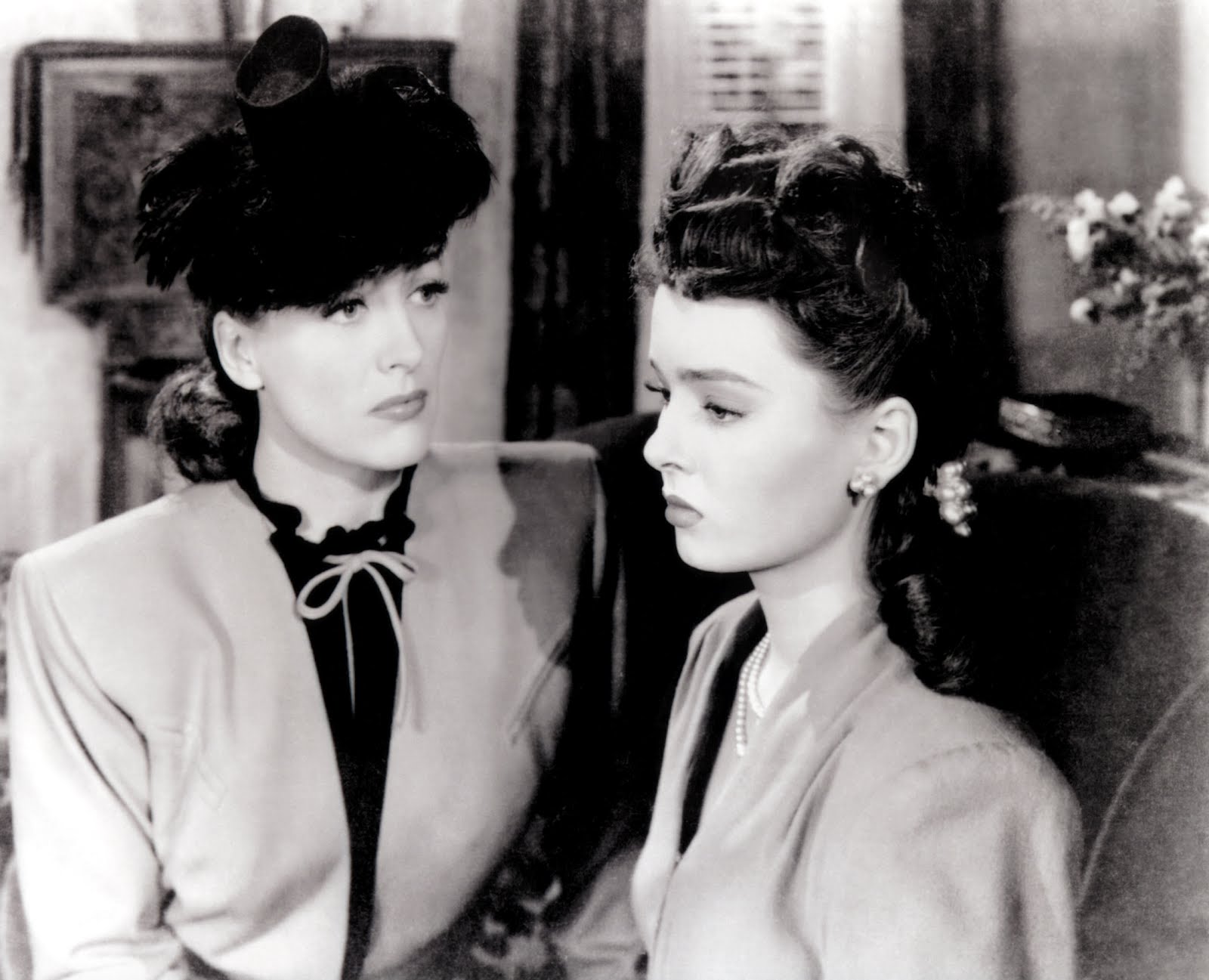 Joan Crawford was a complicated woman—which is to say that like all of us, she had her good points and her bad points. She was catty and cruel, she was uneducated and insecure about it, she had the morals of an alley cat and her failures as a mother are legendary. But she also had a tremendous work ethic, always tried to improve herself, and as far as I can tell, she never phoned in a performance, not even in the execrable sci-fi horror flick, Trog, which proved to be her last.
 A lot has been written over the years about Joan Crawford's private life, particularly with regard to her sexuality and her parenting skills, so much so that the scandals have completely obscured her work as an actress. But if I were handing out awards based on people's private lives, we'd wind up with a roster full of nice people and very few good movies. Only to the extent that I can discern a clear relationship between a person's off-screen life and their on-screen work will I tend to dwell on the former. Beyond that, celebrity gossip bores me. In fact, as far as I can tell, when they're not working, most celebrities are actually pretty dull people.
 Fans of the novel might be tempted to complain that Hollywood sanitized and simplified James M. Cain's original vision. But let's face it, no novel ending with the line "Let's get stinko" was going to make it to the big screen intact in 1945. Besides, the final product is plenty violent for all but the most bloodthirsty among us and as cynical about human behavior as the darkest film noir. Mildred Pierce isn't a perfect movie, just a great one and Crawford gave her best performance in it.






 Posts
Posts

