skip to main |
skip to sidebar

But only a bloviating narcissist determined to repeat his mistakes won't admit when he's wrong, and I was wrong to dismiss Norma Shearer without first seeing her pre-Code work.
In fact, before she got culture and started playing those maddeningly starchy good girls in bloodless MGM literary adaptations, Shearer turned in some of the best performances of the early sound era, playing — pardon my French — horny blue bloods too eager to get into a man's pants to worry about the impact on her social standing.
Thank God for pre-Code movies! All that misbehavior kids think they invented in the Sixties — sex, drugs, hot music, adultery, abortion — Hollywood was making movies about in the early 1930s, and making all that sin look like a helluva lot fun.
Too much fun as it turned out for the Puritans who get their mitts on the government from time to time. With censorship threatening their profit margins, Hollywood invented the Code, which not only banned onscreen depictions of all that naughtiness we're not supposed to enjoy but so obviously do, but also wholesome activities like a husband and wife sleeping in the same bed together, a fact of life every child in America was damn well aware of, else why bother to climb in there with them in the middle of a thunderstorm.
Who did they think they were fooling?
But I digress ...
I suspect Shearer's husband, the legendary producer Irving Thalberg, was only too happy to wrap his wife up in a shroud of respectability. Probably didn't want her audience to know the woman he had married was, in the words of the ever-classy Mickey Rooney, "hotter than a half-f***ed fox in a forest fire."
Well, some guys are like that.
As Walter Clemons once wrote for EW.com, "Thalberg was fatally afflicted with gentility. He cast his wife in movies with literary pretensions — O'Neill's Strange Interlude, The Barretts of Wimpole Street, and as a mature Juliet in a suffocatingly tasteful rendition of Shakespeare. Norma gets a bad rap for these turkeys, but the reverence in which Thalberg's contemporaries held him is an unexamined delusion."
So what Norma Shearer movies should you see?
The 1939 comedy The Women would be an obvious choice — it's her best known film and it's a good one. But let's be honest, Norma is a bit of a sad sack in The Women — abandoned by her cheating husband, betrayed by her closest friends — and frankly, co-stars Joan Crawford and Rosalind Russell blow her off the screen.
Instead, try these three pre-Code classics:
The Divorcee (1930) — When husband Ted (Robert Montgomery) has an extramarital fling, his wife Jerry (Shearer) retaliates with one of her own. Suddenly the gander, who always felt free to goose anything in a skirt, gets his feathers in a ruffle and files for divorce.
Separated, Ted drinks, Jerry parties, and neither is any too happy with the state of their affairs. Eventually, Jerry falls into the arms of a married man and ... well, there's enough here for a season's worth of Real Housewives, all of it unfolding in a brisk 84 minutes.
Shearer topped Greta Garbo and Gloria Swanson, among others, at the 3rd Academy Awards for the only Oscar of her career.
A Free Soul (1931) — Even better than The Divorcee, in this sprightly 91-minute melodrama, free-spirit Jan Ashe (Shearer) falls for a gangster (Clark Gable in a star-making turn), discovering too late what kind of a man he really is.
When her ex-beau (Leslie Howard) comes to her rescue and winds up on trial for murder, Jan turns to her alcoholic father, a once successful attorney, hoping he can pull one more rabbit from his briefcase of lawyerly tricks.
Lionel Barrymore (at his hammy best as Jan's alcoholic father) won the Oscar for best actor, and Shearer picked up another nomination for best actress, one of five in her career.
Private Lives (1931) — In this faithful adaptation of Noel Coward's popular stageplay, two recently remarried divorcees, Elyot (Robert Montgomery, again) and Amanda (Shearer), find themselves honeymooning in adjoining suites at the same resort. The two ex-spouses are less interested in starting life anew than in tearing into each other, preferably with a wit so biting, the quips leave teeth marks.
And when the wit's not wounding enough, they use actual teeth!
You'd be tempted to call this a comedy of spousal abuse but for the fact that the two participants so thoroughly enjoy themselves. Elyot and Amanda are natural-born performers — drama queens, we'd call them — and after a season apart, they realize each is the other's best audience. They can't live together, but to live apart means they'd have to climb off their private little stages and start living with themselves — or more to the point, with their brand new spouses who, they quickly discover, bore them to tears.
In an essay for Bright Lights Film Journal, Dan Callahan called it "Shearer's finest, most well-rounded performance, and it's the only film that you can show to the uninitiated without fear of the dreaded Shearer-isms."
If you're only going to see one Norma Shearer movie, see this one.
Next up: Howard Hawks: A Baker's Dozen

They didn't wait long to see the results of the new system, holding the next ceremony just seven months later, the only time in Oscar history awards were handed out twice in the same calendar year.
For a first exercise in democracy, the Academy did pretty well.
All Quiet On The Western Front — not just the best picture of the year, but one of the best pictures of any year — won both the top prize and an Oscar for its director, Lewis Milestone, the second Oscar of his career.
The Big House, a highly-regarded prison drama, nabbed a pair of awards, one for legendary screenwriter Frances Marion, the other for sound editor Douglas Shearer, the first of his fourteen career Oscars. And though I prefer Ronald Colman in his first talkie, George Arliss gave a solid performance in Disraeli, a role he had first crafted on Broadway.
The only controversy was generated by Norma Shearer's win for best actress in the movie The Divorcee.
"What do you expect," said Joan Crawford afterwards. "She sleeps with the boss," referring to Shearer's powerful husband, MGM producer Irving Thalberg.
Me, I like Norma. Well, pre-code Norma anyway. But more on that later ...
As I put together my own list of Katie Award winners, I realized that my only problem with All Quiet On The Western Front was that it was so good it obscured the fact that overall, 1929-30 was a very weak year for movies.
Silent films had all but disappeared from theaters, but unfortunately, the talkies that replaced them were saddled with a primitive technology that practically bolted the camera and the actors to the floor. Moreover, most directors clearly had no idea what to do with sound, treating it as a novelty rather than an opportunity, sticking in a song or two, or worse going overboard and cramming every nook and cranny with talk-talk-talk.
Things would get better ...
As always, click on the highlighted link to read more ...
1929-30
PICTURE (Drama)
winner: All Quiet On The Western Front (prod. Carl Laemmle, Jr.)
nominees: Anna Christie (prod. Clarence Brown); The Big House (prod. Irving Thalberg); Bulldog Drummond (prod. Samuel Goldwyn); City Girl (prod. William Fox); A Cottage On Dartmoor (prod. H. Bruce Woolfe)
PICTURE (Comedy/Musical)
winner: The Cocoanuts (prod. Monta Bella)
nominees: Applause (prod. Monta Bell); Hallelujah! (prod. King Vidor); The Love Parade (prod. Ernst Lubitsch); The Skeleton Dance (prod. Walt Disney)
PICTURE (Foreign Language)
winner: Pandora's Box (prod. Heinz Landsmann)
nominees: The Blood Of A Poet (prod. Le Vicomte de Noailles); The Blue Angel (prod. Erich Pommer); Diary Of A Lost Girl (prod. Georg Wilhelm Pabst); Earth (prod. VUFKU); Under the Roofs Of Paris (prod. Films Sonores Tobis)
ACTOR (Drama)
winner: Ronald Colman (Bulldog Drummond)
nominees: George Arliss (Disraeli); Lew Ayres (All Quiet On The Western Front); Charles Farrell (Lucky Star); Emil Jannings (The Blue Angel); Uno Henning (A Cottage On Dartmoor)
ACTOR (Comedy/Musical)
winner: Maurice Chevalier (The Love Parade)
nominees: Douglas Fairbanks (The Taming of the Shrew); William Haines (Speedway, Navy Blues and The Girl Said No); The Marx Brothers (The Cocoanuts); Albert Préjean (Under The Roofs Of Paris)
ACTRESS (Drama)
winner: Louise Brooks (Pandora's Box and Diary Of A Lost Girl)
nominees: Nora Baring (A Cottage On Dartmoor); Marlene Dietrich (The Blue Angel); Greta Garbo (Anna Christie); Norma Shearer (The Divorcee)
ACTRESS (Comedy/Musical)
winner: Jeanette MacDonald (The Love Parade)
nominees: Helen Morgan (Applause); Mary Pickford (The Taming of the Shrew)
DIRECTOR (Drama)
winner: Lewis Milestone (All Quiet On The Western Front)
nominees: Anthony Asquith (A Cottage On Dartmoor); Aleksandr Dovzhenko (Earth); F.W. Murnau (City Girl); G.W. Pabst (Pandora's Box and Diary Of A Lost Girl); Josef von Sternberg (The Blue Angel)
DIRECTOR (Comedy/Musical)
winner: King Vidor (Hallelujah!)
nominees: René Clair (Under The Roofs Of Paris); Ernst Lubitsch (The Love Parade); Rouben Mamoulian (Applause)
SUPPORTING ACTOR (Drama)
winner: Louis Wolheim (All Quiet On The Western Front)
nominees: Claud Allister (Bulldog Drummond); Wallace Beery (The Big House); Douglas Fairbanks, Jr. (Our Modern Maidens); Francis Lederer (Pandora's Box); Robert Montgomery (The Divorcee, The Big House and Our Blushing Brides)
SUPPORTING ACTOR (Comedy/Musical)
winner: Lupino Lane (The Love Parade)
nominees: Gaston Madot (Under the Roofs of Paris)
SUPPORTING ACTRESS (Drama)
winner: Anita Page (Our Modern Maidens and Our Blushing Brides)
nominees: Marie Dressler (Anna Christie); Leila Hyams (The Big House); Beryl Mercer (All Quiet on the Western Front); Seena Owen (Queen Kelly); Lilyan Tashman (Bulldog Drummond)
SUPPORTING ACTRESS (Comedy/Musical)
winner: Nina Mae McKinney (Hallelujah!)
nominees: Margaret Dumont (The Cocoanuts)
SCREENPLAY
winner: George Abbott, Maxwell Anderson and Del Andrews; from a novel by Erich Maria Remarque (All Quiet On The Western Front)
nominees: Frances Marion; additional dialogue by Joseph Farnham and Martin Flavin (The Big House); Elliott Lester; adaptation and scenario by Marion Orth and Gerthold Viertel; titles by H.H. Caldwell and Katherine Hilliker (City Girl); Rudolf Leonhardt, from the novel by Margarete Böhme (Diary of a Lost Girl)
SPECIAL AWARDS
"Swanee Shuffle" (Hallelujah!) (Best Song); Arthur Edeson (All Quiet On The Western Front) (Cinematography); C. Roy Hunter and Lewis Milestone (All Quiet On The Western Front) (Special Achievement In The Use Of Sound)

A few facts about silent film star Ramon Novarro:
● He was born José Ramón Gil Samaniego in Durango, Mexico, in 1899. At age fourteen, he moved with his family to Los Angeles to escape the Mexican Revolution.
● Novarro made his acting debut with an uncredited part as a starving peasant in Cecil B. DeMille's 1916 costume epic, Joan the Woman.
● After ten more small, usually uncredited bit roles between 1917 and 1921, Novarro scored his breakout role as Rupert of Hentzau in the 1922 version of The Prisoner of Zenda.
● Novarro's biggest role was the title character in Fred Niblo's silent classic, Ben-Hur: A Tale of the Christ. Among his silent works, I can also highly recommend Scaramouche and Ernst Lubitsch's The Student Prince in Old Heidelberg.
● As was the case with many actors of the time, his career suffered with the advent of the talkies. He made his talkie debut in 1929, and of these early efforts, I'd point you to 1931's Mati Hari in which he co-starred with an especially luminous Greta Garbo. MGM dropped his contract in 1935.
● Novarro was a devout Roman Catholic; he was also gay, and was tormented by the conflict between his sexuality and his religious beliefs. Nevertheless, he refused to enter into a sham marriage to satisfy the gossip columnists or his boss, Louis B. Mayer.
● Of his later movies, I am a big fan of his work in the 1949 comic noir The Big Steal, starring Robert Mitchum and Jane Greer. There he is a Mexican police inspector who plays cat-and-mouse with a thief and his pursuers. He also appeared in an episode of The Wild Wild West, a childhood favorite of mine.
● Novarro was brutally murdered in his home in 1968 by two male prostitutes who mistakenly believed Novarro had a large cache of money hidden in his home. They eventually made off with $20, were captured, convicted and served less than ten years each for their crimes.
● And while we're here, how about a few more photos of Ramon Novarro:
with Ernst Lubitsch:
with Joan Crawford:
with Norma Shearer:
 You know, sometimes the headline says it all.
A look ahead at the Monty's March Madness Favorite Actress Tournament, part of which we'll be hosting here at the Monkey.
Voting begins March 5.
Marlene Dietrich
 Birth Name: Marie Magdalene Dietrich
Tourney Bracket and Seeding: "Tough Broads and Pre-Code Babes" #2
Birth Date: December 27, 1901
Birthplace: Berlin, Germany
Height: 5' 6"
Film Debut: So sind die Männer (The Little Napoleon) (1923)
Academy Awards: 1 nomination, 0 wins
Katie Awards: Best Actress (Drama) (1930-31) (Morocco) and Best Actress (Comedy/Musical) (1948) (A Foreign Affair)
Three More To See: Shanghai Express, Destry Rides Again, Witness for the Prosecution
versus
Elsa Lanchester
 Birth Name: Elizabeth Lanchester Sullivan
Tourney Bracket and Seeding: "Tough Broads and Pre-Code Babes" #7
Birth Date: October 28, 1902
Birthplace: London, England
Height: 5' 4½"
Film Debut: The Scarlet Woman (1925)
Academy Awards: 2 nominations, 0 wins
Katie Awards: Best Supporting Actress (1935) (Bride of Frankenstein)
Three More To See: The Private Life of Henry VIII, Witness for the Prosecution, Bell Book and Candle
The winner of this match-up will face the winner of:
Joan Crawford
 Birth Name: Lucille Fay LeSueur
Tourney Bracket and Seeding: "Tough Broads and Pre-Code Babes" #3
Birth Date: March 23, 1905
Birthplace: San Antonio, Texas
Height: 5' 5"
Film Debut: Pretty Ladies (1925)
Academy Awards: 3 nominations, 1 win (Best Actress, 1945) (Mildred Pierce)
Katie Awards: Best Actress (Drama) (1945) (Mildred Pierce)
Three More To See: Grand Hotel, The Women, Humoresque
versus
Norma Shearer
 Birth Name: Edith Norma Shearer
Tourney Bracket and Seeding: "Tough Broads and Pre-Code Babes" #6
Birth Date: August 10, 1902
Birthplace: Montreal, Quebec
Height: 5' 1"
Film Debut: The Star Boarder (1919)
Academy Awards: 5 nominations, 1 win (Best Actress, 1929-30) (The Divorcee)
Katie Awards: Best Actress (Comedy/Musical) (1931-32) (Private Lives)
Three More To See: The Student Prince in Old Heidelberg, A Free Soul, The Women
 Universal Studio's cycle of classic horror movies officially began in early 1931 with Bela Lugosi's Dracula, but for me, it's Frankenstein that really kicked it off. Boris Karloff and James Whale only made three movies together—Frankenstein, The Old Dark House and Bride of Frankenstein—but it feels like more than that, maybe because this trio of movies established so many of the conventions of the genre. Or maybe because they're just that good.
1932 also saw the release of Scarface, the best gangster movie made before The Godfather despite starring Paul Muni rather than James Cagney, Humphrey Bogart or Edward G. Robinson. But Howard Hawks directed it and given that he makes a serious claim to the title of best American director ever, maybe I shouldn't be surprised after all.
As for the actress awards, I was tempted when I expanded the Katies to the "Golden Globe" format to bump Joan Crawford up from supporting to lead and give her the award for drama. But I like Mae Clarke, the girl who got the grapefruit in the face in The Public Enemy, and I've got a later award in mind for Joan. Feel free to argue with me. My mind is subject to change.
PICTURE (Drama)
winner: Frankenstein (prod. Carl Laemmle, Jr.)
nominees: Freaks (prod. Tod Browning); Grand Hotel (prod. Irving Thalberg); Scarface (prod. Howard Hughes); Waterloo Bridge (prod. Carl Laemmle Jr.)
Must-See: The Champ; Dr. Jekyll And Mr. Hyde; Emma; Five Star Final; Frankenstein; Freaks; Grand Hotel; Scarface; Shanghai Express; Skyscraper Souls; Tabu: A Story Of The South Seas; Waterloo Bridge; What Price Hollywood?
PICTURE (Comedy/Musical)
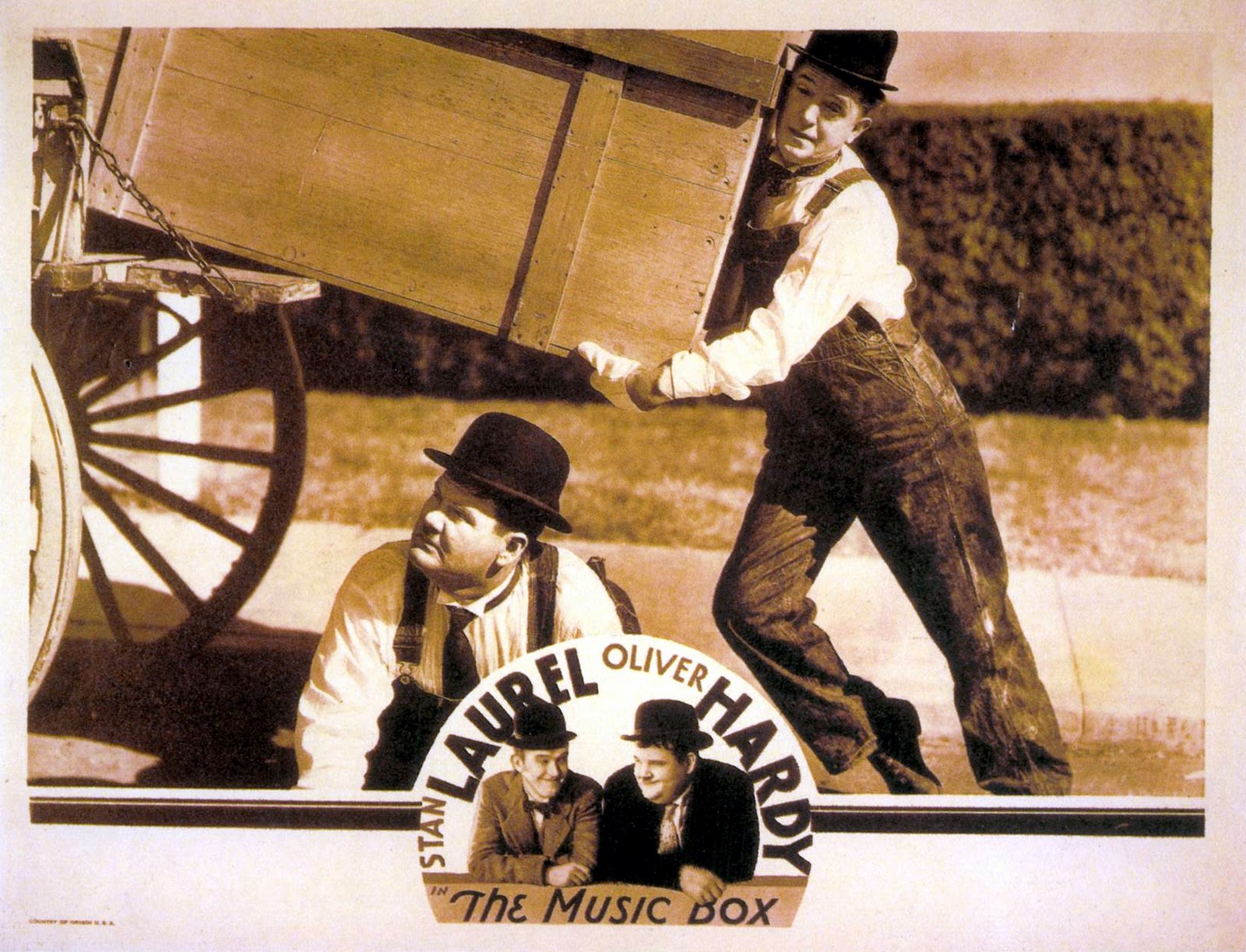
winner: The Music Box (prod. Hal Roach)
nominees: Monkey Business (prod. Herman J. Mankiewicz); Private Lives (prod. Irving Thalberg); The Smiling Lieutenant (prod. Ernst Lubitsch)
Must-See Comedy/Musical: The Guardsman; Monkey Business; The Music Box; One Hour With You; Private Lives; Red-Headed Woman; The Smiling Lieutenant
PICTURE (Foreign Language)
winner: À Nous La Liberté (prod. Frank Clifford)
nominees: La Chienne (prod. Pierre Braunberger and Roger Richebé); I Was Born, But ... (prod. Shochiku Film); Mädchen in Uniform (prod. Carl Froelich and Friedrich Pflughaupt); Marius (prod. Robert Kane and Marcel Pagnol)
Must-See Foreign Language Pictures: À Nous La Liberté; La Chienne; I Was Born, But ...; Mädchen In Uniform; Marius
ACTOR (Drama)
<winner: Fredric March (Dr. Jekyll And Mr. Hyde)
nominees: Wallace Beery (The Champ); Paul Muni (Scarface); Edward G. Robinson (Five Star Final); Warren William (Skyscraper Souls)
ACTOR (Comedy/Musical)
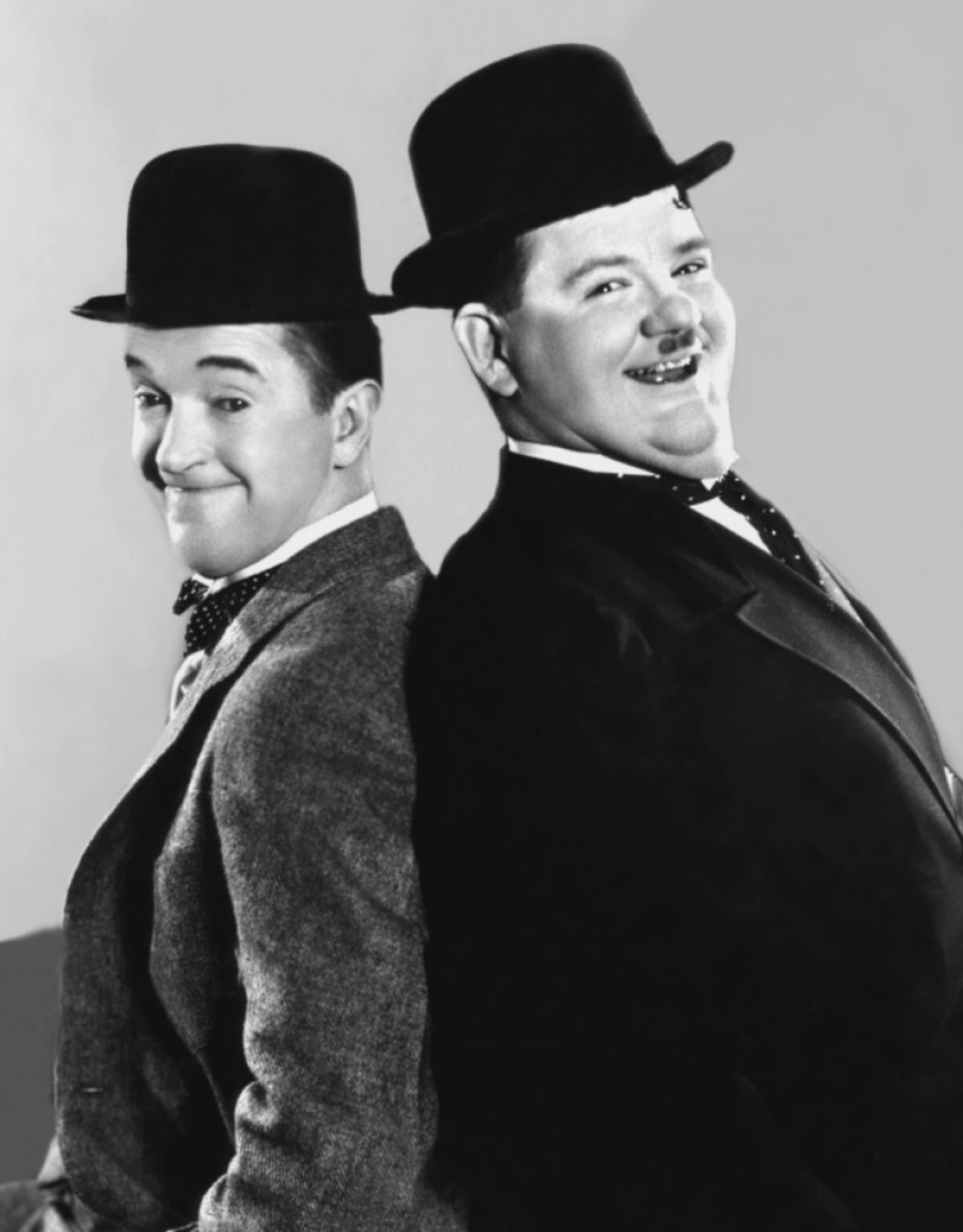
winner: Stan Laurel and Oliver Hardy (The Music Box)
nominees: James Cagney (Blonde Crazy); Maurice Chevalier (The Smiling Lieutenant and One Hour With You); The Marx Brothers (Monkey Business); Robert Montgomery (Private Lives)
ACTRESS (Drama)
winner: Mae Clarke (Waterloo Bridge)
nominees: Constance Bennett (What Price Hollywood?); Marlene Dietrich (Shanghai Express); Barbara Stanwyck (The Miracle Woman); Dorothea Wieck (Mädchen in Uniform)
ACTRESS (Comedy/Musical)
winner: Norma Shearer (Private Lives)
nominees: Joan Blondell (Blonde Crazy); Claudette Colbert (The Smiling Lieutenant); Lynn Fontanne (The Guardsman); Jean Harlow (Platinum Blonde and Red-Headed Woman)
DIRECTOR (Drama)
winner: Howard Hawks (Scarface)
nominees: Tod Browning (Freaks); Edmund Goulding (Grand Hotel); Rouben Mamoulian (Dr. Jekyll And Mr. Hyde); James Whale (Frankenstein and Waterloo Bridge)
DIRECTOR (Comedy/Musical)
winner: René Clair (À Nous La Liberté)
nominees: Sidney Franklin (The Guardsman and Private Lives); Ernst Lubitsch (The Smiling Lieutenant and One Hour With You); Yasujirô Ozu (I Was Born, But ...); James Parrott (The Music Box)
SUPPORTING ACTOR
winner: Lionel Barrymore (Grand Hotel)
nominees: John Barrymore (Grand Hotel); Boris Karloff (Frankenstein); Raimu (Marius); Roland Young (The Guardsman and One Hour With You)
SUPPORTING ACTRESS
winner: Miriam Hopkins (The Smiling Lieutenant and Dr. Jekyll And Mr. Hyde)
nominees: Joan Crawford (Grand Hotel); Ann Dvorak (Scarface); Aline MacMahon (Five Star Final); Anna May Wong (Shanghai Express)
SCREENPLAY
winner: Ben Hecht; continuity and dialogue by Seton I. Miller, John Lee Mahin and W.R. Burnett; from a novel by Armitage Trail (Scarface)
nominees: René Clair (À Nous La Liberté); Frances Marion (story), Leonard Praskins (dialogue continuity) and Wanda Tuchock (additional dialogue) (The Champ); Christa Winsloe and Friedrich Dammann (as F.D. Andam); from the play by Christa Winsloe (Mädchen in Uniform); S.J. Perelman and Will B. Johnstone (screenplay); Arthur Sheekman (additional dialogue) (Monkey Business)
SPECIAL AWARDS
Lee Garmes (Shanghai Express and Scarface) (Cinematography); C. Roy Hunter (Frankenstein) (Sound); Charles D. Hall and Kenneth Strickfaden (Frankenstein) (Art Direction-Set Decoration); Jack Pierce and Pauline Eells (Frankenstein) (Makeup); Wally Westmore (Dr. Jekyll and Mr. Hyde) (Special Effects)











 Posts
Posts

