skip to main |
skip to sidebar
The greatest astronomer ever, Galileo Galilei, was born 450 years ago today. To quote National Geographic, "Discoverer of moons, toppler of Aristotle's physics, and celebrated loser of history's most famous heresy trial, Galileo Galilei's greatest invention, in truth, was our own modern world."
You want to treat yourself to something special? Get yourself a good telescope (I inherited mine from my father-in-law) and look at the Galilean moons of Jupiter sometime. It'll blow your mind if you'll let it.
I'm testing out a new polling device ahead of the 2014 Favorite Classic Movie Actress Tournament which begins in March. To say the Monkey has had trouble with blogger's polling widget in the past would be a polite understatement. So I'll be going with Polldaddy.com this time around.
At the same time, I've been kicking around the notion of creating a permanent poll on a separate page allowing readers to vote on alternate nominees for alternate Oscars. The polls at right are a sample of what you might see on such a page.
If you don't know anything about the movies of 1926, I encourage you to vote anyway. Ignorance has never stopped the Academy, why should it stop you?
A screwball comedy starring Rosalind Russell and Janet Blair, about two sisters from Columbus, Ohio, one a writer, the other an actress, who move to New York City, figuring if they can make it there, they can make it anywhere.
Any movie that ends with a cameo from the Three Stooges gets a thumbs-up from me. Russell received her first of four Oscar nomination for this (she never won). Blair is good, too.
3.5 stars out of 5.
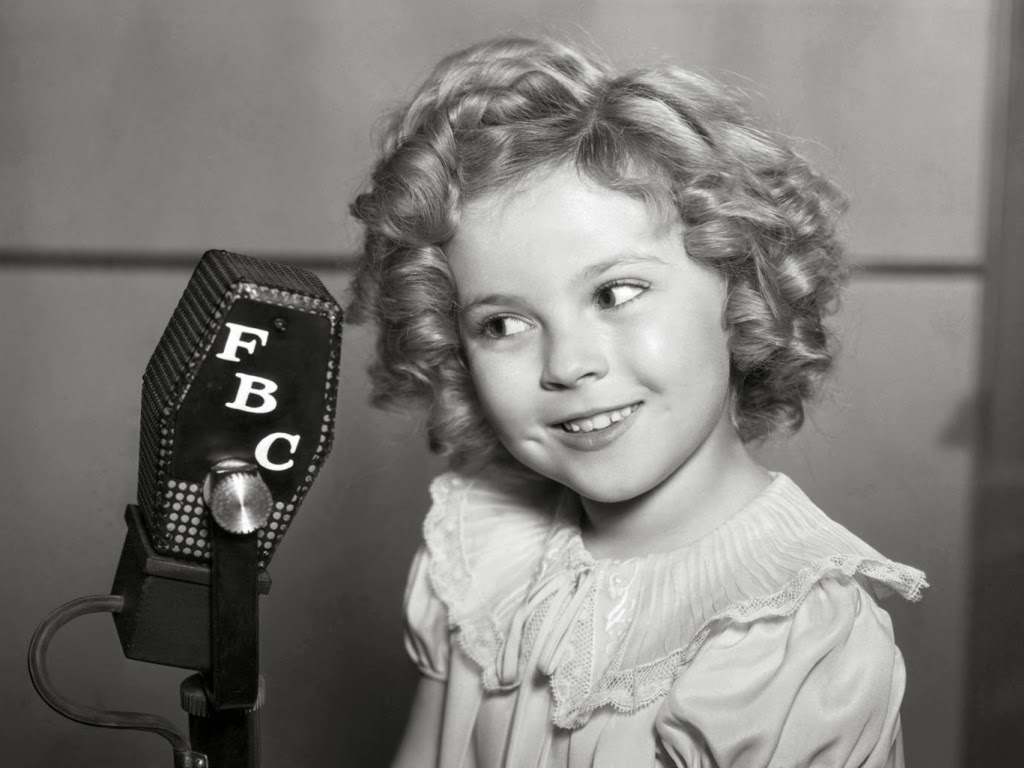
A Favorite of Katie-Bar-The-Door's growing up, the Shirley Temple is a pretty easy drink to make:
ginger ale
a splash of grenadine
maraschino cherry
ice
Katie tells me the schmancy Main Line country club she hung out in made it with 7-Up instead of ginger ale, a common substitution. I've read a squeeze of fresh lime tarts it up a bit, but I wouldn't know, I've never had one myself—I was too busy digging ditches.
For those of you who prefer stronger stuff, a grown-up, married version of the drink called a Shirley Temple Black uses alcoholic ginger beer.
If I can find a recipe for a Jackie Coogan or a Margaret O'Brien, I'll let you know.
It was fifty years ago today that Ed Sullivan told the Beatles play. And play they did, and nothing in America has been the same since.
If your inclination at this late date is to pooh-pooh the Beatles' influence on the music and the culture then you're beyond hope and I can't waste the energy trying to change your mind—that's a young man's game. Instead, I'll just say that if the Beatles hadn't come along, I wouldn't be a writer, or any kind of an artist, which means I wouldn't have joined the staff of the college newspaper, which I means I wouldn't have met Katie-Bar-The-Door, much less married her, which means I wouldn't have moved to Washington, D.C., which means I wouldn't have met my good friend Bellotoot, which means I wouldn't have been half the film fanatic I am today, which also means I wouldn't have met Mr. Muleboy, which means I wouldn't have started this blog.
Without the Beatles influence, I'd probably be practicing law in Nashville, married to some blonde Southern Baptist girl with three kids and two cats, and I'd be looking out a window wondering why my life seems so utterly without color or flavor.
Actually, I'd be dead because I'd have blown my brains out years ago.
But because I like the way my life has turned out, I am eternally grateful to the Beatles. So, John, Sir Paul, George and Ringo—from the bottom of the Monkey's heart, thank you.
The gang at True Classics reminds us that today is the one hundredth anniversary of the debut of Charlie Chaplin's Tramp.
Believe it or not, I've written about Chaplin before. This is what I had to say about that magical moment:
It was while filming the otherwise forgettable Kid Auto Races at Venice that Chaplin stumbled upon an idea for what would become the most memorable character of the entire silent era.
 "[O]n the way to the wardrobe," he wrote in his autobiography, "I thought I would dress in baggy pants, big shoes, a cane and a derby hat. I wanted everything to be a contradiction: the pants baggy, the coat tight, the hat small and the shoes large. I was undecided whether to look old or young, but remembering Sennett had expected me to be a much older man, I added a small moustache, which I reasoned, would add age without hiding my expression. I had no idea of the character. But the moment I was dressed, the clothes and the makeup made me feel the person he was. I began to know him, and by the time I walked on stage he was fully born."
Chaplin exaggerates—the Tramp's debut here may have been the most inauspicious of a legendary character in movie history—but he built on the idea over the course of several shorts and in later years rarely played anything else.
The turning point in Chaplin's stint at Keystone came during the filming of his eleventh short, Mabel At The Wheel. Directed by Normand herself, she and Chaplin had a terrific argument about a gag he had worked out.
 "We were on location in the suburbs of Los Angeles and in one scene Mabel wanted me to stand with a hose and water down the road so that the villain's car would skid over it. I suggested standing on the hose so that the water can't come out, and when I look down the nozzle I unconsciously step off the hose and the water squirts in my face. But she shut me up quickly: 'We have no time! We have no time! Do what you're told.'
"That was enough. I could not take it—and from such a pretty girl. 'I'm sorry, Miss Normand. I will not do what I'm told. I don't think you are competent to tell me about what to do.'"
 Normand won the argument, but Chaplin won the war. Putting his money where his mouth was—in the form of his life savings as a surety that the resulting film would be worth releasing—Chaplin made his directing debut with his very next film, Twenty Minutes Of Love (April 20, 1914). The film was a success and Chaplin rarely thereafter worked for anyone but himself. (You can see the best of his Keystone efforts, The Rounders, here.)
While at Keystone, Chaplin played the usual assortment of drunks, mashers and incompetent waiters—by then already stock film characters—but he had, especially when directing himself, a sense of rhythm that turned comedy into a dance, and a gift for finding an unexpected twist in any comedic situation, subverting expectations, delaying or denying the expected payoff and giving us something we would have never thought of instead.
 Indeed, seeing Chaplin in the context of his times, it's clear to me now he was to film comedy what D.W. Griffith was to film drama, establishing the rules and raising the bar. Even when he's just doing variations on Mack Sennett's everybody-fall-down brand of comedy, the internal logic of the characters' actions creates a sense of anticipation that makes the payoff so much more satisfying than one based on pure surprise and absurdity.
"That Chaplin exploded the boundaries of film comedy with each successive phase in his career," Rick Levinson wrote in Ranking the Silent Comedians, "much like Picasso exploded the boundaries of art with each successive phase of his career, is either known too well or too often taken for granted. You have to have a sense of what film comedy was like before, during and after Chaplin's career to get an inkling of the immense impact he made on 20th century culture."
This is not just a case of pretending to see something in retrospect that no one saw at the time. Audiences immediately recognized that Chaplin was something special and during the silent era, only his future business partners, Douglas Fairbanks and Mary Pickford, would rival him in terms of box office appeal.
And now here it is, not the most auspicious debut in movie history, but possibly the most significant. Better things would follow in short order.
As I previously mentioned, I am co-hosting Monty's annual Favorite Classic Movie Actress Tournament, this time the 1950s bracket. I've tinkered a bit with the lineup and am pleased to announce there will be six new faces in the field: Carroll Baker, Kay Kendall, Jean Hagen, Shirley Booth, Betty Hutton and Kim Hunter. With contestants such as Audrey Hepburn, Grace Kelly, Doris Day and Deborah Kerr returning, you'll have thirty-two actresses to choose from here, 128 overall.
Hope there's one to your liking.
One of those films I really should write five thousand words about, The Kid was Charlie Chaplin's first feature-length film, a Dickensian-style dramedy about a tramp who finds an abandoned baby in the gutter and raises him as his own. Not only was it a box office blockbuster, it inspired Buster Keaton and Harold Lloyd to make features of their own.
We owe The Kid a lot.
This marked the first time Chaplin successfully mixed comedy and pathos. He'd made stabs at it in such shorts as The Tramp and The Vagabond, but here, he pulls it off. I rank it third on my list of favorite Chaplin films, behind City Lights and The Gold Rush.
As close to perfect as you're likely to get in this world. 5 stars out of 5.
I've written quite a bit about Chaplin in the past, especially here, and for those of you who care about these things, it struck me on this repeat viewing how much of The Kid is a re-working of Chaplin's earlier work. There's the story arc of a mother haunted by the loss of her child as in 1916's The Vagabond, a street fight with a bully on what looks like the same set as 1917's Easy Street, and the raising a foundling storyline from 1918's A Dog's Life (there a dog, here Jackie Coogan).
In The Kid, he stitches these subplot together to reach emotional highs and lows greater than the sum of the parts. Must-see.
A note on the viewing experience: Katie-Bar-The-Door and I saw this at the Meyerhoff in Baltimore with the BSO providing the live musical accompaniment based on Chaplin's own score. A word to the wise: the screen is up high, above the musicians, so unless you want to scrunch down in your seat and crane your neck for an hour and a half, buy seats in the mezzanine.
Actor Bill Mumy turns sixty today. Perhaps you know him better as Lost in Space's Will Robinson, Lennier of Babylon 5 or that scary-ass kid who wished people into the cornfield in The Twilight Zone.
I, of course, knew him as my best friend when I was a kid—not that we've ever met, of course, but you can't spend as much time as I did following the exploits of Will Robinson and the Robot without thinking of him as your bestest pal. I imagine a lot of kids thought of him as a pal.
Mumy still acts, and he gets credit for nailing the science fiction trifecta: Lost in Space, The Twilight Zone and, with a guest appearance on Deep Space Nine, the Star Trek franchise. Hey, and if you ever get a chance, look up the sequel to that Twilight Zone episode I mentioned—Mumy, now a grown man, has spawned a daughter (played by Mumy's real-life daughter, Liliana) three times as scary as he ever was.
Check out his website here—he's a very busy man.
In addition to acting, he's also a musician and singer-songwriter, and here's something I'll bet you didn't know: remember the novelty hit "Fish Heads" back in 1979? He and Robert Haimer wrote, performed and released that as the duo Barnes & Barnes. Rolling Stone magazine once chose it #57 on the list of the greatest videos of all time. Eat 'em up, yum! (The song kicks in around the 2:18 mark:)
Mr. Mumy, for all the good times (and no bad ones that I can recall), we here at the Monkey wish you the happiest of happy birthdays.


 "[O]n the way to the wardrobe," he wrote in his autobiography, "I thought I would dress in baggy pants, big shoes, a cane and a derby hat. I wanted everything to be a contradiction: the pants baggy, the coat tight, the hat small and the shoes large. I was undecided whether to look old or young, but remembering Sennett had expected me to be a much older man, I added a small moustache, which I reasoned, would add age without hiding my expression. I had no idea of the character. But the moment I was dressed, the clothes and the makeup made me feel the person he was. I began to know him, and by the time I walked on stage he was fully born."
 "We were on location in the suburbs of Los Angeles and in one scene Mabel wanted me to stand with a hose and water down the road so that the villain's car would skid over it. I suggested standing on the hose so that the water can't come out, and when I look down the nozzle I unconsciously step off the hose and the water squirts in my face. But she shut me up quickly: 'We have no time! We have no time! Do what you're told.'
 Normand won the argument, but Chaplin won the war. Putting his money where his mouth was—in the form of his life savings as a surety that the resulting film would be worth releasing—Chaplin made his directing debut with his very next film, Twenty Minutes Of Love (April 20, 1914). The film was a success and Chaplin rarely thereafter worked for anyone but himself. (You can see the best of his Keystone efforts, The Rounders, here.)
 Indeed, seeing Chaplin in the context of his times, it's clear to me now he was to film comedy what D.W. Griffith was to film drama, establishing the rules and raising the bar. Even when he's just doing variations on Mack Sennett's everybody-fall-down brand of comedy, the internal logic of the characters' actions creates a sense of anticipation that makes the payoff so much more satisfying than one based on pure surprise and absurdity.






 Posts