skip to main |
skip to sidebar
The story of a girl from the country who makes it big in Hollywood was a staple of the silent era — see, e.g., A Girl's Folly, Souls for Sale, The Extra Girl, Ella Cinders — so much so that when Marion Davies (with King Vidor directing) spoofed the genre in the 1928 silent comedy Show People, everybody in town was in on the joke.
Look for cameos from just about everybody who was anybody including Douglas Fairbanks, Charlie Chaplin, John Gilbert and even Marion Davies and King Vidor as themselves.
While she is mostly remembered now as the inspiration for the no-talent opera singer in Orson Welles's Citizen Kane — a grossly unfair characterization if that's what Welles really thought of her — Marion Davies was actually a very good comedic actress and this movie was the best showcase of her talent.
Recommended.
(Subsequent to posting this earlier today, I decided to tie in my movie recommendations below with the Oscar-winning film The Artist which Thingy was watching when she gave me the Thingster Award.)

My blog pal Thingy over at Pondering Life has bestowed upon me the coveted Thingster Award. She was watching The Artist—the silent movie that won the Oscar for best picture in 2011—the other day and thought of yours truly.
"Mythical Monkey. The go to guy for great insight on the classics, and not so classic movies."
Thingy created the "Thingster Award" back in April. After winning the Liebster Blog Award, she wrote, "I came up with a scathingly brilliant idea. I shall give out my own awards at the end of each week to blogs I find especially appealing to me. You get no trophy, although, you can take the special banner I have made. I also assume many of you will never know of your special prize, for I shall not tell you. (I'm lazy that way)."
And she's been handing out the Thingster Award ever since.
Just not to me.

Now, I don't usually brood about this sort of thing, but every time she handed one out I thought, "Gee, I wish I had me one of those Thingster Awards." And now I do! To quote Mister Roberts, "I'd rather have it than the Congressional Medal of Honor" (you know, in my case because the Medal of Honor would require an act of extraordinary bravery and heroism, a hard thing to accomplish while sitting in front of a computer in the suburbs of Baltimore).

To return the favor, and since Thingy is apparently in a silent movie mood, here are five suggestions to follow up The Artist:
The Black Pirate—Jean Dujardin, the Oscar-winning star of The Artist, cheerfully acknowledged that he was channeling silent film legend Douglas Fairbanks, Sr., during his performance. So why not cut out the middle man and see Fairbanks for yourself. The Black Pirate is a swashbuckling classic, and if you have a Blu-Ray player, you can see the original color version.
Stella Maris—Remember the scene in The Artist where Peppy Miller fondles the jacket and imagines herself with the hero? That's a direct quote of a scene from the classic Mary Pickford melodrama, Stella Maris, my favorite of all of Pickford's films. There she plays two roles, and so convincingly that if you didn't know better, you'd swear it was two different actresses.
Show People—The story of an unknown girl from the country who makes it big in Hollywood was a staple of the silent era (see, e.g., A Girl's Folly, Souls for Sale, The Extra Girl and Ella Cinders), so much so that Marion Davies (with King Vidor directing) spoofed the genre with this 1928 classic comedy. Look for cameos from just about everybody who was anybody including Douglas Fairbanks, Charlie Chaplin, John Gilbert and even Marion Davies and King Vidor as themselves.
Flesh and the Devil—Speaking of John Gilbert, was his fall from box office grace with the coming of the sound age the inspiration for The Artist? Well, actually it could be any number of silent film greats, but if it was Gilbert, here's one of his best, a noirish romance pairing him with off-screen lover Greta Garbo.
Behind the Screen—And finally, a very funny behind-the-scenes look at the making of a Hollywood movie from the silent era's most popular comedy star, the legendary Charlie Chaplin.
Hope that's of use to you, Thingy, and once again, thank you very much for the award!
A list of silent movies on Turner Classic Movies this July. This is why God created the DVR. (All times Eastern Daylight Savings Time).
July 8
12:00 AM
The Thief Of Bagdad (1924)
An Arabian thief sets out on a magical adventure to win a beautiful princess.
Dir: Raoul Walsh Cast: Douglas Fairbanks, Snitz Edwards, Charles Belcher. BW-140 mins
July 10
6:30 AM
Bardelys the Magnificent (1926)
A notorious womanizer falls for the woman he has bet he can trick into marriage.
Dir: King Vidor Cast: John Gilbert, Eleanor Boardman, Roy D'Arcy . BW-90 mins
July 10
8:15 AM
The Show (1927)
In this silent film, a sideshow dancer secretly loves the show's amoral barker.
Dir: Tod Browning Cast: John Gilbert, Rene Adore, Lionel Barrymore. BW-76 mins
July 10-
9:45 AM
A Woman of Affairs (1928)
Prejudice keeps a free spirit from the man she loves, triggering a series of tragedies.
Dir: Clarence Brown Cast: Greta Garbo, John Gilbert, Lewis Stone. BW-91 mins
July 10
11:30 AM
Desert Nights (1929)
In this silent film, diamond robbers get caught in a violent sandstorm.
Dir: William Nigh Cast: John Gilbert, Ernest Torrence, Mary Nolan. BW-62 mins
July 15
12:00 AM
Seven Years Bad Luck (1921)
In this silent film, a man's attempts to avoid bad luck after he breaks a mirror lead straight to it.
Dir: Max Linder Cast: Max Linder, Thelma Percy, Alta Allen. BW-62 mins
July 15
1:15 AM
Seven Chances (1925)
To inherit a fortune, a man races to find a bride by 7 p.m.
Dir: Buster Keaton Cast: Buster Keaton, T. Roy Barnes, Snitz Edwards. BW-56 mins
July 21
10:00 PM
Modern Times (1936)
The Tramp struggles to live in a modern industrial society with the help of a young homeless woman.
Dir: Charlie Chaplin Cast: Charlie Chaplin, Paulette Goddard, Henry Bergman. BW-87 min.
July 22
12:00 AM
Mickey (1918)
An orphan brought up in a mining settlement is sent to New York to live with her aunt.
Dir: Richard Jones Cast: Mabel Normand, George Nichols, Wheeler Oakman. BW-74 mins
July 29
12:00 AM
Phantom (1922)
In this silent film, a store clerk risks his future to pursue his obsession with a beautiful, ghostly woman.
Dir: F. W. Murnau Cast: Alfred Abel, Lil Dagover, Aud Egede Nissen. BW-119 mins
That's films from such Monkey favorites as Douglas Fairbanks, John Gilbert, Max Linder, Charlie Chaplin, Mabel Normand and F.W. Murnau. Mark your calendars!
My review of Garbo's Queen Christina, reposted in honor of her birthday
 The most elusive and enigmatic superstar in movie history, Greta Garbo is also one of the most recognizable, familiar even to those who have never seen one of her movies. Because the beautiful and talented Swedish import rarely granted interviews, retired early and lived the rest of her days in jealously-guarded seclusion, nearly everything we know about her, or think we know, comes down to us in the form of the perfectly-rendered, never-aging images she made iconic on the silver screen. To the extent that acting is a matter of invention, Garbo surely ranks as one of the greatest, since in a very real sense, she is purely a product of her own self-creation.
Of the two dozen Hollywood movies she made in a career that began with great fanfare in the waning days of the silent age and lasted until her sudden retirement in 1941, many movie fans and historians count her performance in Queen Christina as the best of her career. I count it as the best by a dramatic actress in 1932-33.
 As Queen Christina opens, Sweden is embroiled in midst of the Thirty Years' War, a destructive 17th century conflict that had its origins in the ongoing battle between Protestants and Catholics for control of central Europe. The country's beloved King Gustavus Adolphus has just fallen on the field of battle leaving his seven year old daughter to ascend to the throne. Raised as a boy and schooled in the arts of war (well, to the extent that a child can be), Christina tosses aside her regent's carefully-worded speech about "wag[ing] war with courage" and instead vows "to win it!"
In the next scene, it's years later and we see the grown up Christina (Garbo) in trousers and a man's hat riding astride a galloping horse through the forests on the palace grounds. To a modern audience, this scene might mean nothing, but in 1933 a woman in trousers riding astride rather than sidesaddle, these are signals that Christina has taken to heart the notion that to rule the country means ruling as a man. And indeed, by the standards of the day's cinema, she dresses like a man, argues like a man, and, it is implied when she kisses her lady-in-waiting on the lips, loves like a man.
 Despite Christina's skill and devotion as a leader, all is not well at home. The people clamor for more war, clamor for a royal marriage, clamor for an heir.
"In short," she says, "they clamor."
At the heart of the unrest is the desire that the queen should settle the question of the royal succession by producing an heir of Swedish blood, which of necessity requires her to settle on a mate, be it the handsome schemer Magnus or the aging war hero, cousin Charles. Christina sees marriage as a loss of her hard-earned freedom, a prospect that drives her to distraction.
"But majesty, you cannot die an old maid!"
"I have no intention to, Chancellor. I shall die a bachelor!"
 Fed up with demands of power, Christina disguises herself (as a man, always as a man) and spends a few days riding alone in the wintery countryside to clear her head. There, she stumbles across the Spanish ambassador (John Gilbert) and his entourage stranded in the snow. The ambassador, Antonio, mistakes her for an impudent boy—a conceit the filmmakers expect you to roll with since Garbo looks no more like a boy than Jean Harlow looks like Abe Vigoda—and the two wind up sharing a room in a nearby inn.
Not until Christina slips off her outer garments does Antonio finally tumble to the fact that he's in the presence of a beautiful woman.
(To read about Garbo's real-life romance with Gilbert, click here.)
It's the goofiest sequence in the entire movie, one that always has me itching to turn off the player, but it's followed by what is not only the best scene in the movie, but to me, the best scene in Garbo's illustrious career.
 Christina and Antonio have fallen into bed, no great surprise, but they've also fallen in love, an event so unexpected and new to both of them, they barely know how to express their joy and wonder. They recline sated before the fire, sharing a bowl of grapes and talking, but their spirits are soaring, and unable to contain herself, Christina finally gets up to wander around the room, as if first love were an out-of-body experience and she is following her soul around the bedchamber.
 The scene works because it pays such close attention to the emotion, particularly the melancholy that colors Christina's happiness. She wanders around the room, touching everything that Antonio has touched—a dresser, a candle, a spinning wheel—memorizing by touch and smell and sight every inch of the only room in which she has ever known complete happiness.
"In the future in my memory," she says, "I shall live a great deal in this room."
You don't have to be a monarch to appreciate just how fleeting time is or how rare moments of pure happiness are.
It's telling that, as she tours the room, she watches Antonio's image in the mirror, and his image in turn watches her, as if she is already viewing the moment in her memory, and feeling already the exquisite pain associated with an ideal past we can never revisit.
 It seems wholly appropriate to me that Garbo spends so much of the scene in front of both the mirror and, on the other side of the room, a religious triptych. Garbo was as much about images as she was about acting, holding poses that represent emotions rather than embody them from within, a style more akin to kabuki theater or the pantomime of the silent era than the Method approach actors have held to for more than fifty years. In that sense, Garbo's performance, like the triptych on the wall, is literally iconic—a pictorial representation whose form suggests its meaning. It's not "modern," but then when did we buy into the notion that "modern" and "better" were synonymous. In any event, I wouldn't want to throw out Garbo just because I also like Brando, any more than I'd throw out Rembrandt just because I also like Picasso.
In any event, as Christina feared, the moment is all too soon over. Antonio continues his journey to Stockholm, and she leaves by a different route to the same destination. Imagine Antonio's surprise when he discovers the woman he loves is a queen. Imagine the royal court's surprise when it discovers that their queen is in love with envoy of their enemy.
 The latter conflict sets in motion the final act of the movie. For the Protestant Christina to pursue a relationship with the Catholic Antonio after thirty years of war between those two faiths would be like Nixon bedding down with Brezhnev at the height of the Cold War. It's not simply xenophobia or self-interest that drives the opposition to the romance, it's a genuine horror at the idea of having to refight, both at home and abroad, an issue that was settled at the price of so much blood and treasure. Christina must choose between love and responsibilities. The way she chooses, and the consequences of her choice, lead to the most famous scene of Garbo's career, that final enigmatic shot that I won't describe except to say every film buff must see it.
 Now, I'm going to be up front with you: Queen Christina is one of the more problematic entrants in the Hollywood film canon. Even TV Guide in its glowing 5 (out of 5) star review describes the script as "great clumps of unleavened bread," which is a charitable way of saying that parts of the movie are preposterous—can anybody, for example, accept on the film's own terms the notion that John Gilbert could mistake Greta Garbo for a man? I don't care how dark that inn is or how mannish Garbo's clothes, unless Gilbert's character has an affinity for Swedish lads with rouged lips and plucked eyebrows, there's no way to watch that scene without thinking that either director Rouben Mamoulian set out deliberately to undermine his own movie or that the makeup man and cinematographer made some pretty grievous errors in professional judgment.
 Then again, many critics have suggested that that is the point. Historically, Christina was thought to be bisexual, Garbo was almost certainly bisexual, and Mamoulian was gay; perhaps without being able to say it explicitly during a time when even pre-Code permissiveness didn't permit a frank exploration of such things, Garbo and Mamoulian set out to investigate the limits of sexual orientation and wound up suggesting that, rather than being distinctly straight or gay, we reside on a sliding continuum between the two. And that, thus, in the right moment with the right person, even John Gilbert's Antonio could find himself attracted to a young Swedish lad on a cold, cold night.
Well, maybe.
Or maybe Garbo should have scrubbed off her makeup and cut her hair, ala Katharine Hepburn in Sylvia Scarlett, and really played the part instead of pretending to play it. But given the degree to which Garbo hid behind the mask of her perfect face and her professional mannerisms, asking her to strip all of that away and hang herself out there emotionally naked might have been as impossible as asking her grow wings and fly to the moon.
 Besides, did anybody ever argue that Tony Curtis, Milton Berle, Dustin Hoffman or Bugs Bunny should have made greater efforts to look like women when they played such in their movies? God forbid—the lack of illusion was half the joke.
Anyway, I suspect that I'm bringing 21st century expectations of "realism" to a 1933 movie and that an audience of the time, with the conceits of the silent era's cross-dressing comedies still fresh in their minds, wouldn't have expected Garbo to look like a man, but would simply have accepted the comic set-up and moved on.
I don't know.
What I do know is that when Queen Christina works, it works as well as any movie Garbo ever made.
"They usually ask me if it was easy or difficult to direct Garbo," Rouben Mamoulian said years later, "and the answer is that it was either easy or impossible. If she respected you as an artist, and if you gave her something that was better than what she had in mind, she was the easiest, most professional person to work with. In the case of Queen Christina she was simply marvelous."
 Queen Christina premiered in New York the day after Christmas, 1933, with a nationwide release on February 9, 1934. Reviews were mixed. Mordaunt Hall of the New York Times wrote that Queen Christina was "a skillful blend of history and fiction" and that Garbo, "alluring as ever, gives a performance which merits nothing but the highest praise." Variety on the other hand, called the movie "slow and ofttimes stilted" and criticized Garbo's performance as "too often apace of the script's lethargy."
It turned out Variety knew American audiences better than Hall did. The film didn't perform well in the U.S. Garbo's sensibilities had always been foreign to American audiences, and while during the silent era that may have suggested a "desirable metropolitan European sophistication" (to quote Marcia Landy and Amy Villarejo writing in the BFI Film Classic study of the movie), by the time of the Great Depression, American audiences had become increasingly hostile to Garbo (and to her German counterpart, Marlene Dietrich).
 These same sensibilities, however, be they uniquely European or simply a product of Garbo's own matchless talents, helped make Queen Christina a big hit overseas where it made back twice its budget in Britain alone, establishing a pattern that would hold true for the remainder of Garbo's career. From Queen Christina forward through the end of her career, Garbo's movies made far more money overseas than in America, and more than any particular desire on Garbo's part, it was the outbreak of World War II, which closed off the foreign market, that hastened her early retirement from pictures. (After the war, Garbo sent out tentative feelers, thinking to make a comeback, but found no interest.)
Ironically, despite her waning domestic box-office appeal, with Queen Christina Garbo had hit her stride as an actress and would soon produce the best movies of her career, including Camille and Ninotchka. But we'll talk about those in their own good time.
[For a post on the production of Queen Christina, click here. And click here for my most popular post ever, photos of Garbo as she aged, from 9 to 85.]
 Just in case 2800 words about Greta Garbo and Queen Christina wasn't enough for you, here's the stuff I left out!
● For the first time, Garbo consented to rehearsals and extra takes—although not without some fuss. Director Rouben Mamoulian described the process to George Stevens, Jr., a conversation recounted in Conversations with the Great Moviemakers of Hollywood's Golden Age:
"Garbo said to me, 'Oh, I don't rehearse. If I rehearse I become stale. If I do more than one take, I become empty inside.' So I said, 'Miss Garbo, this is incredible. Let's make a deal. I'll do it your way. If that works out it will be marvelous, because I will earn the reputation of being the fastest-shooting director in Hollywood. I'll get through the picture in four weeks instead of eight. But if it doesn't work out you will try to do it my way.
 "So I rehearsed the two men for an hour and a half. Then she came in and I told her, 'You start here, you do this, you go there, you do this.' 'Fine.' So we made a first take. Afterwards, I said, 'Well, how do you feel about it?' And she said, 'Fine! Fine!' As she was about to walk past me, she stopped and said, 'Well, how do you feel about it?' I said, 'No good. It's all wrong. Let's rehearse.' She said, 'Believe me. I'll get worse.' I rehearsed the three of them for over an hour, and with each rehearsal she said, 'I'm getting worse. I am completely empty. There is nothing there at all.' Then we shot eight more takes, and I said, 'Print take eight, and print take one also Now, Miss Garbo, tomorrow morning, take one, yours, and take eight, the one I like, will be in projection room. You go in there alone. You see these two takes and then you tell me which I should use in the picture, and I promise to abide by your judgment.' She started walking out and leaned close to my ear, whispering, 'Please do not print take one.' From then on it was wonderful."
 And which directors had a good working relationship with Garbo? Clarence Brown, Mamoulian, George Cukor and Ernst Lubitsch, who directed, respectively, Flesh and the Devil, Queen Christina, Camille and Ninotchka, which also happen to be the best movies Garbo ever made.
● Of Garbo's acting technique, Mamoulian said, "There are actors who are intuitive and actors who reason. Sometimes they are a combination of both, but that's rare. The greatest thing is intuition. For instance with Garbo, I would say to her, 'This mood is like the purple sunset, when the leaves turn their shadows, and now and then a yellow falls down.' She would say, "Oh, I know.'"
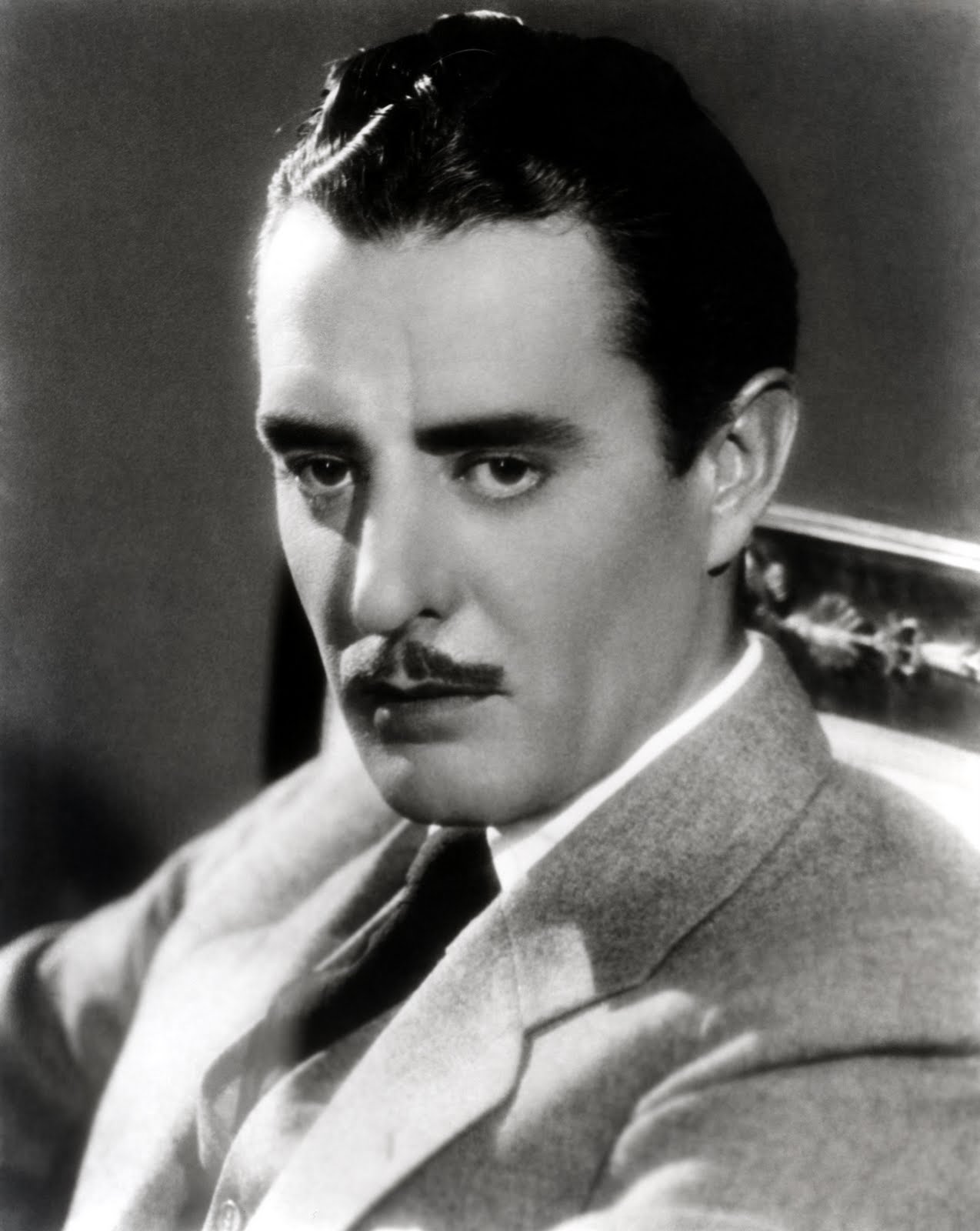
 ● The studio offered Leslie Howard, Franchot Tone, Nils Asther and Bruce Cabot as leading men. Garbo settled on Laurence Olivier based on his performance in Westward Passage. But after a disastrous rehearsal made it clear Garbo would never warm up to Olivier, she insisted on her old co-star John Gilbert in the role. Despite the fact that his career was in eclipse, Garbo's contract gave her complete control over all aspects of the production; she was comfortable with him and also felt she owed him a shot at commercial redemption given his role in promoting her early career; so over Louis B. Mayer's strenuous objections, Gilbert wound up playing the Spanish envoy, Antonio.
Contrary to Louis Mayer's slander, Gilbert had a fine voice, but by 1933 audiences were no longer willing to give him a chance. He made only one more picture then died of a heart attack in 1936.
 King Vidor, who directed Gilbert in The Big Parade, speculated (again to George Steven, Jr.), "What I believe happened was that he was the image of the aggressive lover, and they thought he could just speak the same words he did when doing silent scenes that nobody actually heard. He would arouse himself by saying things like 'I love you, I adore you, I worship you. I can't wait to get you alone tonight,' the kind of things that were funny when you heard them. So I think it wasn't his high voice but that you couldn't just take an image and suddenly change it by putting a lot of words on the soundtrack. The words destroyed the image. You'll see that a lot in life—somebody will look like something and then they'll start to talk with maybe a deep Texas accent and it changes the image."
● The scene where Garbo wanders around the bedroom, touching everything and commenting "In the future in my memory, I shall live a great deal in this room," was choreographed like a dance and performed to a metronome.
 ● The famous last close-up which begins as a medium shot then zooms in and holds on Garbo's face was shot with a 48mm lens, a lens which would typically, as GarboForever.com puts it, make the pores of her face look like the craters of the moon. In order to achieve the sharp focus of the medium shot but the soft focus of the close-up, director Mamoulian held a long strip of glass, clear on one end, gradually becoming more diffuse at the other, in front of the lens and as the camera dollied in moved the glass across it.
 Of all the posts I've worked on over the past year and a half, the most popular turns out to be one I knocked off in about five minutes—a series of photos of John Wayne as he aged in the movies, from the shockingly handsome twenty-three year old of The Big Trail to the grizzled, terminally-ill sixty-nine year old in The Shootist.
Echoing that theme, here are a series of photos of Greta Garbo, tracing her career and the lines on her face from childhood to the end of her life and most everything in between.
Just between you and me, I'm not sure they really tell you anything other than that there was a woman named Greta Garbo made of flesh and blood who eventually withered and died. For me, she lived on the screen and nowhere else, but census takers would disagree.
Now, if you really want photos of Greta Garbo, there are two places to go: Dr. Macro's High Quality Movie Scans and Garbo Forever. The former has hundreds of, yes, high quality scans from her movies; the latter has an exhaustive supply of portraits that covers her entire life.
But for the nutshell version, here you go. As always, click on the photo to enlarge it.
1914—age 9 (that's Garbo in the middle)
Of all the posts I've worked on over the past year and a half, the most popular turns out to be one I knocked off in about five minutes—a series of photos of John Wayne as he aged in the movies, from the shockingly handsome twenty-three year old of The Big Trail to the grizzled, terminally-ill sixty-nine year old in The Shootist.
Echoing that theme, here are a series of photos of Greta Garbo, tracing her career and the lines on her face from childhood to the end of her life and most everything in between.
Just between you and me, I'm not sure they really tell you anything other than that there was a woman named Greta Garbo made of flesh and blood who eventually withered and died. For me, she lived on the screen and nowhere else, but census takers would disagree.
Now, if you really want photos of Greta Garbo, there are two places to go: Dr. Macro's High Quality Movie Scans and Garbo Forever. The former has hundreds of, yes, high quality scans from her movies; the latter has an exhaustive supply of portraits that covers her entire life.
But for the nutshell version, here you go. As always, click on the photo to enlarge it.
1914—age 9 (that's Garbo in the middle)
 1920—age 15
 1923—age 18 (by Olaf Ekstrand)
 1926—age 21 Flesh and the Devil (with John Gilbert)
 1929—age 24 The Kiss
 1932—age 27 As You Desire Me
 1936—age 31 (color—not colorized—photo by Sinclair Bull)
 1941—age 36 Two-Faced Woman
 1946—age 41 (by Cecil Beaton)
 1951—age 46 (by George Hoyningen-Huene)
 1965—age 60 (by Cecil Beaton)
 1990—age 84

The most elusive and enigmatic superstar in movie history, Greta Garbo is also one of the most recognizable, familiar even to those who have never seen one of her movies. Because the beautiful and talented Swedish import rarely granted interviews, retired early and lived the rest of her days in jealously-guarded seclusion, nearly everything we know about her, or think we know, comes down to us in the form of the perfectly-rendered, never-aging images she made iconic on the silver screen. To the extent that acting is a matter of invention, Garbo surely ranks as one of the greatest, since in a very real sense, she is purely a product of her own self-creation.
Of the two dozen Hollywood movies she made in a career that began with great fanfare in the waning days of the silent age and lasted until her sudden retirement in 1941, many movie fans and historians count her performance in Queen Christina as the best of her career. I count it as the best by a dramatic actress in 1932-33.
The Contenders
 Queen Christina may have been Garbo's best performance—to my mind, it was at the very least her first great performance after the introduction of sound—but the choice of Garbo as best dramatic actress of 1932-33 was hardly a clear-cut one.
Like Garbo, Barbara Stanwyck and Katharine Hepburn consistently turn up on lists of the ten best actresses in Hollywood history, and Kay Francis, though little remembered now outside a small but devoted band of followers, was at the peak of her career in 1932.
 Why, even Fay Wray, who isn't generally regarded as a great actress, made a vital contribution to the field, teaching a generation of damsels in distress how to scream—and scream she did. She screamed with her whole body, she screamed from her toes, and the horror genre has never been the same. Think about it: before 1927, it wasn't even possible to hear an actress scream in a movie, and before Fay Wray, it wasn't clear we were supposed to. Afterwards, we knew that the only proper response to being scared out of our wits was to scream, and nobody would ever do it better. So before we move on to talk about greater actresses in greater roles, let's stop to salute her contribution to movie history.
Done? Okay, let's keep moving.
 Barbara Stanwyck would have been a good choice for the top acting prize this year. The Bitter Tea Of General Yen and Baby Face are terrific movies, better than any movie at issue here aside from King Kong. The former, one of director Frank Capra's best, is the story of an American missionary (Stanwyck) who falls in love with a Chinese warlord (Nils Asther) and in the process confronts her own racism and hypocrisy. The latter, about a woman who sleep her way to the top, is the most deliciously cynical movie of the pre-Code era and helped usher in tighter studio censorship.
But while Stanwyck did some terrific work in the 1930s—these two pictures, The Miracle Worker, Stella Dallas—it's really her work in the 1940s that made her a legend and since she's a lock for two best actress awards, in 1941 (The Lady Eve, Ball Of Fire and Meet John Doe) and in 1944 (Double Indemnity), I'm going to risk the wrath of her loyal fans and bypass her this year.
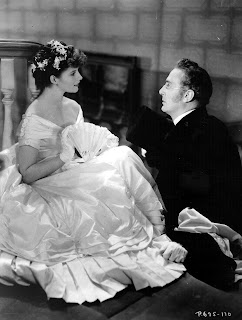 Likewise, Katharine Hepburn is one of the greatest actresses of all time—maybe the greatest—but I can think of at least five performances from the 1930s alone (Alice Adams, Stage Door, Bringing Up Baby, Holiday and even Sylvia Scarlett) that are more assured than the one she gave in Little Women. She's going to win two, three, maybe even four awards before we're done (assuming I live to be 140). I'm going to wait to recognize her accomplishments for a movie I really want to talk about.
 Finally, we have Kay Francis who in the space of a little over two months starred in three of the best movies of her career, Jewel Robbery, One Way Passage and Trouble In Paradise, a phenomenal run. In particular, One Way Passage is a splendid showcase of her abilities. The story of two people (Francis as a cancer patient, William Powell as a condemned criminal) who fall in love on an ocean voyage not knowing the other has little time to live, it's one of those magnificently stylish weepers that once upon a time Hollywood cranked out in its sleep. If you haven't seen it, get cracking—I highly recommend it.
That said, though, it's was Greta Garbo who gave the most moving performance of the year, and in many ways, the most iconic of her career. The vote may have been close, but when the final tally was read, it was Garbo's name at the top of the list.
Queen Christina: Great Performance, Flawed Movie
As Queen Christina opens, Sweden is embroiled in midst of the Thirty Years' War, a destructive 17th century conflict that had its origins in the ongoing battle between Protestants and Catholics for control of central Europe. The country's beloved King Gustavus Adolphus has just fallen on the field of battle leaving his seven year old daughter to ascend to the throne. Raised as a boy and schooled in the arts of war (well, to the extent that a child can be), Christina tosses aside her regent's carefully-worded speech about "wag[ing] war with courage" and instead vows "to win it!"
In the next scene, it's years later and we see the grown up Christina (Garbo) in trousers and a man's hat riding astride a galloping horse through the forests on the palace grounds. To a modern audience, this scene might mean nothing, but in 1933 a woman in trousers riding astride rather than sidesaddle, these are signals that Christina has taken to heart the notion that to rule the country means ruling as a man. And indeed, by the standards of the day's cinema, she dresses like a man, argues like a man, and, it is implied when she kisses her lady-in-waiting on the lips, loves like a man.
Despite Christina's skill and devotion as a leader, all is not well at home. The people clamor for more war, clamor for a royal marriage, clamor for an heir.
"In short," she says, "they clamor."
At the heart of the unrest is the desire that the queen should settle the question of the royal succession by producing an heir of Swedish blood, which of necessity requires her to settle on a mate, be it the handsome schemer Magnus or the aging war hero, cousin Charles. Christina sees marriage as a loss of her hard-earned freedom, a prospect that drives her to distraction.
"But majesty, you cannot die an old maid!"
"I have no intention to, Chancellor. I shall die a bachelor!"
Fed up with demands of power, Christina disguises herself (as a man, always as a man) and spends a few days riding alone in the wintery countryside to clear her head. There, she stumbles across the Spanish ambassador (John Gilbert) and his entourage stranded in the snow. The ambassador, Antonio, mistakes her for an impudent boy—a conceit the filmmakers expect you to roll with since Garbo looks no more like a boy than Jean Harlow looks like Abe Vigoda—and the two wind up sharing a room in a nearby inn.
Not until Christina slips off her outer garments does Antonio finally tumble to the fact that he's in the presence of a beautiful woman.
(To read about Garbo's real-life romance with Gilbert, click here.)
It's the goofiest sequence in the entire movie, one that always has me itching to turn off the player, but it's followed by what is not only the best scene in the movie, but to me, the best scene in Garbo's illustrious career.
Christina and Antonio have fallen into bed, no great surprise, but they've also fallen in love, an event so unexpected and new to both of them, they barely know how to express their joy and wonder. They recline sated before the fire, sharing a bowl of grapes and talking, but their spirits are soaring, and unable to contain herself, Christina finally gets up to wander around the room, as if first love were an out-of-body experience and she is following her soul around the bedchamber.
The scene works because it pays such close attention to the emotion, particularly the melancholy that colors Christina's happiness. She wanders around the room, touching everything that Antonio has touched—a dresser, a candle, a spinning wheel—memorizing by touch and smell and sight every inch of the only room in which she has ever known complete happiness.
"In the future in my memory," she says, "I shall live a great deal in this room."
You don't have to be a monarch to appreciate just how fleeting time is or how rare moments of pure happiness are.
It's telling that, as she tours the room, she watches Antonio's image in the mirror, and his image in turn watches her, as if she is already viewing the moment in her memory, and feeling already the exquisite pain associated with an ideal past we can never revisit.
It seems wholly appropriate to me that Garbo spends so much of the scene in front of both the mirror and, on the other side of the room, a religious triptych. Garbo was as much about images as she was about acting, holding poses that represent emotions rather than embody them from within, a style more akin to kabuki theater or the pantomime of the silent era than the Method approach actors have held to for more than fifty years. In that sense, Garbo's performance, like the triptych on the wall, is literally iconic—a pictorial representation whose form suggests its meaning. It's not "modern," but then when did we buy into the notion that "modern" and "better" were synonymous. In any event, I wouldn't want to throw out Garbo just because I also like Brando, any more than I'd throw out Rembrandt just because I also like Picasso.
In any event, as Christina feared, the moment is all too soon over. Antonio continues his journey to Stockholm, and she leaves by a different route to the same destination. Imagine Antonio's surprise when he discovers the woman he loves is a queen. Imagine the royal court's surprise when it discovers that their queen is in love with envoy of their enemy.
The latter conflict sets in motion the final act of the movie. For the Protestant Christina to pursue a relationship with the Catholic Antonio after thirty years of war between those two faiths would be like Nixon bedding down with Brezhnev at the height of the Cold War. It's not simply xenophobia or self-interest that drives the opposition to the romance, it's a genuine horror at the idea of having to refight, both at home and abroad, an issue that was settled at the price of so much blood and treasure. Christina must choose between love and responsibilities. The way she chooses, and the consequences of her choice, lead to the most famous scene of Garbo's career, that final enigmatic shot that I won't describe except to say every film buff must see it.
Now, I'm going to be up front with you: Queen Christina is one of the more problematic entrants in the Hollywood film canon. Even TV Guide in its glowing 5 (out of 5) star review describes the script as "great clumps of unleavened bread," which is a charitable way of saying that parts of the movie are preposterous—can anybody, for example, accept on the film's own terms the notion that John Gilbert could mistake Greta Garbo for a man? I don't care how dark that inn is or how mannish Garbo's clothes, unless Gilbert's character has an affinity for Swedish lads with rouged lips and plucked eyebrows, there's no way to watch that scene without thinking that either director Rouben Mamoulian set out deliberately to undermine his own movie or that the makeup man and cinematographer made some pretty grievous errors in professional judgment.
Then again, many critics have suggested that that is the point. Historically, Christina was thought to be bisexual, Garbo was almost certainly bisexual, and Mamoulian was gay; perhaps without being able to say it explicitly during a time when even pre-Code permissiveness didn't permit a frank exploration of such things, Garbo and Mamoulian set out to investigate the limits of sexual orientation and wound up suggesting that, rather than being distinctly straight or gay, we reside on a sliding continuum between the two. And that, thus, in the right moment with the right person, even John Gilbert's Antonio could find himself attracted to a young Swedish lad on a cold, cold night.
Well, maybe.
Or maybe Garbo should have scrubbed off her makeup and cut her hair, ala Katharine Hepburn in Sylvia Scarlett, and really played the part instead of pretending to play it. But given the degree to which Garbo hid behind the mask of her perfect face and her professional mannerisms, asking her to strip all of that away and hang herself out there emotionally naked might have been as impossible as asking her grow wings and fly to the moon.
Besides, did anybody ever argue that Tony Curtis, Milton Berle, Dustin Hoffman or Bugs Bunny should have made greater efforts to look like women when they played such in their movies? God forbid—the lack of illusion was half the joke.
Anyway, I suspect that I'm bringing 21st century expectations of "realism" to a 1933 movie and that an audience of the time, with the conceits of the silent era's cross-dressing comedies still fresh in their minds, wouldn't have expected Garbo to look like a man, but would simply have accepted the comic set-up and moved on.
I don't know.
What I do know is that when Queen Christina works, it works as well as any movie Garbo ever made.
"They usually ask me if it was easy or difficult to direct Garbo," Rouben Mamoulian said years later, "and the answer is that it was either easy or impossible. If she respected you as an artist, and if you gave her something that was better than what she had in mind, she was the easiest, most professional person to work with. In the case of Queen Christina she was simply marvelous."
A Troubling Pattern: Garbo In Eclipse
Queen Christina premiered in New York the day after Christmas, 1933, with a nationwide release on February 9, 1934. Reviews were mixed. Mordaunt Hall of the New York Times wrote that Queen Christina was "a skillful blend of history and fiction" and that Garbo, "alluring as ever, gives a performance which merits nothing but the highest praise." Variety on the other hand, called the movie "slow and ofttimes stilted" and criticized Garbo's performance as "too often apace of the script's lethargy."
It turned out Variety knew American audiences better than Hall did. The film didn't perform well in the U.S. Garbo's sensibilities had always been foreign to American audiences, and while during the silent era that may have suggested a "desirable metropolitan European sophistication" (to quote Marcia Landy and Amy Villarejo writing in the BFI Film Classic study of the movie), by the time of the Great Depression, American audiences had become increasingly hostile to Garbo (and to her German counterpart, Marlene Dietrich).
These same sensibilities, however, be they uniquely European or simply a product of Garbo's own matchless talents, helped make Queen Christina a big hit overseas where it made back twice its budget in Britain alone, establishing a pattern that would hold true for the remainder of Garbo's career. From Queen Christina forward through the end of her career, Garbo's movies made far more money overseas than in America, and more than any particular desire on Garbo's part, it was the outbreak of World War II, which closed off the foreign market, that hastened her early retirement from pictures. (After the war, Garbo sent out tentative feelers, thinking to make a comeback, but found no interest.)
Ironically, despite her waning domestic box-office appeal, with Queen Christina Garbo had hit her stride as an actress and would soon produce the best movies of her career, including Camille and Ninotchka. But we'll talk about those in their own good time.
[For a post on the production of Queen Christina, click here.]
Programming Note: Tuesday, August 24 is John Gilbert day on TCM and on the schedule is a showing of Queen Christina. Check your local listings and mark your calendar.









 Posts
Posts

