skip to main |
skip to sidebar

It's said that Glenda Farrell could speak 400 words in 40 seconds which considering how quiet I am could come in handy at a dinner party. She could also act — both comedy and drama — which came in really handy in a career that lasted nearly sixty years.
Unless you're a fan of Pre-Code Hollywood movies, it's likely you've never heard of Glenda Farrell, but she's worth getting to know. Pushed by a mother whose own dreams of becoming an actress were never realized, Farrrell began working on the stage at the age of seven in Enid, Oklahoma, the beginning of a career that only ended with her death in 1971 at the age of sixty-six.
Farrell worked on Broadway in the late 1920s and made her film debut in Lucky Boy, a George Jessel vehicle I've never heard of, but really took off in 1931 with Little Caesar, the gangster classic that made James Cagney a star.
In short order, Farrell appeared in Three on a Match, I Am a Fugitive from a Chain Gang (her best performance, as Paul Muni's gold digging wife) and Mystery of the Wax Museum, an early two-strip Technicolor horror classic in which Fay Wray screamed and Farrell did all the acting.
She also had a nice role in the Frank Capra comedy Lady for a Day based on a Damon Runyon story about a poor apple seller's efforts to pass as a classy society maven in front of her long-lost daughter — a terrific movie if you've never seen it.
Come to think of it, maybe that's Glenda Farrell's best performance.
She's best known now for her recurring role as Torchy Blane, a smart, wisecracking newspaper reporter who solves crimes, playing the part seven times in three years between 1937 and 1939.
"So before I undertook to do the first Torchy," she said years later, "I determined to create a real human being — and not an exaggerated comedy type. I met those [newswomen] who visited Hollywood, and watched them work on visits to New York City. They were generally young, intelligent, refined and attractive. By making Torchy true to life, I tried to create a character practically unique in movies."
According to Joe Shuster and Jerry Siegel, the creators of Superman, Farrell's performance as Torchy inspired the character of Lois Lane.
After she left Warner Brothers in 1939, Farrell split her time between Hollywood and the Broadway stage. A decade later, she made her television debut on The Chevrolet Tele-Theater and worked steadily as a guest star in such shows as Route 66, The Fugitive, Bonanza and Bewitched.
In 1963, she won an Emmy for her supporting performance in a two-part episode of Ben Casey.
Her later film work included roles in the 1942 film noir Johnny Eager, the Cary Grant comedy The Talk of the Town, a funny turn as Dick Powell's secretary in Susan Slept Here, and a part in Kissin' Cousins, one of those million or so movies Elvis Presley churned out in the 1960s.
Farrell was married twice, first in the 1920s to Thomas Richards, and then in 1941 to Henry Ross, an Army Air Force flight surgeon, to whom she remained married until death did them part.
"She was marvelous," said her son Tommy, himself a film actor. "She never got a bad notice in her life."

Starring Greta Garbo, John Barrymore, Wallace Beery, Joan Crawford and Lionel Barrymore, Grand Hotel is the story of five very different people — a ballerina, a thief, a factory owner, his secretary and a dying man — who cross paths at a luxury hotel in Berlin with tragic consequences.
With its sumptuous art Deco sets and its foreign locale, Grand Hotel was about as far removed from the daily lives of the audiences who paid to see it as a movie could get, yet it was the highest grossing film of the year for MGM, one of the few studios to turn a profit during this particularly harsh year of the Depression.
On November 18, 1932, the Academy named Grand Hotel the best movie of the year, a triumph for producer Irving Thalberg who had bought the rights to Vicki Baum's 1929 novel and shepherded it through every stage of production, honing the screenplay, choosing the cast and putting his personal stamp on the film's every detail.
Grand Hotel won for best picture despite failing to receive a single nomination in any other category.
The award for best actor went to both Fredric March (Dr. Jekyll and Mr. Hyde) and Wallace Beery (The Champ), the first tie in Oscar history.
It almost didn't turn out that way.
During the ceremony itself, Norma Shearer announced March alone as the winner. Moments later, the president of the Academy, Conrad Nagel, came on stage to announce that under Academy rules, candidates for an award who finished within three votes of each other were deemed to have tied. Beery, who had finished a single vote in back of March, came up on stage and accepted a second best actor trophy.
The only problem was, while such a rule had been in place the year before, it had been discarded before the 1932 ceremony. Stories abound regarding the backstage shenanigans that resulted in the tie, the most fun of which is that Beery was so incensed at losing to March, he went to MGM studio chief Louis B. Mayer and insisted he be given an Oscar, too.
Whatever the truth, by 1935, the accounting firm of Price Waterhouse would begin tabulating and certifying the results, another step out of Louis B. Mayer's smoke-filled office into the fresh air of Oscar democracy.
The best actress trophy went to Helen Hayes, a Broadway legend making her film debut in The Sin of Madelon Claudet, a 75-minute super-soaper about a woman who has a child out of wedlock and then endures unimaginable hardships to care for a son who doesn't know she exists. Her performance was a bit stagy and theatrical, not bad, not great, but her pedigree appealed to Oscar voters who were eager to promote movies — thought of as lowbrow entertainment for the masses — as the equal of the "legitimate" theater.
We here at the Monkey have no such agenda.
The only real horror among the major winners was Frank Borzage who picked up his second career Oscar, this time for directing Bad Girl, the story of a couple struggling through Depression-era difficulties — a jaded girl meets a cranky radio salesman, gets pregnant, then gets married — that turns into an idiot plot and fizzles, a damp squib now deservedly forgotten.
Oh, well, that's what alternate Oscars are for.
Lot of good movies came out between August 1, 1931, and July 31, 1932, including Dr. Jekyll and Mr. Hyde, Frankenstein, Freaks, the aforementioned Grand Hotel, Monkey Business, The Music Box, Private Lives, Scarface, Waterloo Bridge ...
My picks:
1931-32
PICTURE (Drama)
winner: Frankenstein (prod. Carl Laemmle, Jr.)
nominees: Dr. Jekyll and Mr. Hyde (prod. Rouben Mamoulian); Freaks (prod. Tod Browning); Grand Hotel (prod. Irving Thalberg); Scarface (prod. Howard Hughes); Waterloo Bridge (prod. Carl Laemmle Jr.)
PICTURE (Comedy/Musical)
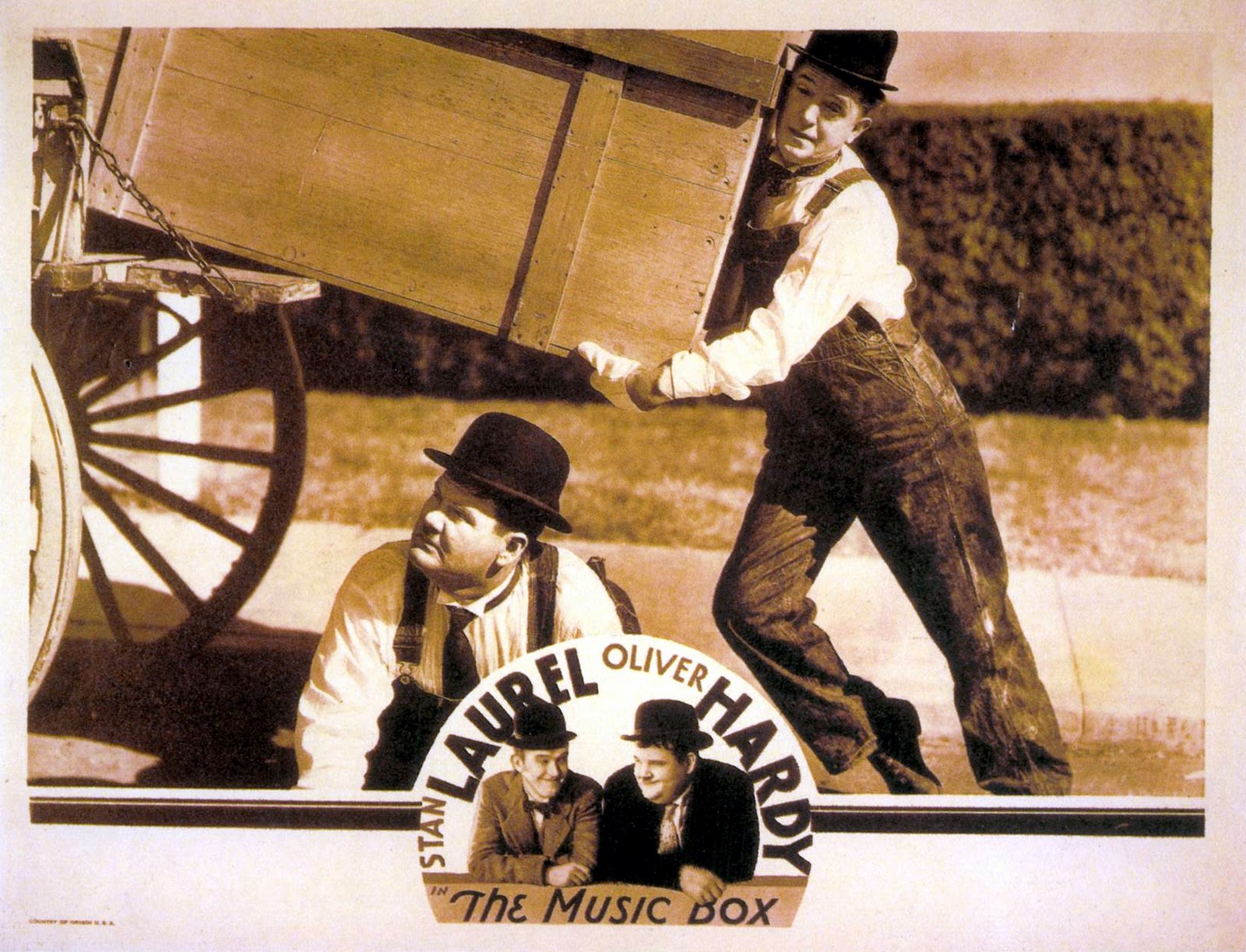
winner: The Music Box (prod. Hal Roach)
nominees: Monkey Business (prod. Herman J. Mankiewicz); Private Lives (prod. Irving Thalberg); The Smiling Lieutenant (prod. Ernst Lubitsch)
PICTURE (Foreign Language)
winner: À Nous La Liberté (prod. Frank Clifford)
nominees: La Chienne (prod. Pierre Braunberger and Roger Richebé); I Was Born, But ... (prod. Shochiku); Mädchen in Uniform (prod. Carl Froelich and Friedrich Pflughaupt); Marius (prod. Robert Kane and Marcel Pagnol)
ACTOR (Drama)
winner: Fredric March (Dr. Jekyll And Mr. Hyde)
nominees: John Barrymore (Grand Hotel); Lionel Barrymore (Grand Hotel); Wallace Beery (The Champ); Colin Clive (Frankenstein); Paul Muni (Scarface); Edward G. Robinson (Five Star Final); Warren William (Skyscraper Souls)
ACTOR (Comedy/Musical)
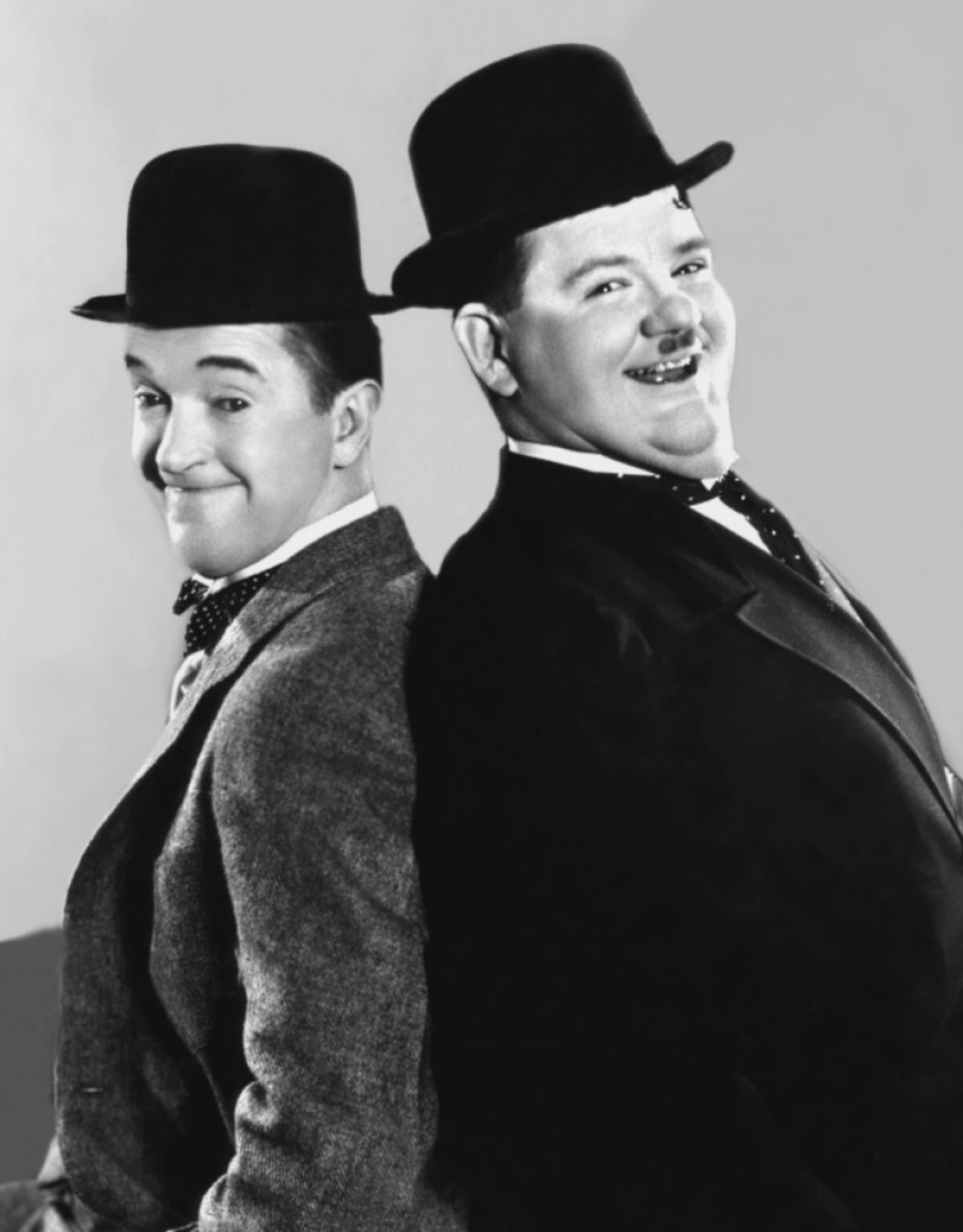
winner: Stan Laurel and Oliver Hardy (The Music Box)
nominees: James Cagney (Blonde Crazy); Maurice Chevalier (The Smiling Lieutenant and One Hour With You); The Marx Brothers (Monkey Business); Robert Montgomery (Private Lives)
ACTRESS (Drama)
winner: Mae Clarke (Waterloo Bridge)
nominees: Constance Bennett (What Price Hollywood?); Joan Crawford (Grand Hotel); Marlene Dietrich (Shanghai Express); Greta Garbo (Susan Lenox (Her Fall and Rise), Mata Hari, Grand Hotel and As You Desire Me); Helen Hayes (The Sin of Madelon Claudet and Arrowsmith); Barbara Stanwyck (The Miracle Woman); Dorothea Wieck (Mädchen in Uniform)
ACTRESS (Comedy/Musical)
winner: Norma Shearer (Private Lives)
nominees: Joan Blondell (Blonde Crazy); Claudette Colbert (The Smiling Lieutenant); Lynn Fontanne (The Guardsman); Jean Harlow (Platinum Blonde and Red-Headed Woman)
DIRECTOR (Drama)
winner: Tod Browning (Freaks)
nominees: Edmund Goulding (Grand Hotel); Howard Hawks (Scarface); Rouben Mamoulian (Dr. Jekyll And Mr. Hyde); James Whale (Frankenstein and Waterloo Bridge)
DIRECTOR (Comedy/Musical)
winner: René Clair (À Nous La Liberté)
nominees: Sidney Franklin (The Guardsman and Private Lives); Ernst Lubitsch (The Smiling Lieutenant and One Hour With You); Yasujirô Ozu (I Was Born, But ...); James Parrott (The Music Box)
SUPPORTING ACTOR (Drama)
winner: George Raft (Scarface)
nominees: Boris Karloff (Frankenstein); Lewis Stone (The Sin of Madelon Claudet, Mata Hari and Grand Hotel)
SUPPORTING ACTOR (Comedy/Musical)
winner: Roland Young (The Guardsman and One Hour With You)
nominees: Raimu (Marius)
SUPPORTING ACTRESS (Drama)
winner: Miriam Hopkins (Dr. Jekyll And Mr. Hyde)
nominees: Ann Dvorak (Scarface); Aline MacMahon (Five Star Final); Anna May Wong (Shanghai Express)
SUPPORTING ACTRESS (Comedy/Musical)
winner: Thelma Todd (Monkey Business)
nominees: Miriam Hopkins (The Smiling Lieutenant); Una Merkel (Private Lives and Red-Headed Woman)
SCREENPLAY
winner: Ben Hecht; continuity and dialogue by Seton I. Miller, John Lee Mahin and W.R. Burnett; from a novel by Armitage Trail (Scarface)
nominees: René Clair (À Nous La Liberté); Frances Marion (story), Leonard Praskins (dialogue continuity) and Wanda Tuchock (additional dialogue) (The Champ); Garrett Fort and Francis Edward Faragoh (screenplay), adaptation by John L. Balderston, from the novel Frankenstein: or, The Modern Prometheus by Mary Shelley and the play Frankenstein: An Adventure in the Macabre by Peggy Webling (Frankenstein); Christa Winsloe and Friedrich Dammann (as F.D. Andam); from the play by Christa Winsloe (Mädchen in Uniform); S.J. Perelman and Will B. Johnstone (screenplay); Arthur Sheekman (additional dialogue) (Monkey Business)
SPECIAL AWARDS
Lee Garmes (Shanghai Express and Scarface) (Cinematography); C. Roy Hunter (Frankenstein) (Sound); Charles D. Hall and Kenneth Strickfaden (Frankenstein) (Art Direction-Set Decoration); Jack Pierce and Pauline Eells (Frankenstein) (Makeup); Wally Westmore (Dr. Jekyll and Mr. Hyde) (Special Effects)

Me, I'd reserve room for a DVD on boat building and another on edible plants, but I understand the sentiment. Hawks, more than any other director, covered the waterfront — Westerns, comedies, crime, war, action, sci-fi, musicals, straight-up drama, and even silent movies. And he didn't just make entertaining movies, he made genre-defining classics.
Hawks gave John Wayne his first great acting showcase, taught Katharine Hepburn how to play comedy and Lauren Bacall how to whistle, helped define 1930s gangster movies, 1940s film noir, and 1950s sci-fi spectacles, and put Marilyn Monroe in a slinky pink dress as she sang her signature song, "Diamonds Are a Girl's Best Friend."
That he also directed two of the greatest Westerns in history, well, that's just showing off.
So what are my favorite Howard Hawks movies? Glad you asked.
In chronological order:
Scarface (1932) — Although Hawks had been directing since 1926 (including 1928's A Girl in Every Port, which put Louise Brooks on the map, and the first, best version of The Dawn Patrol in 1930), Scarface was the first indispensable movie of his career. I've written about Scarface at length (here, here and here) and I won't rehash any of that except to note that along with Little Caesar and The Public Enemy, this is one of the three great gangster pictures of its era. Brian De Palma remade it in 1983 with Al Pacino.
Bringing Up Baby (1938) — Some people, such as the aforementioned David Thomson, would include Hawks's 1934 comedy Twentieth Century here but although it made a star of Carole Lombard, to me it's more shrill than funny. Instead, I'll list Hawks's other screwball classic, Bringing Up Baby, in which a batty Katharine Hepburn and her pet leopard fall in love with a very goofy college professor played by Cary Grant. "Now it isn't that I don't like you, Susan, because, after all, in moments of quiet, I'm strangely drawn toward you, but, well, there haven't been any quiet moments." This was Hepburn's first comedy; it wouldn't be her last.
Only Angels Have Wings (1939) — Starring Cary Grant, Jean Arthur and a young Rita Hayworth, this one explores one of Hawks's favorite themes: men of action behaving according to a professional code, and the women who learn to love them. Grant plays a pilot trying to get a fledgling air mail service off the ground; Arthur is a showgirl stranded at his hotel. For fun, take a drink every time somebody says "Calling Barranca" — you'll be in the hospital by the end of the first act! A personal favorite.
His Girl Friday (1940) — A (superior) remake of the comedy The Front Page, this one stars Cary Grant as a hilariously ruthless newspaper editor, Rosalind Russell as his star reporter — and ex-wife — and Ralph Bellamy as the man she intends to marry. One look at Grant and Bellamy, and you know how this one's going to turn out but what a wild ride getting there with a very modern moral to boot: a woman's place is in the office, not the kitchen. Career best performances by all three leads. Holds the record for the fastest dialogue in movie history. Must see.
Ball of Fire (1941) — Another comedy. Typically, in Hawks's dramas, women must prove worthy of the men they love. In his comedies, the formula is reversed. Here, Barbara Stanwyck is a showgirl on the run from her gangster boyfriend. Gary Cooper is the virginal professor who gives her shelter. When the film's writer Billy Wilder (who would later win Oscars directing The Lost Weekend and The Apartment) confessed he didn't understand the plot, Hawks told him "It's a remake of Snow White and the Seven Dwarfs." Bingo!
To Have and Have Not (1944) — Set in French Martinique during World War II, Harry Morgan (Humphrey Bogart) has retreated from the messy political world into a cocoon of isolationism so complete he's willing to ignore the fascists in charge even as they are shooting his clients and pushing his friends around. Marie "Slim" Browning (Lauren Bacall in her first film role) teaches him how to whistle and forces him to realize that no matter how much he thinks he's successfully avoided sticking his neck out, his neck is out there. A loose adaptation of Ernest Hemingway's novel, the screenplay is by William Faulkner, to date the only time a Nobel Prize winner has written a screenplay based on the work of another Nobel Prize winner.
The Big Sleep (1946) — Bogart and Bacall again. This time, Bogart is Raymond Chandler's famous private detective, Philip Marlowe, while Bacall draws his eye as the beautiful, spoiled daughter of a rich client. The plot is incomprehensible (even Chandler didn't know whodunit) but the sparks fly and the dialogue sets some sort of record for sexual innuendo. Loads of fun.
Red River (1948) — One of the greatest Westerns ever made, John Wayne and his adopted son Montgomery Clift lead a cattle drive along the Chisholm Trail. Basically a retelling of Mutiny on the Bounty with Wayne as Captain Bligh. After seeing the movie, director John Ford (who had cast Wayne in the classic Stagecoach way back in 1939) exclaimed, "I didn't know the big son of a bitch could act!" Boy, could he.
The Thing from Another World (1951) — Based on John Campbell's classic novella "Who Goes There?" this is the story of soldiers and scientists in the Arctic Circle fighting an invader from outer space (and sometimes each other). Hawks is credited only as the film's producer but those who were there insisted he directed as well. Sure seems like it. Remade in 1982 by John Carpenter, this science fiction classic is full of danger and paranoia but also humor, camaraderie and a good-looking, no-nonsense Hawksian woman (Margaret Sheridan).
Gentlemen Prefer Blondes (1953) — Based on the novel by the immortal Anita Loos, gold digger Lorelei Lee (Marilyn Monroe) and her no nonsense pal Dorothy Shaw (Jane Russell in her best role) set sail for France with a boatload of handsome Olympians, a rich, eligible bachelor (aged seven) and a private eye determined to catch Lorelei in flagrante delicto. Features Marilyn Monroe's signature song "Diamonds Are a Girl's Best Friend." One of the best musicals of the 1950s, Gentlemen Prefer Blondes, as much as anything, proves Howard Hawks was the master of any genre.
Rio Bravo (1959) — Ostensibly the story of a border town sheriff (John Wayne) who squares off against a rich rancher and his army of hired goons, Rio Bravo is really a study of a professional doing his job and doing it well despite the imminent threat of death, an idealized code of conduct Hemingway called "grace under pressure." This is Hawks at his most compassionate, not an attribute I would always associate with his brusque heroes and no-nonsense women. But John Wayne watches over his ragged crew — a drunk, a cripple, and later a girl, a young gunslinger and even the manager of the local hotel — like a mother hen, with a love that is sometimes tough and sometimes tender, but always genuine. With Dean Martin, Walter Brennan and Angie Dickinson. The best Howard Hawks movie and my all-time favorite Western — and you know how much I love a good Western!
Man's Favorite Sport? (1964) — The least well-known of all the movies on this list, but a personal fave, this is a comedy about an expert fisherman (Rock Hudson) who confesses to the woman who's organized a tournament in his honor that he's never fished in his life — never even touched a fish! Paula Prentiss, in the best performance of her career, takes him in hand and teaches him everything he needs to know, some of it having to do with a rod and reel.
El Dorado (1966) — A loose comedic remake of Rio Bravo, with John Wayne again, Robert Mitchum as the drunk, and James Caan as a poetry-spouting gambler in a funny hat. Caan has the best line in the movie while wrasslin' the voluptuous Michele Carey in a hay barn. "Hey, you're a girl!" No kidding, Jimmy.
And if that's not enough, you might also try Sergeant York (1941) (which won Gary Cooper an Oscar), I Was a Male War Bride (1949) (with Ann Sheridan and Cary Grant in drag), Monkey Business (1952) (No, not the Marx Brothers — Cary Grant and Marilyn Monroe) and Hatari! (1962) (John Wayne basically playing a macho Marlin Perkins — and if you understand that reference, boy, are you old!).
In 1974, Hawks received an honorary Oscar as "a giant of the American cinema whose pictures, taken as a whole, represent one of the most consistent, vivid, and varied bodies of work in world cinema."
And that undersells him.
In 1996, Entertainment Weekly ranked Hawks fourth on the list of the 50 greatest directors of all time. In 2007, Total Film also ranked him fourth on its list of the 100 greatest directors of all-time.
And me? I have him on the Mount Rushmore of Hollywood film directors along with Alfred Hitchcock, Billy Wilder and Steven Spielberg, a first among equals in my book. Put that in your pipe and smoke it.

But only a bloviating narcissist determined to repeat his mistakes won't admit when he's wrong, and I was wrong to dismiss Norma Shearer without first seeing her pre-Code work.
In fact, before she got culture and started playing those maddeningly starchy good girls in bloodless MGM literary adaptations, Shearer turned in some of the best performances of the early sound era, playing — pardon my French — horny blue bloods too eager to get into a man's pants to worry about the impact on her social standing.
Thank God for pre-Code movies! All that misbehavior kids think they invented in the Sixties — sex, drugs, hot music, adultery, abortion — Hollywood was making movies about in the early 1930s, and making all that sin look like a helluva lot fun.
Too much fun as it turned out for the Puritans who get their mitts on the government from time to time. With censorship threatening their profit margins, Hollywood invented the Code, which not only banned onscreen depictions of all that naughtiness we're not supposed to enjoy but so obviously do, but also wholesome activities like a husband and wife sleeping in the same bed together, a fact of life every child in America was damn well aware of, else why bother to climb in there with them in the middle of a thunderstorm.
Who did they think they were fooling?
But I digress ...
I suspect Shearer's husband, the legendary producer Irving Thalberg, was only too happy to wrap his wife up in a shroud of respectability. Probably didn't want her audience to know the woman he had married was, in the words of the ever-classy Mickey Rooney, "hotter than a half-f***ed fox in a forest fire."
Well, some guys are like that.
As Walter Clemons once wrote for EW.com, "Thalberg was fatally afflicted with gentility. He cast his wife in movies with literary pretensions — O'Neill's Strange Interlude, The Barretts of Wimpole Street, and as a mature Juliet in a suffocatingly tasteful rendition of Shakespeare. Norma gets a bad rap for these turkeys, but the reverence in which Thalberg's contemporaries held him is an unexamined delusion."
So what Norma Shearer movies should you see?
The 1939 comedy The Women would be an obvious choice — it's her best known film and it's a good one. But let's be honest, Norma is a bit of a sad sack in The Women — abandoned by her cheating husband, betrayed by her closest friends — and frankly, co-stars Joan Crawford and Rosalind Russell blow her off the screen.
Instead, try these three pre-Code classics:
The Divorcee (1930) — When husband Ted (Robert Montgomery) has an extramarital fling, his wife Jerry (Shearer) retaliates with one of her own. Suddenly the gander, who always felt free to goose anything in a skirt, gets his feathers in a ruffle and files for divorce.
Separated, Ted drinks, Jerry parties, and neither is any too happy with the state of their affairs. Eventually, Jerry falls into the arms of a married man and ... well, there's enough here for a season's worth of Real Housewives, all of it unfolding in a brisk 84 minutes.
Shearer topped Greta Garbo and Gloria Swanson, among others, at the 3rd Academy Awards for the only Oscar of her career.
A Free Soul (1931) — Even better than The Divorcee, in this sprightly 91-minute melodrama, free-spirit Jan Ashe (Shearer) falls for a gangster (Clark Gable in a star-making turn), discovering too late what kind of a man he really is.
When her ex-beau (Leslie Howard) comes to her rescue and winds up on trial for murder, Jan turns to her alcoholic father, a once successful attorney, hoping he can pull one more rabbit from his briefcase of lawyerly tricks.
Lionel Barrymore (at his hammy best as Jan's alcoholic father) won the Oscar for best actor, and Shearer picked up another nomination for best actress, one of five in her career.
Private Lives (1931) — In this faithful adaptation of Noel Coward's popular stageplay, two recently remarried divorcees, Elyot (Robert Montgomery, again) and Amanda (Shearer), find themselves honeymooning in adjoining suites at the same resort. The two ex-spouses are less interested in starting life anew than in tearing into each other, preferably with a wit so biting, the quips leave teeth marks.
And when the wit's not wounding enough, they use actual teeth!
You'd be tempted to call this a comedy of spousal abuse but for the fact that the two participants so thoroughly enjoy themselves. Elyot and Amanda are natural-born performers — drama queens, we'd call them — and after a season apart, they realize each is the other's best audience. They can't live together, but to live apart means they'd have to climb off their private little stages and start living with themselves — or more to the point, with their brand new spouses who, they quickly discover, bore them to tears.
In an essay for Bright Lights Film Journal, Dan Callahan called it "Shearer's finest, most well-rounded performance, and it's the only film that you can show to the uninitiated without fear of the dreaded Shearer-isms."
If you're only going to see one Norma Shearer movie, see this one.
Next up: Howard Hawks: A Baker's Dozen











 Posts
Posts

